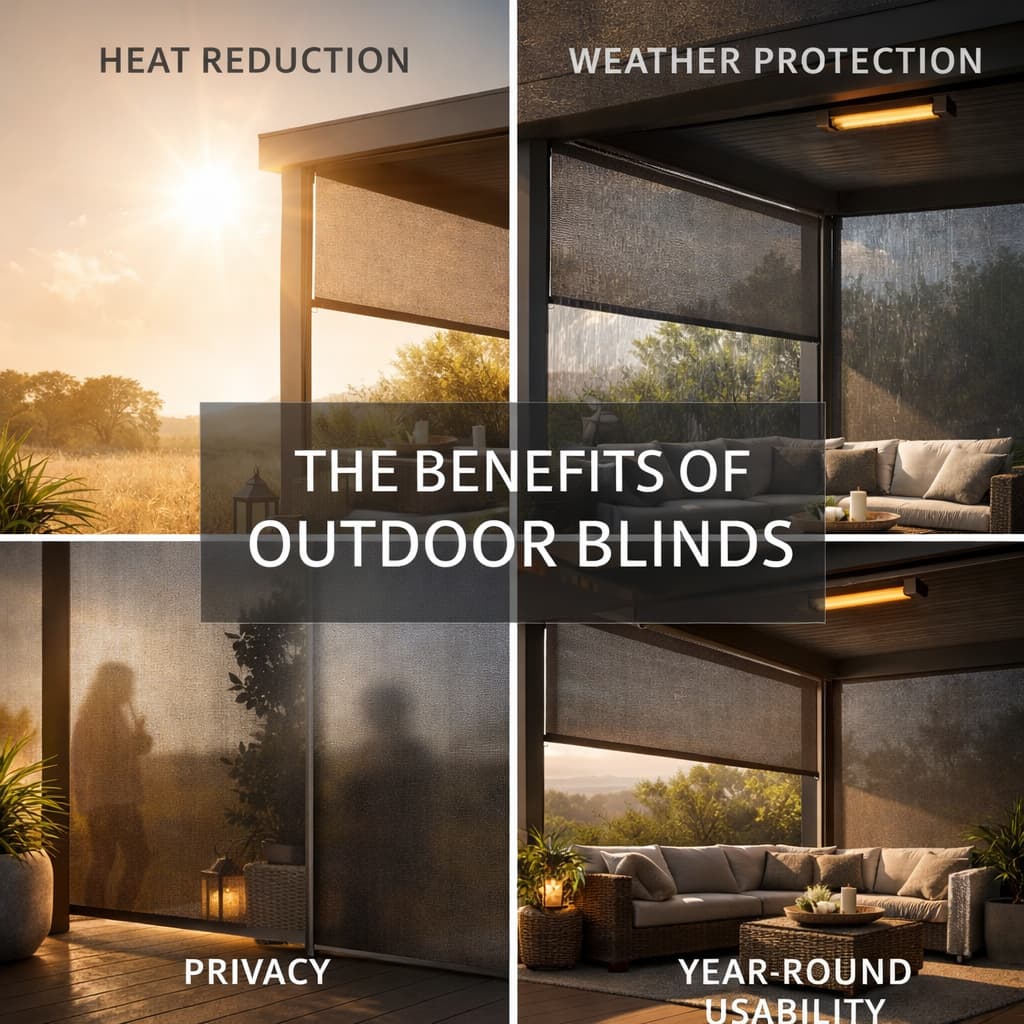
Description
Why Outdoor Blinds Are Becoming Essential — Not Optional
Outdoor living has evolved significantly over the last decade. What were once seasonal spaces used mainly during summer are now expected to function as true extensions of the home. Patios, pergolas, decks, and alfresco areas are increasingly designed to operate as dining rooms, entertainment zones, relaxation areas, and even remote working environments.
However, achieving year-round comfort outdoors requires more than overhead shelter. While pergolas and roof systems provide protection from above, outdoor blinds are quickly becoming the key element that determines whether an outdoor space is usable in changing conditions.
Outdoor blinds are no longer decorative additions. Instead, they are performance-driven solutions that improve comfort, protect assets, and extend the usability of outdoor environments.
The Real Challenge of Outdoor Spaces
Outdoor environments are constantly exposed to changing weather patterns. Although overhead roofing provides valuable shelter, the open sides of outdoor spaces often remain vulnerable to environmental stress.
Without effective side protection, outdoor areas can quickly become:
• Excessively hot during summer
• Cold and uncomfortable during winter
• Exposed to wind-driven rain
• Impacted by glare and UV exposure
• Lacking privacy in urban environments
• Susceptible to furniture and material deterioration
For this reason, outdoor blinds are increasingly integrated into outdoor structures during the design phase rather than being added later as accessories.
Heat Control and Solar Management
One of the most significant benefits of outdoor blinds is their ability to regulate temperature through solar management.
Direct sunlight dramatically increases both surface and air temperatures within outdoor spaces. Outdoor blinds act as a protective solar filter, reducing radiant heat before it enters the area.
High-quality outdoor mesh blinds are engineered with controlled openness factors that allow them to:
• Reduce solar heat gain
• Maintain airflow and ventilation
• Minimise glare while preserving views
• Improve overall comfort levels
By blocking sunlight before it reaches flooring, furniture, and seating areas, outdoor blinds help maintain cooler and more stable environments. In many situations, they can reduce perceived temperatures by several degrees, transforming outdoor areas into comfortable living spaces during warmer months.
Overheating, Outdoor Living, and Climate Change
Climate patterns are changing, and outdoor living design is evolving in response. Across regions such as New Zealand and Australia, rising temperatures and extended heat periods are affecting how outdoor spaces are used.
Outdoor entertaining zones that were once comfortable are now frequently exposed to intense afternoon sun. Consequently, overheating has become one of the primary limitations to outdoor usability.
Climate change is contributing to:
• Increased solar intensity
• Longer heatwave periods
• Higher UV exposure
• More unpredictable weather systems
• Growing demand for energy-efficient cooling strategies
Outdoor blinds provide an effective passive climate control solution. Unlike air conditioning or mechanical cooling, they reduce solar heat before it enters living spaces. As a result, they can lower the need for energy-intensive cooling systems.
Additionally, outdoor blinds help regulate temperature in adjacent indoor areas by reducing heat entering through sliding doors and open-plan living spaces. As sustainable building design becomes increasingly important, passive shading solutions are becoming essential components of energy-efficient homes.
Extending Outdoor Living into Winter
Although outdoor blinds are often associated with summer shading, their winter performance benefits are equally important.
Wind exposure is one of the most significant factors reducing outdoor comfort during colder months. Even moderate airflow can quickly remove heat from outdoor areas and reduce the effectiveness of outdoor heaters.
Outdoor blinds act as wind barriers that help:
• Retain warm air within enclosed areas
• Improve heating efficiency
• Reduce drafts and airflow disruption
• Extend seasonal usability of outdoor spaces
Because of these benefits, enclosed pergolas and semi-outdoor rooms are becoming increasingly popular in climates where seasonal variation limits outdoor entertaining. Outdoor blinds can effectively extend the use of outdoor spaces by several months each year.
Protecting Outdoor Furniture and Interior Spaces
Outdoor furniture and décor often represent significant investments. Unfortunately, constant exposure to environmental conditions can rapidly degrade materials.
Ultraviolet radiation is particularly damaging and can lead to:
• Fabric fading
• Timber drying and cracking
• Plastic and composite material breakdown
• Cushion and upholstery deterioration
Outdoor blinds function as protective shields that reduce UV exposure and weather damage. Over time, this protection can significantly extend the lifespan of outdoor furnishings.
Furthermore, in areas adjacent to sliding doors or open walls, outdoor blinds also help protect interior flooring, furnishings, and finishes by limiting UV and moisture exposure entering from outdoor environments.
Privacy Without Blocking Views
Modern housing developments often place homes closer together, making privacy a growing concern for homeowners.
Outdoor blinds provide a unique balance between openness and privacy. Depending on fabric type and openness factor, blinds can:
• Reduce visibility from neighbouring properties
• Maintain outward views and natural light
• Create a more enclosed and comfortable outdoor atmosphere
• Improve security and separation between properties
Unlike permanent walls or glazing, outdoor blinds offer flexibility, allowing users to adjust privacy levels depending on weather conditions and personal preference.
Creating Flexible Outdoor Rooms
One of the most significant design trends in outdoor living is the creation of flexible outdoor rooms.
Outdoor blinds allow spaces to be adapted dynamically throughout the day and across seasons. Outdoor areas can be:
• Fully open during warm, calm weather
• Partially enclosed during windy conditions
• Fully enclosed during rain or colder temperatures
This flexibility transforms outdoor spaces from seasonal features into fully functional living environments. Hospitality venues, including restaurants and cafés, have embraced outdoor blinds to maximise seating capacity while maintaining customer comfort throughout changing weather conditions.
The Rise of Performance-Engineered Outdoor Blinds
Outdoor blinds have advanced significantly from earlier shade-focused designs. Modern systems are engineered to meet demanding performance expectations.
Contemporary outdoor blind systems commonly incorporate:
• Wind resistance engineering
• UV stabilised fabrics
• Corrosion-resistant structural components
• Motorised and automated control options
• Integration with environmental sensors and smart home systems
This development reflects a broader shift within outdoor construction, where products are now expected to meet structural, durability, and automation standards similar to indoor building components.
Why Outdoor Blinds Are Becoming Standard Design Elements
As outdoor living becomes central to residential and commercial architecture, expectations surrounding comfort, usability, and performance continue to increase.
Outdoor blinds provide a combination of benefits that few other outdoor solutions can match:
• Environmental control
• Extended seasonal usability
• Furniture and material protection
• Privacy enhancement
• Architectural flexibility
• Passive temperature management
Because of this, outdoor blinds are no longer considered finishing accessories. Instead, they are influencing how outdoor spaces are designed from the earliest planning stages.
The Future of Outdoor Living Design
Outdoor blinds represent a shift in how outdoor environments are conceptualised. They are no longer simply shade devices. Instead, they provide control over climate, comfort, privacy, and usability.
As outdoor living continues to evolve, adaptable environmental control will become one of the defining characteristics of successful outdoor design. Outdoor blinds are positioned at the centre of that transformation.