Description
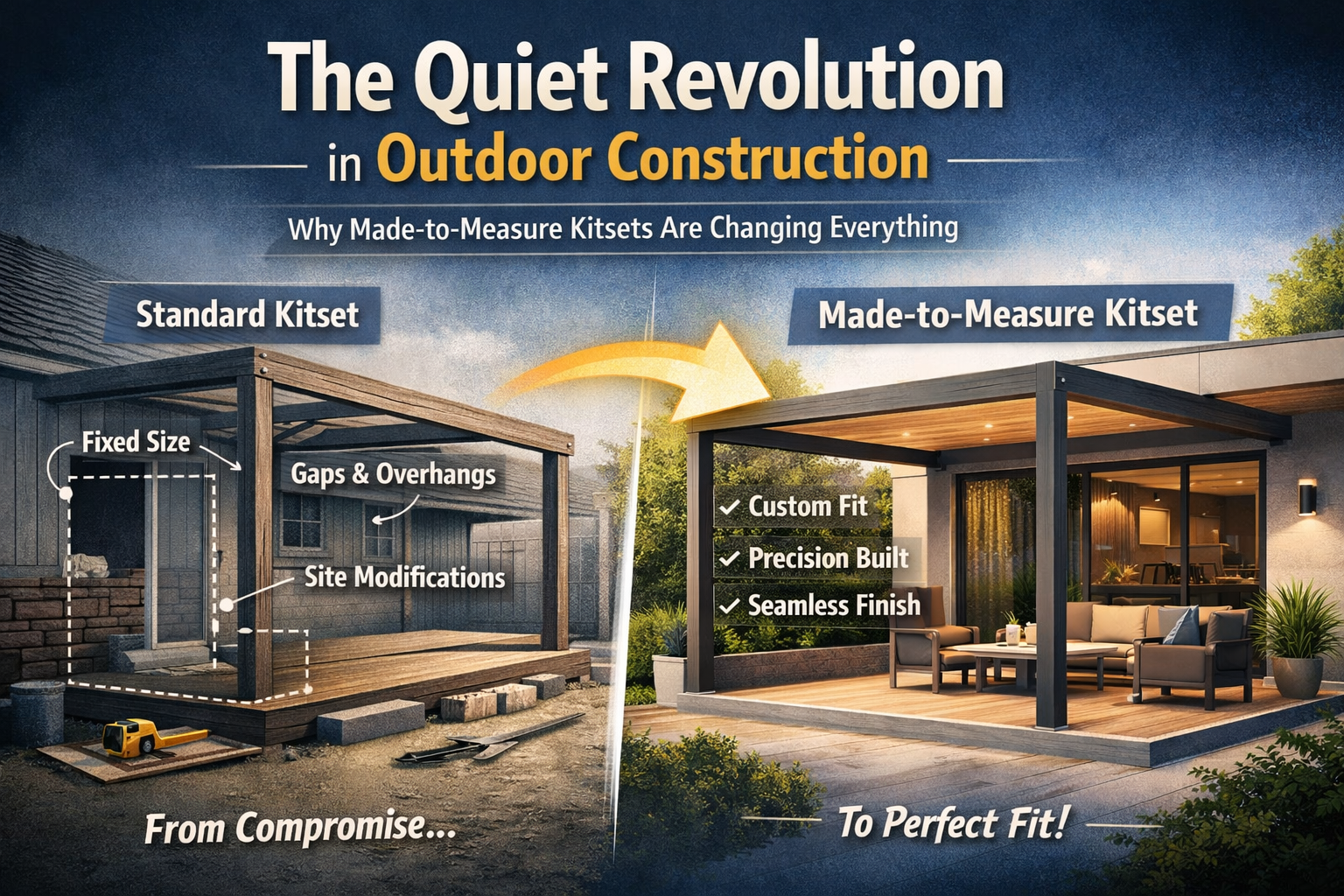
The word kitset used to trigger a predictable reaction.
Standard sizes.
Fixed heights.
Limited flexibility.
Design your space around the product.
If it didn’t fit — you modified the deck, shifted the posts, accepted overhangs, or paid significantly more for full custom fabrication.
But something important has changed.
A new category has emerged: made-to-measure kitsets.
And for homeowners, designers, and commercial developers, it’s becoming one of the most important upgrades the industry has seen in decades.
What Is a Made-to-Measure Kitset?
A made-to-measure kitset keeps the advantages that made kitsets popular in the first place:
• predictable pricing
• faster production
• simpler installation
• modular logistics
• repeatable engineering
But instead of forcing projects into predetermined sizes, the system is manufactured to the exact dimensions required.
Width.
Projection.
Height.
Clearances.
Integration points.
All defined before production.
It arrives like a kitset — but fits like a custom build.
Why This Is a Game Changer
Architecture No Longer Has to Compromise
Designers can work with real dimensions of the site.
Existing patios.
Irregular slabs.
Boundary setbacks.
Rooflines.
Drainage locations.
Instead of adjusting the property to suit the pergola, the pergola suits the property.
That is a massive psychological and practical shift.
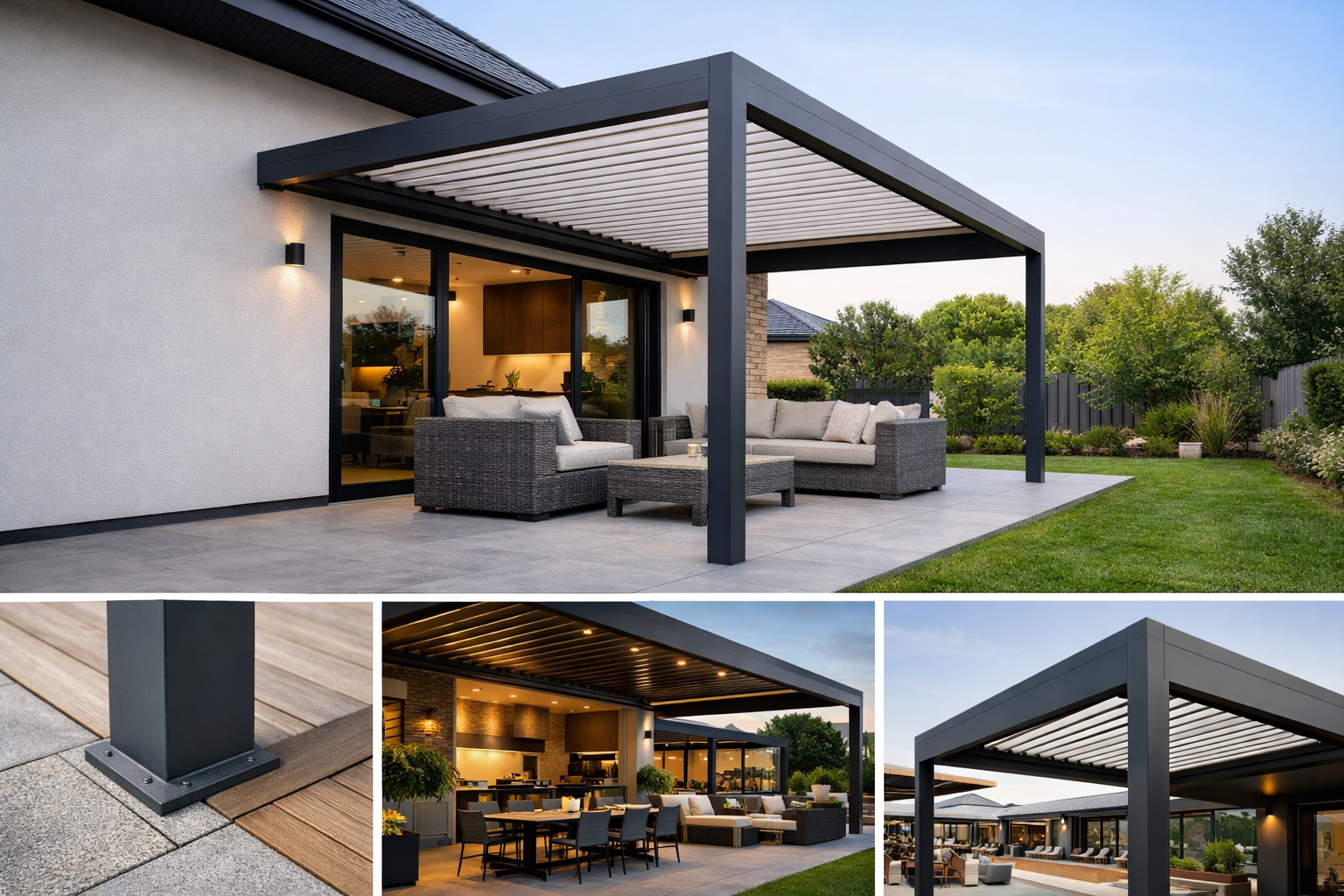
Cleaner Finishes, Higher-End Appearance
When structures are sized correctly:
• posts land where they should
• beams align with walls
• gutters sit cleanly
• blind systems integrate properly
• glass or screens close gaps
The result looks intentional — not adapted.
To the end client, this is the difference between premium and retrofit.
Faster Installations
You might assume custom sizing slows projects down.
In reality, it often does the opposite.
Installers spend less time:
• packing gaps
• modifying flashings
• trimming components
• re-engineering footings
Everything arrives ready to go.
Less site improvisation means fewer surprises.
Cost Efficiency Improves
Traditional thinking:
Custom = expensive.
Kitset = cheaper.
Made-to-measure is blurring that line.
Because factory precision reduces:
• labour hours
• wastage
• rectification work
• post-installation complaints
The total project cost can land very close to standard kitsets — but deliver a far superior outcome.
Traditionally Reserved for the High End
For most of the history of outdoor structures, precision manufacturing was a luxury.
If you wanted a pergola or louvre roof built exactly to your dimensions, you typically entered the world of fully custom architectural builds.
That meant:
• longer lead times
• higher design costs
• engineering fees
• specialist installers
• premium pricing
Made-to-measure accuracy was associated with high-end homes, luxury hospitality, and landmark commercial projects.
Kitsets, on the other hand, were designed around repeatability.
They worked because they were standard.
What has changed is who gets access to precision.
Modern production methods now allow kitset systems to be adjusted in the factory without losing the efficiencies of scale.
The result?
Homeowners and mid-range projects can now achieve outcomes that previously belonged only to architect-specified, high-budget builds.
This is one of the most significant democratizations the industry has ever seen.
Precision is no longer exclusive.
Why the Industry Is Moving This Way
Several forces are pushing this evolution:
• digital measuring tools
• CAD/CAM production
• CNC cutting accuracy
• smarter supply chains
• improved logistics planning
Manufacturers can now customise without the chaos that used to come with traditional custom work.
What used to be difficult is now normal.
The Buyer Expectation Has Changed
Today’s client expects things to fit.
They notice alignment.
They photograph details.
They compare finishes online.
A structure that looks “almost right” no longer feels acceptable.
Made-to-measure answers that expectation.
The brilliance of made-to-measure kitsets is simple:
They combine factory efficiency with site intelligence.
You keep the speed.
You keep the price control.
But you gain architectural accuracy.
And once people experience that difference, it’s very hard to go back.