




Description
Cricket has long been a sport of nuance, strategy, and numbers. From batting averages to bowling economy rates, cricket fans and analysts have always thrived on statistics. But over the last decade, the sport hasn’t just adopted analytics — it has become one of the most advanced arenas for artificial intelligence (AI) in sport. What started as simple ball-tracking tools has evolved into a full ecosystem of machine learning, computer vision, and predictive analytics that is redefining how the game is played, viewed, and understood.
So why cricket — of all sports — became the global test lab for AI in sport is a story rooted in complexity, opportunity, and the quest for competitive edge.
1. Cricket’s Data-Rich DNA
Cricket is intrinsically statistical. Every ball bowled, every run scored, and every fielding position adopted generates a rich dataset. Test matches can last up to five days. T20 leagues compress intense action into a few hours. This diversity of formats creates vast, multidimensional datasets — ideal for training machine learning models. AI can detect subtle patterns in player performance, ball trajectories, pitch conditions, and game situations that humans would struggle to quantify manually.
In Twenty20 leagues like the Indian Premier League (IPL), teams use AI models to analyse ball flight, predict opposition tactics, and even estimate the probability of specific outcomes as the match unfolds. These models don’t just crunch stats — they translate raw data into actionable strategy in real time.
2. Early Innovation with Vision and Tracking Systems
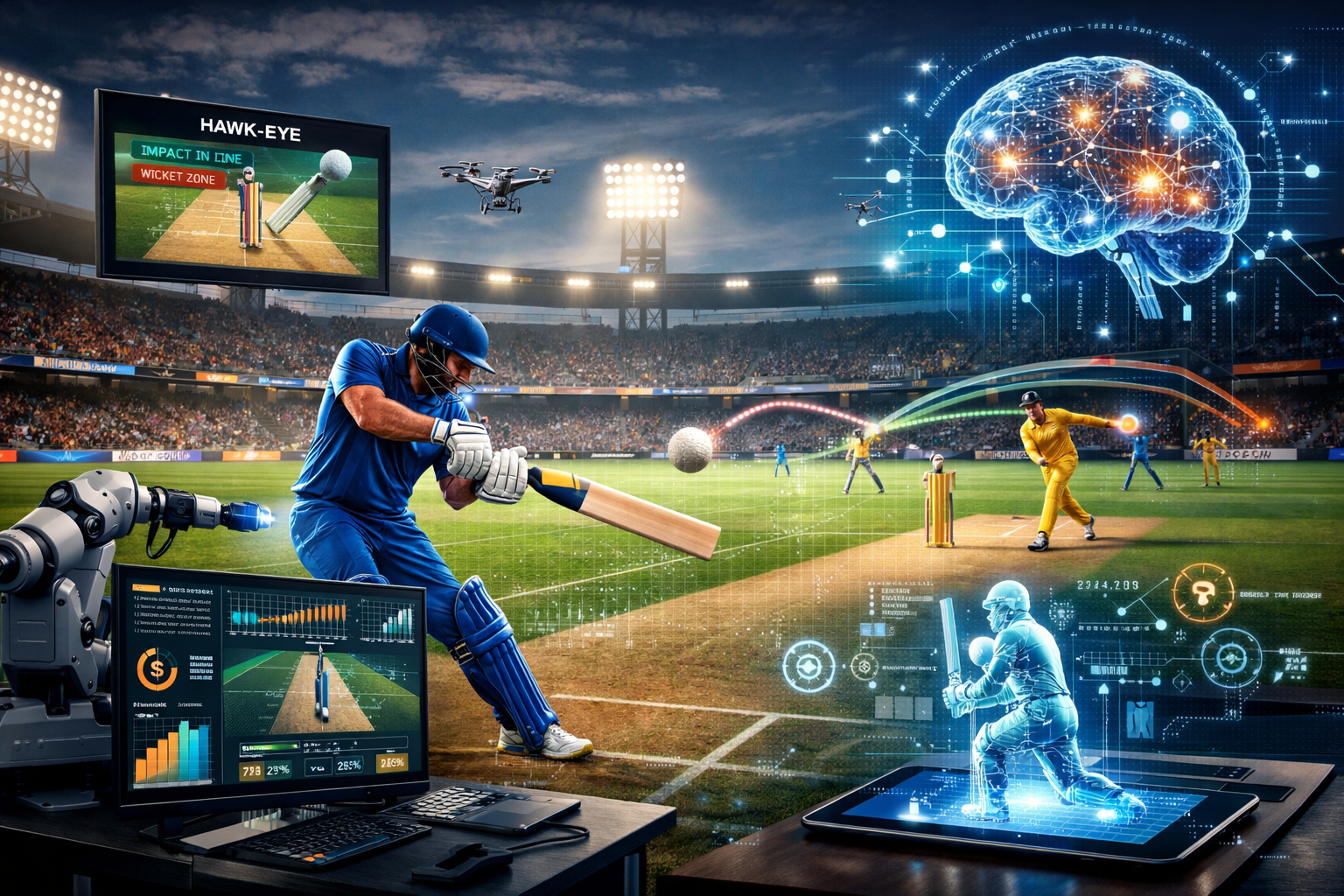
One of the earliest and most influential technological adopters in cricket was ball-tracking systems such as Hawk-Eye. First introduced for broadcast enhancement, Hawk-Eye uses multiple high-speed cameras and triangulation to plot the complete trajectory of the ball. Beyond telling viewers whether a delivery would have hit the stumps, it laid the groundwork for computer vision in sport.
These video insights didn’t just serve TV graphics. They became foundational training data for machine learning models that now power everything from player performance breakdowns to predictive simulations. Cricket’s early acceptance of computer vision set the tone for broader AI adoption.
3. Cricket’s Fragmented Yet Intense Competitive Landscape
Unlike sports with uniform seasons or centralized leagues, cricket spans Test tours, One-Day Internationals, global T20 leagues, and regional tournaments. This fragmentation actually becomes an advantage for AI:
-
Analysts can experiment with models in one format and test cross-format applicability.
-
Teams can leverage insights from international matches to improve domestic performance.
-
Leagues like the IPL become incubators for real-world deployment under pressure, fast feedback loops, and immense audience data.
This makes cricket a natural innovation laboratory — more flexible than rigid club structures, yet competitive enough that every marginal gain matters.
4. From Umpire Assistance to Strategic Insights
Cricket’s adoption of technology began with umpire support systems like the Decision Review System (DRS), which uses ball tracking, infra-red imaging, and sound analysis to support officiating decisions. While DRS today is standard, its early stages helped professionalise AI and analytics within match operations.
Once teams and commentators saw the value of technology in decision making, it wasn’t long before analysts started asking deeper questions:
What if we could model player fatigue? Predict the next bowler’s impact? Personalise fan experiences with live narrative summaries?
Today, AI does all of these and more — from performance optimisation to real-time fan engagement tools that explain tactical shifts, turning cricket into a testbed for next-gen sport AI.
5. Commercial Incentives and Global Reach
Cricket’s commercial ecosystem — with massive broadcast rights in South Asia, lucrative T20 leagues, and passionate global fandom — provides fertile ground for technological experimentation. AI partnerships aren’t just about performance; they’re about engagement and monetisation.
For example, partnerships between global tech firms and cricket’s governing bodies are now delivering AI-powered analytics directly to fans via apps and broadcasts. These tools can answer natural-language questions about matches, annotate video clips with tactical insights, and create personalised highlights — all in near real time.
This isn’t just technology for the sake of innovation; it’s technology with a massive audience ready to adopt it.
6. Ethical and Practical Challenges Forge Better Tech
Finally, cricket’s journey with AI hasn’t been without challenges. Data privacy (especially in leagues like the IPL), broadcast rights limitations, and the occasional model error have forced developers, organisers, and broadcasters to navigate ethical and legal complexity alongside technical innovation.
In wrestling with these issues early, cricket has helped shape frameworks that other sports can learn from — making it not just a test lab for technology, but a laboratory for responsible AI in sport.
Conclusion: A Living, Evolving Laboratory
Cricket’s historic fascination with numbers made it receptive to analytics. Its varied formats made it an ideal innovation playground. Its commercial appeal ensured that technology had real-world audiences and stakes. And today, with AI infiltrating everything from coaching decisions to fan apps, cricket stands at the forefront of sports technology.
No longer just a game of averages and strike rates, cricket is now a proving ground for the future of AI in sport.