Designing the Perfect Tropical Sanctuary: Outdoor Shading in the Pacific Islands

March 30, 2026
Spread the love

In the Pacific Islands, the outdoor environment is as demanding as it is beautiful. For architects, developers, and homeowners in regions like Fiji, Samoa, the Cook Islands, and Vanuatu, creating an outdoor sanctuary requires more than just aesthetic consideration. It demands an engineering-first approach to shading.

The tropical climate presents a unique trifecta of challenges: extreme UV radiation, highly corrosive salt air, and intense tropical deluges. To design a space that remains functional and pristine over decades, one must understand the technical specifications of modern shading systems: specifically aluminum louvres, robust outdoor blinds, and high-performance awnings.

The Foundation: Material Science in Coastal Environments

When designing for the Pacific, the first rule is material integrity. Standard residential-grade materials often fail within years due to the aggressive oxidation caused by salt spray.

Aluminum Grade and Temper

For structural shading elements like louvres and pergolas, T5 or T6 grade extruded aluminum is the industry standard for high-wind zones. Aluminum 6063-T5 offers excellent structural strength while maintaining the flexibility required for precision machining of internal gutters and pivot points.

Marine-Grade Protective Coatings

The "finish" on an aluminum structure is its primary defense. In coastal Pacific environments (classified as C4 or C5 corrosion zones), standard powder coating is insufficient. Specify a marine-grade powder coating with a minimum thickness of 80 to 100 microns.

  • Ensure the coating meets Qualicoat or Interpon D2000 standards.
  • Verify that pre-treatment processes include acid etching to ensure maximum adhesion.
  • Avoid exposed steel components; even galvanized steel will eventually succumb to the humidity and salt.

Operable Louvres: The "Breathing" Roof

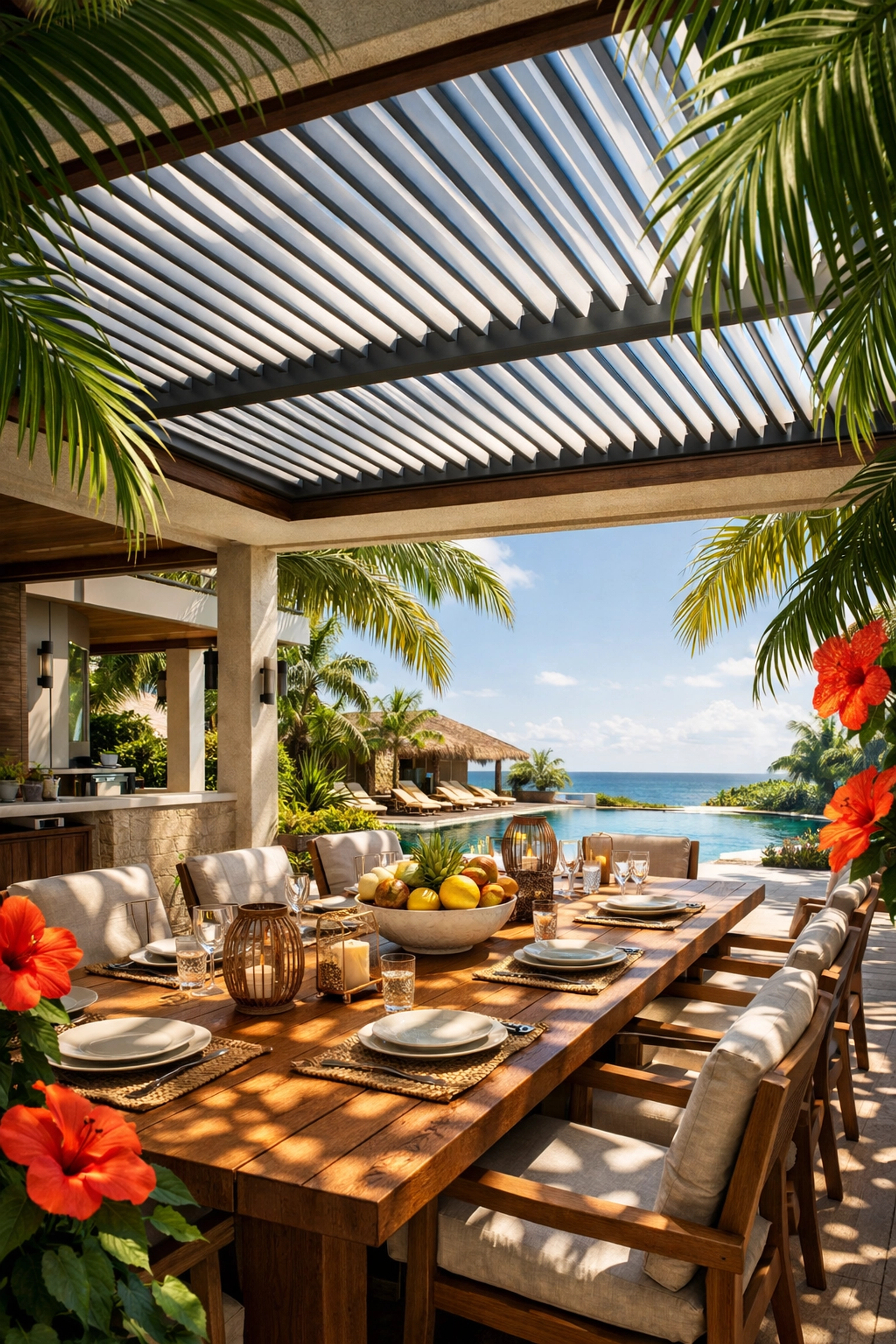
In a tropical sanctuary, static roofs can trap heat, creating a "greenhouse effect" underneath. Operable louvre systems are the premier solution for the Pacific because they provide active climate control.

Maximizing Natural Ventilation

The primary benefit of an operable louvre system is the ability to manage the Venturi effect. By slightly cracking the louvres open, hot air is allowed to rise and escape, while cooler breezes are pulled in from the sides. This natural convection can reduce the perceived temperature of an outdoor space by 5 to 8 degrees Celsius without the need for mechanical cooling.

Integrated Drainage Systems

Tropical rainfall is often horizontal and heavy. A high-performance louvre system must feature:

  • Deep-profile blades with internal "V" channels to catch water during the transition from open to closed.
  • 360-degree internal guttering hidden within the frame to direct water to internal downpipes.
  • High-torque motors capable of maintaining a tight seal under the pressure of heavy water weight.

High-Performance Outdoor Blinds: Managing the Elements

While a roof provides overhead protection, the low-angled sun and tropical winds require vertical solutions. Outdoor blinds in the Pacific are not merely for privacy; they are essential structural components.

Side-Channel Retention Systems

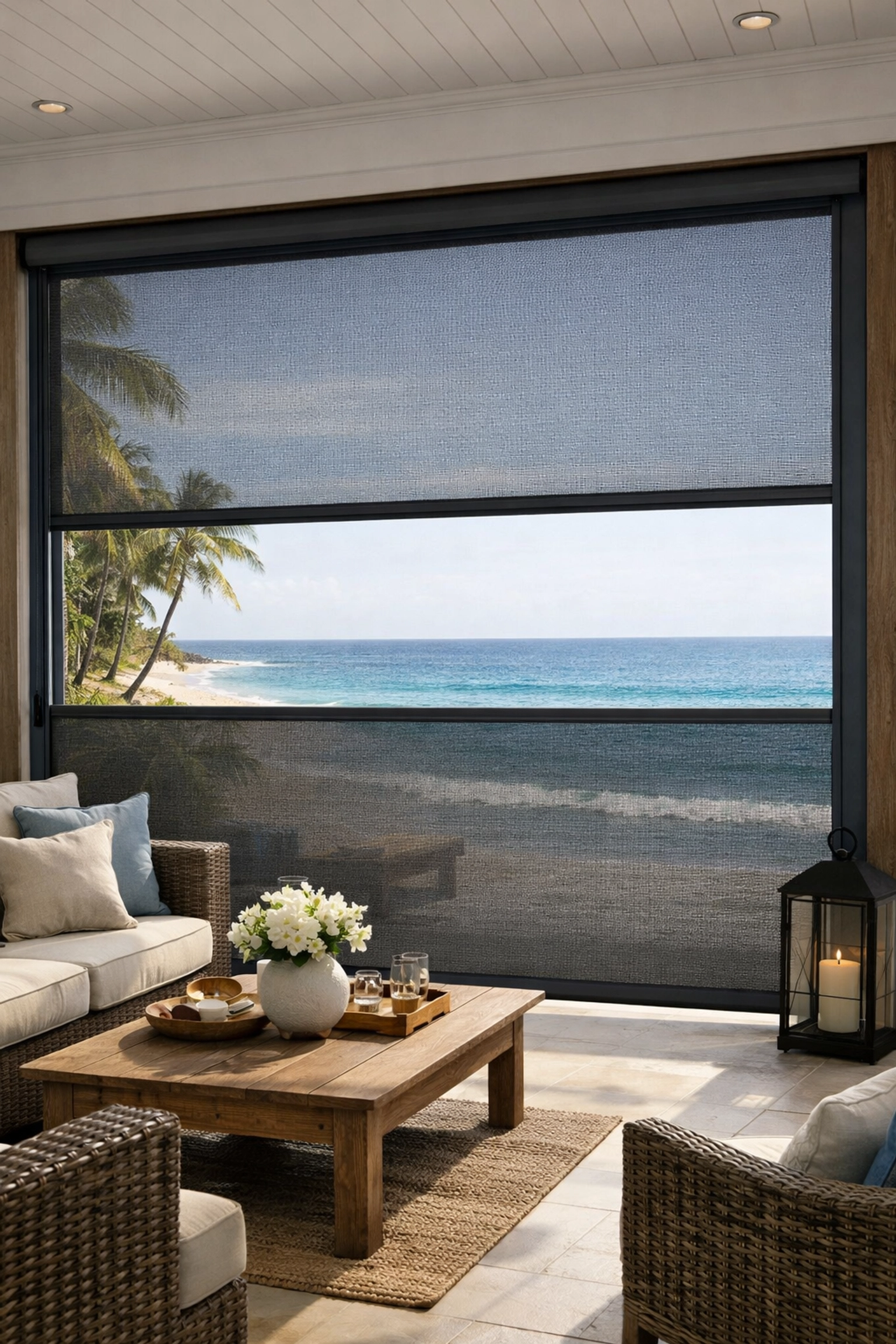
In wind-prone island environments, traditional "crank" blinds or loose-hanging fabrics will tear or damage the structure. Side-channel retention systems (often referred to as Ziptrak or similar track-guided systems) lock the fabric into a side track. This ensures:

  • Wind Resistance: Many systems are rated to withstand winds up to 60-80km/h when fully deployed.
  • Insect Protection: By creating a complete seal from top to bottom, these blinds turn an outdoor deck into a pest-free zone: critical for evening comfort in the islands.
  • Fabric Stability: The tension prevents the "clattering" sound of fabric hitting posts during a breeze.

Technical Fabric Selection

The choice of mesh is a balance between visibility and heat rejection.
  • Openness Factor: For the Pacific, a 5% or 1% openness factor is recommended. This allows enough airflow to prevent stagnation while blocking up to 95% of UV rays.
  • Soltis or High-Tenacity Polyester: Specify fabrics that are "solution-dyed." This means the color is integrated into the fiber itself, preventing the rapid fading common with surface-dyed materials under the intense Pacific sun.
Operable aluminum louvre roof providing shade and natural ventilation for a tropical outdoor dining area.

Engineering for Cyclonic Wind Loads

Pacific Island building codes often require structures to meet specific wind-loading criteria due to the prevalence of seasonal cyclones. When planning a shading installation, the engineering must be "site-specific."

Anchoring and Footings

A shading structure is only as strong as its connection to the ground. In many island resorts built on sandy or reclaimed soil, standard concrete pads may be insufficient.

  • Provide detailed site plans to engineers to determine if deep-pile footings are required.
  • Specify 316 Marine Grade Stainless Steel chemical anchors for fixing structures to existing slabs.

Automated Safety Features

For motorized systems, wind and rain sensors are essential. These sensors automatically retract awnings or close louvres when wind speeds exceed a pre-set threshold, protecting the investment even when the owners are not on-site.

The Design Aesthetic: Integrating Shading with the Landscape

Technical performance should not come at the expense of the "Sanctuary" feel. The goal is to blend modern engineering with the natural beauty of the Pacific.

Color Palettes

While dark charcoal and black are popular in temperate climates, they act as heat sinks in the tropics.

  • Consider lighter "Sand," "Shell," or "Anodic Silver" finishes. These reflect a higher percentage of solar radiation, keeping the metal structure cooler to the touch.
  • Incorporate timber-look aluminum finishes for the aesthetic of tropical hardwoods without the maintenance burden of oiling and sanding in a high-moisture environment.

Lighting and Atmosphere

Integration of LED perimeter lighting or "star-light" louvre strips allows the outdoor sanctuary to transition from a daytime sun-shelter to an evening entertainment hub.
  • Ensure all electrical components are IP67 rated for water ingress protection.
  • Hide all cabling within the structural extrusions to maintain clean, architectural lines.
Track-guided charcoal mesh outdoor blinds reducing sun glare on a beachside tropical veranda.

Maintenance Requirements in Salt-Rich Environments

Even the highest-quality aluminum systems require a maintenance schedule to reach their 25+ year lifespan in the Pacific.

  1. Bi-Monthly Washdowns: Use fresh water to rinse salt crystals from pivot points and tracks. If salt is allowed to sit and crystallize, it acts as an abrasive, wearing down seals and coatings.
  2. Clear Gutter Channels: Tropical foliage and heavy rain can lead to debris buildup. Ensure internal gutters are checked and cleared quarterly to prevent water backflow into motor housings.
  3. Lubricate Moving Parts: Use dry-film lubricants (PTFE) on tracks and hinges. Avoid wet oils or greases, which attract sand and salt, creating a grinding paste.

Technical Checklist for Pacific Island Projects

When sourcing or specifying shading systems for a tropical project, use the following checklist to ensure the system is fit for purpose:

  • Structural Material: 6063-T5 Grade Aluminum.
  • Fasteners: Exclusively 316 Grade Stainless Steel (A4-grade).
  • Coating: Marine-grade powder coat (80μm+).
  • Wind Rating: Certified to local wind zone requirements (e.g., AS/NZS 1170.2).
  • Fabric: Solution-dyed acrylic or high-tenacity PVC-coated polyester.
  • Electronics: IP67 rated motors and sensors with surge protection.

Summary of Key Takeaways

Designing for the Pacific Islands is a balance of resilience and comfort.

  • Prioritize Materials: Only use high-grade aluminum and marine-certified coatings to combat salt air corrosion.
  • Embrace Airflow: Use operable systems like louvres to manage thermal comfort through natural ventilation.
  • Seal the Perimeter: Integrate side-channel blinds to manage wind, glare, and insects effectively.
  • Engineer for Extremes: Ensure all structures are anchored and rated for high wind speeds and heavy rainfall.

By focusing on these technical pillars, designers can create outdoor sanctuaries that provide a lifetime of utility and beauty, standing strong against the most challenging tropical elements.

Return to insights

Charities We Support

cart
20ft double door containers (used) secure storage solution. fresh offer plaza online shopping store for great products. heavy equipment transport broward county fl.