
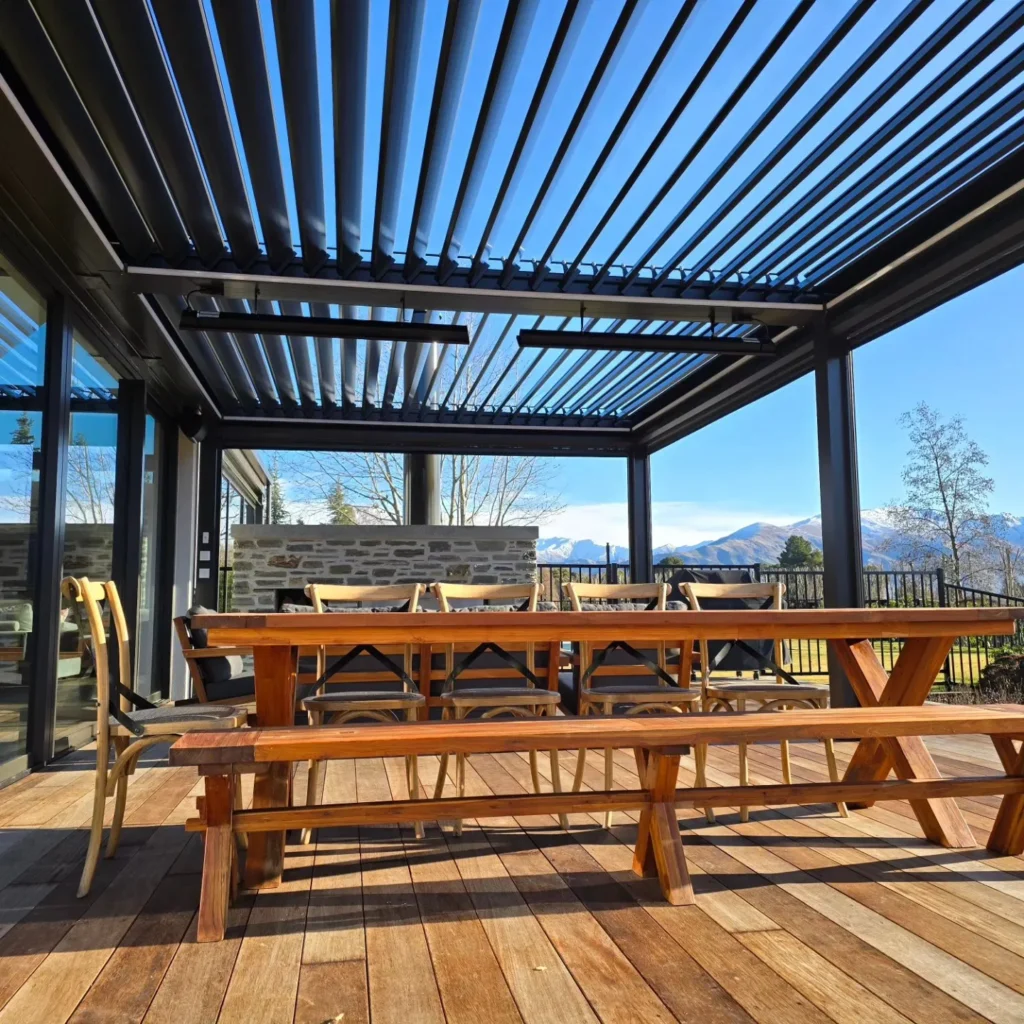
There is a specific type of silence that falls over a homeowner about six months after they’ve completed a major deck renovation. It usually happens on a sweltering February afternoon when the sun is beating down so hard the timber is hot enough to fry an egg, or during a sudden November downpour that sends guests scurrying inside, clutching their plates of half-eaten BBQ.
In the industry, we call this "Renovator's Regret." It’s the realization that while the deck looks fantastic, it’s only actually comfortable for about 20% of the year. The immediate solution is usually to look into louvre systems, only to discover that installing them after the deck is finished is significantly more complex, invasive, and expensive than if they had been planned from day one.
If you are currently in the planning stages of an outdoor area, understanding why the sequence of construction matters is the best way to protect your investment.
The most common mistake in deck design is treating the deck and the overhead cover as two separate, unrelated projects. From a structural engineering perspective, they are inextricably linked.
Aluminum louvres are durable, high-end structures, but they are not weightless. A standard louvre system requires robust support to manage both its self-weight (dead load) and the significant force of wind (live load). When you plan a deck without a louvre system in mind, the subframe is typically designed only to support the weight of the timber and the people standing on it.
If you decide to add a louvre system later, you will often find that the deck’s joists and bearers aren't positioned to take the concentrated load of the louvre posts. This leads to a frustrating process:
By planning ahead, your builder can integrate the louvre systems posts directly into the deck’s primary structure, ensuring a much cleaner look and a far more stable result. This also allows the deck to be built neatly around the posts from the outset, creating a far more seamless finish than cutting openings into a completed deck later.
Just as importantly, early coordination makes it easier to conceal functional infrastructure inside the posts themselves. Internal water exits and drainage components can be hidden within the post cavities, helping maintain clean deck lines and avoiding the exposed outlets and add-on pipework that often come with retrofit installations.

Modern outdoor living isn't just about shade; it’s about creating a "room" outdoors. This usually involves lighting, heaters, and motorized louvres.
Motorized aluminum louvres require a power source. If you plan this during the deck build, an electrician can run conduits under the joists and up through the inside of the louvre posts before the decking boards are ever laid. This results in a completely "wireless" look where all cables are hidden.
When you install louvres after the deck is finished, you are left with two options:
Effective drainage is another area where early planning pays off. Integrated louvre systems feature internal guttering that funnels water through the posts. If you've planned your deck accordingly, the deck layout can be detailed around those posts from the start, which helps the structure read as one unified build rather than a roof added later. It also creates a practical opportunity to hide water exits and drainage runs inside the posts for a cleaner, more resolved finish.
If you've planned your deck accordingly, that water can then be directed into a proper soak-hole or the house’s existing stormwater system. Without prior planning, you might find water dumping directly onto your deck boards or pooling near the house foundation.
There is a distinct visual difference between a project that was designed as a whole and one that was pieced together over time. When a louvre system is designed alongside the deck, you can achieve architectural symmetry.
When you build the deck first, you are often forced to place louvre posts in awkward positions to avoid existing obstacles like stairs, planters, or handrails. This can lead to "the bolt-on look," where the louvre system looks like an afterthought rather than a deliberate design choice.
By integrating the design early, you can:
For more on how integrated systems are changing modern design, you might find the evolution of outdoor systems interesting.
It is a common misconception that splitting the project into two phases: deck now, louvres later: is a good way to manage a budget. In reality, this approach often leads to a higher total spend.
Every time a trade team (builders, electricians, roofers) has to come to your site, there is a mobilization cost. By doing everything at once, you only pay for site setup, scaffolding, and council inspections once.
Rework is the greatest enemy of any renovation budget. Every hour a builder spends removing finished decking boards to install a post is an hour you are paying for twice: once to install the board originally, and once to remove and replace it.
Furthermore, if you are looking at DIY-friendly options, the ease of installation is massively increased when you aren't fighting against an existing, unyielding structure.
To avoid the "Renovator's Regret," ask your designer or builder the following questions before you sign off on your deck plans:
A deck is more than just a surface to walk on; it is the foundation of your outdoor lifestyle. While it might be tempting to focus solely on the timber or composite boards underfoot, the true utility of the space comes from how you manage the environment above.
By incorporating louvre systems into your initial design, you ensure structural integrity, hide unsightly cables, and create a cohesive aesthetic. Most importantly, you avoid the costly rework and architectural compromises that come with trying to fix a space that wasn't planned for all-weather use.
Key Takeaways:


