Description
Pickleball didn’t just grow fast by accident — it fits the way people live now.
While many sports struggle with participation, space constraints, ageing populations, and short attention spans, pickleball quietly solved problems most sports never addressed.
This is why it’s becoming one of the most strategically valuable sports for communities, developers, and hospitality venues worldwide.
A Sport That Matches Real-World Space Constraints
Modern environments are smaller, denser, and more multifunctional than ever before.
Pickleball thrives in these conditions.
-
A pickleball court requires significantly less space than tennis
-
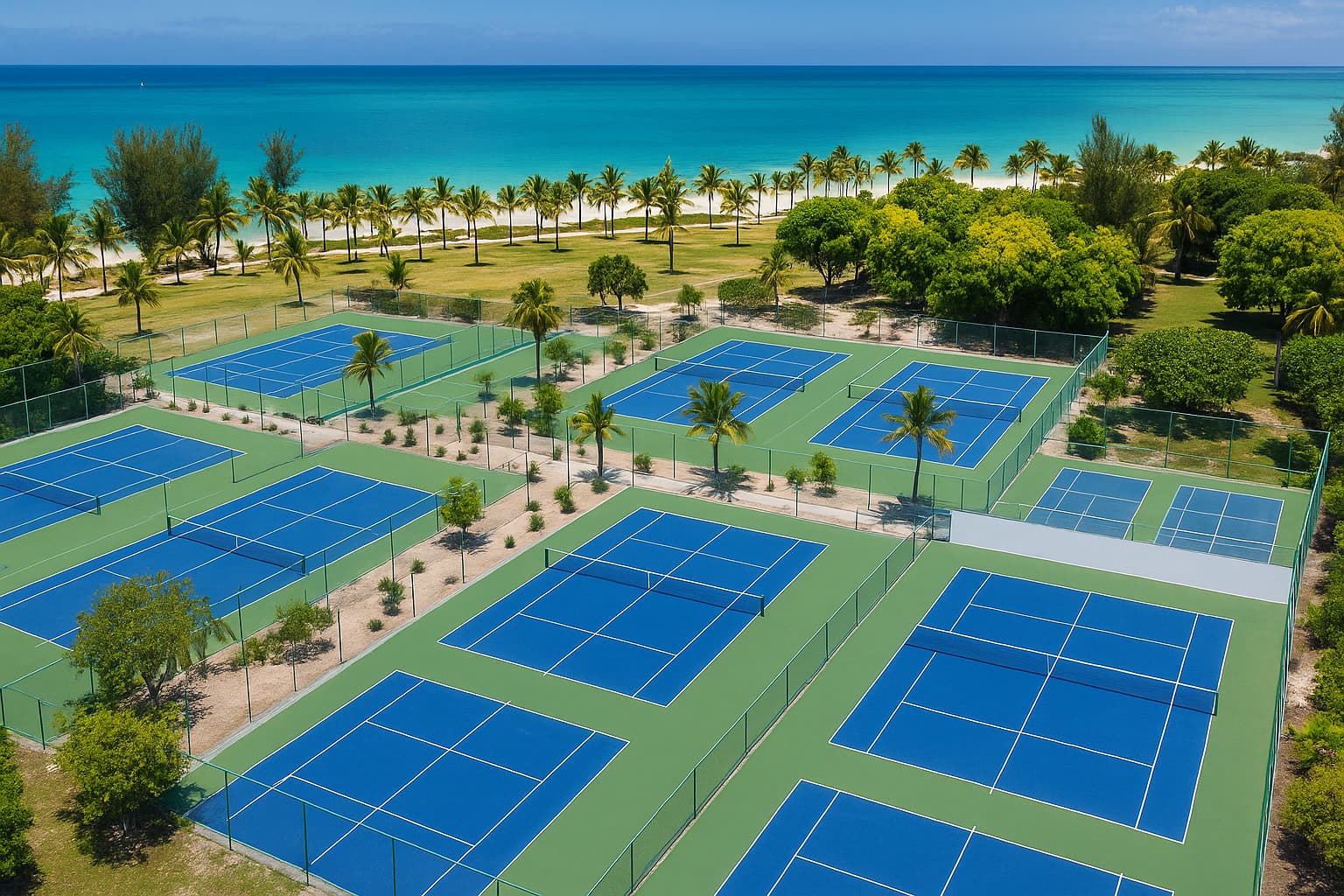
Courts can be installed on rooftops, car parks, container precincts, and shared recreation zones
-
Multiple courts fit into areas previously suitable for only one tennis court
-
Surfaces work on concrete, asphalt, or modular PP tile systems
This makes pickleball ideal for:
-
Urban developments
-
Retirement villages
-
Mixed-use precincts
-
Schools with limited land
-
Hospitality venues and social hubs
Pickleball isn’t competing for space — it fits into leftover space.
Designed for Instant Participation, Not Perfection
Most traditional sports have a steep learning curve. Pickleball doesn’t.
That’s intentional.
Within 10 minutes, most people can rally, score points, and enjoy the game — without coaching, fitness prep, or prior experience.
Why this matters:
-
New players don’t feel intimidated
-
Groups of mixed ages can play together immediately
-
Casual players don’t “drop out” after one bad session
-
Spectators quickly understand what’s happening
Pickleball removes the friction that stops people from starting.
The Social Geometry of Pickleball Courts
Pickleball courts naturally create social interaction — even without organised events.
-
Courts are small, so players are close together
-
Games are short, encouraging rotation and conversation
-
Doubles play is the norm, not the exception
-
Waiting players naturally gather courtside
This creates an environment where:
-
Strangers talk
-
Groups merge
-
Spectators become players
-
Players stay longer
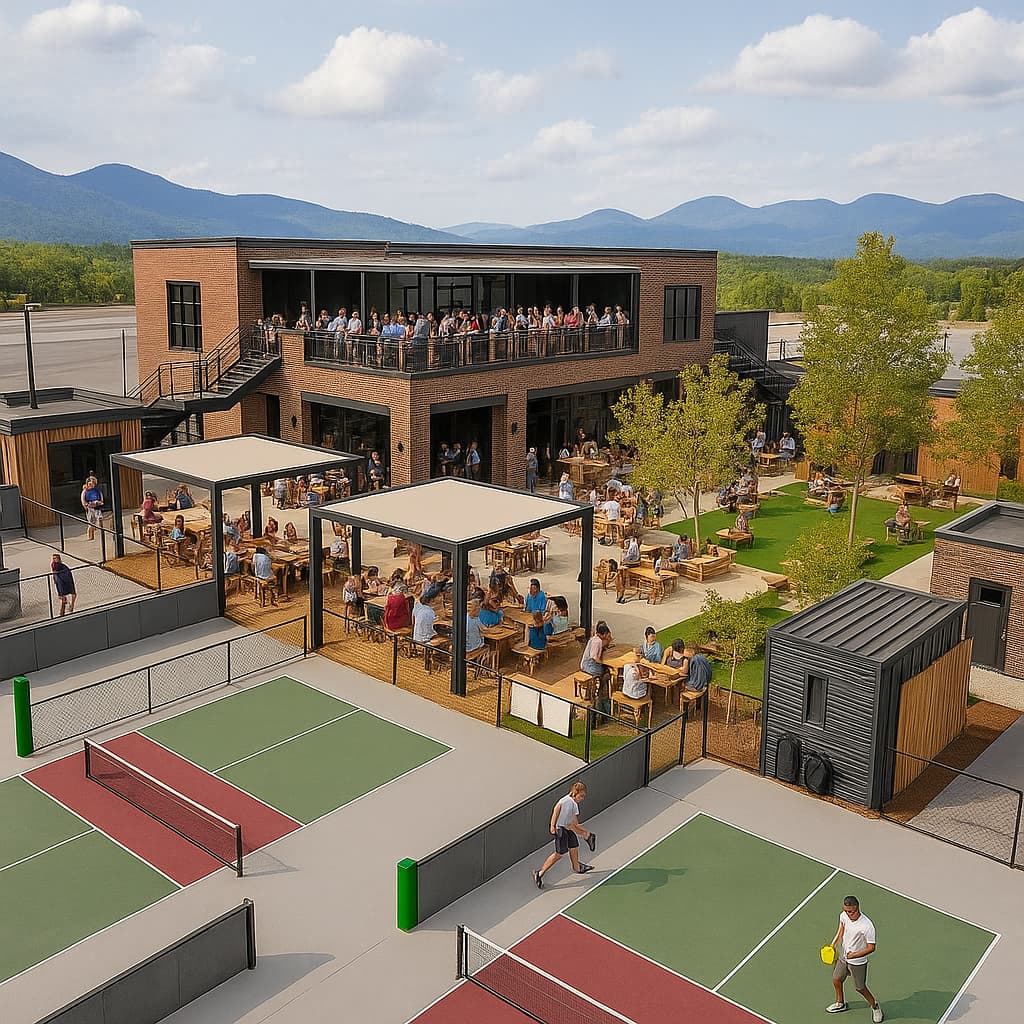
This is why pickleball integrates so well with food, drink, and social spaces.
Why Pickleball Works in Bars, Resorts, and Hospitality Venues
Pickleball isn’t just a sport — it’s an activity anchor.
For hospitality venues, it delivers:
-
Longer dwell times
-
Repeat visitation
-
Group bookings and events
-
Off-peak activation
-
Strong social media visibility
Players don’t come for one game — they come for the experience around it.
This is why pickleball is increasingly paired with:
-
Container bars
-
Outdoor kitchens
-
Shade structures and louvre systems
-
Lighting for night play
-
Seating and viewing areas
It turns a venue into a destination, not just a place to play.
Low Impact, High Frequency = Long-Term Engagement
Pickleball is physically accessible without being boring.
-
Lower joint impact than tennis or basketball
-
Shorter bursts of play
-
Encourages regular, repeat sessions
-
Suitable for long-term participation
This means players don’t “age out” of the sport — they stay involved for decades.
From a community or development perspective, that’s powerful.
A Sport That Scales With Demand
Pickleball works just as well with:
-
One backyard court
-
Four courts at a school
-
Eight courts at a community hub
-
Twenty-plus courts at a commercial venue
Courts can be added over time, relocated, or reconfigured.
This modular scalability is rare in sport infrastructure — and highly attractive to councils and developers.
Pickleball Is Not Replacing Sports — It’s Connecting Them
Pickleball isn’t competing with tennis, basketball, or padel.
It complements them.
Many facilities now combine:
-
Pickleball courts
-
3×3 basketball
-
Multi-use sport tiles
-
Covered social zones
This creates active spaces that work all day, all ages, and all seasons.
Why Pickleball Is Still at the Beginning
Despite its growth, pickleball is still early in its lifecycle in New Zealand and the Pacific.
The next phase isn’t just more players — it’s:
-
Better-designed spaces
-
Integrated hospitality concepts
-
Covered and all-weather courts
-
Lighting and night play
-
Purpose-built pickleball precincts
Pickleball isn’t just a sport trend.
It’s a blueprint for how modern recreation spaces are evolving.