Description
Outdoor living in India is evolving quickly. As urban density increases and residential and commercial buildings place greater emphasis on balconies, terraces, rooftops, and semi-outdoor areas, outdoor blinds are becoming a core architectural feature rather than an optional extra.
Once limited to luxury homes and hospitality projects, outdoor blinds — including zip-track and guided systems such as Titan-style outdoor blinds — are now gaining traction across apartments, mixed-use developments, cafés, resorts, and commercial buildings.
This article explores why the outdoor blinds market in India is growing, the key drivers behind demand, and where the biggest opportunities lie.
The Indian Outdoor Blinds Market at a Glance
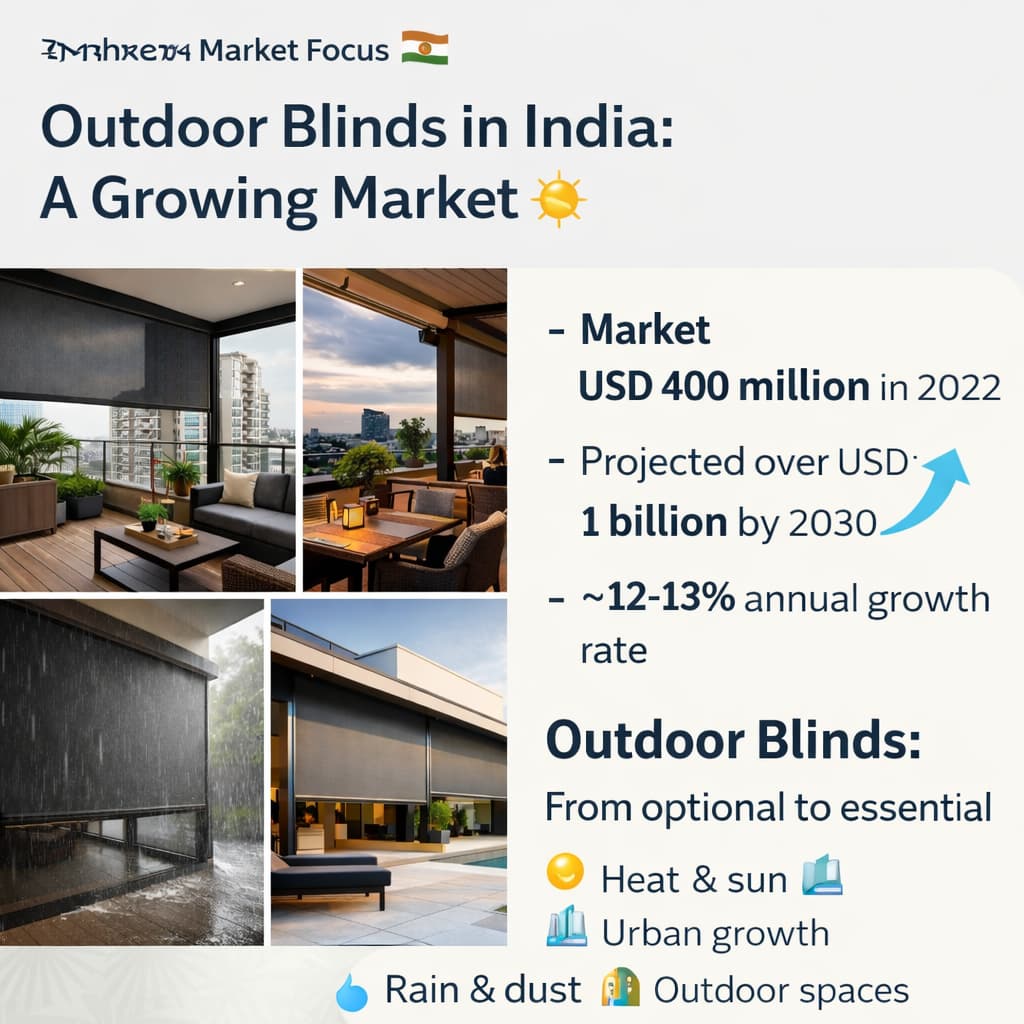
India’s broader blinds and shades market has entered a strong growth phase, supported by construction activity, rising disposable incomes, and lifestyle-driven design choices.
Key market indicators:
The India blinds and shades market is forecast to grow at over 12% CAGR through 2030
The external and outdoor blinds segment is one of the fastest-growing categories within the sector
Asia-Pacific is now the fastest-expanding global region for outdoor shading solutions
As outdoor areas become more valuable in dense cities like Mumbai, Bengaluru, Delhi NCR, and Chennai, solutions that provide sun protection, weather control, and privacy are seeing sustained demand.
Why Outdoor Blinds Are Gaining Popularity in India
1. Urban Density and Balcony-Centric Living
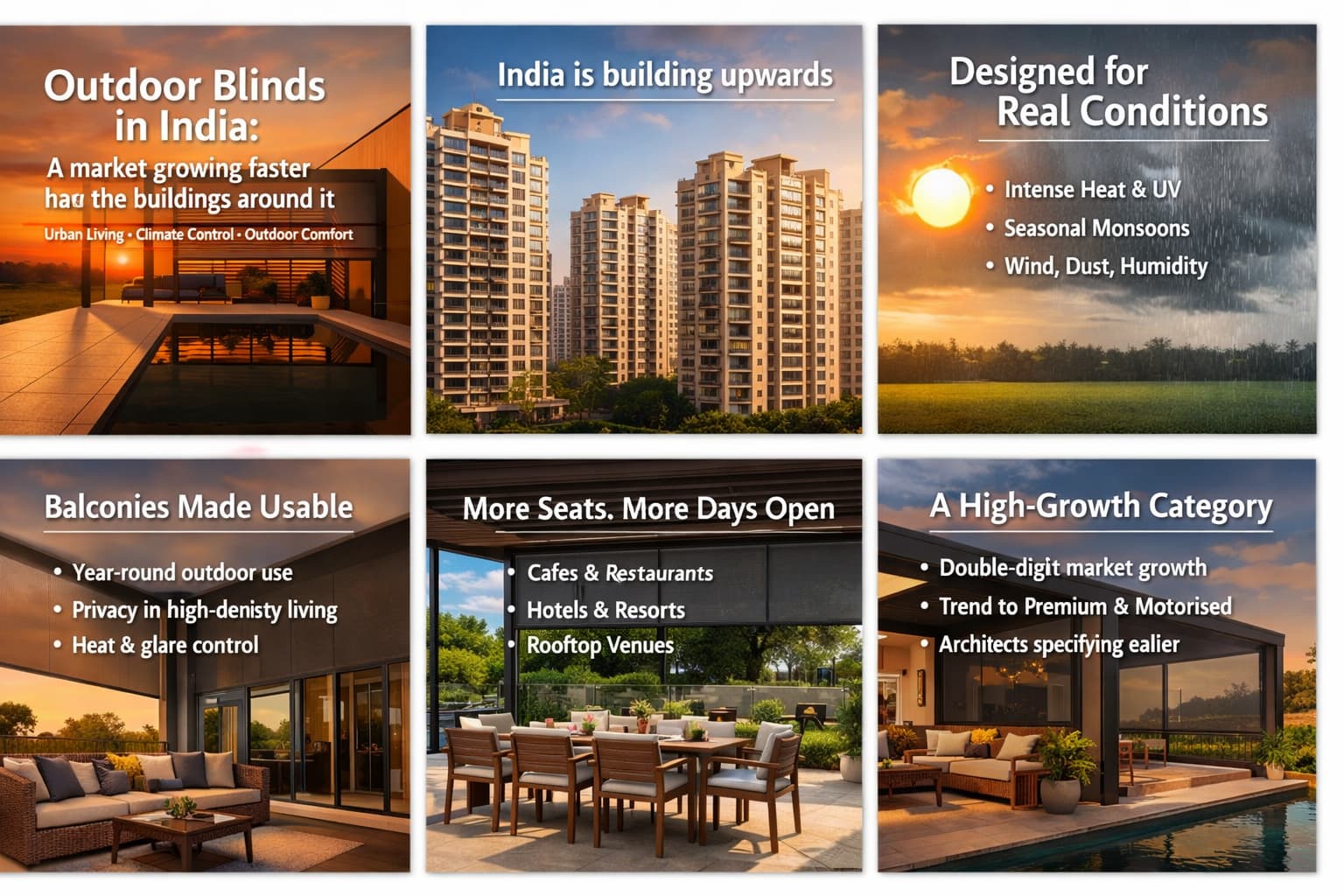
With limited land availability, Indian cities are building upwards rather than outwards. Balconies, terraces, and podium decks are now essential extensions of living spaces.
Outdoor blinds allow these areas to be:
Used year-round
Protected from harsh sun and monsoon rain
More private in high-density developments
This makes them highly attractive for both homeowners and developers.
2. Climate Conditions Demand Functional Shading
India’s climate plays a major role in adoption:
Intense heat and UV exposure
Seasonal monsoons
High humidity in coastal regions
Outdoor blinds offer:
Solar heat reduction
Controlled airflow
Rain and wind protection
Improved thermal comfort without full enclosure
Zip-guided outdoor blinds in particular are well suited to windy and exposed locations.
3. Growth of Outdoor Hospitality Spaces
Cafés, restaurants, hotels, and resorts across India are investing heavily in outdoor seating areas.
Outdoor blinds help hospitality operators:
Increase usable seating capacity
Operate in changing weather
Maintain visual openness while managing sun and rain
Reduce reliance on permanent walls or glazing
This flexibility is driving consistent demand in the commercial sector.
4. Shift Toward Premium and Smart Solutions
There is a clear move away from basic fabric shades toward engineered outdoor blind systems, including:
Zip-track guided blinds
Motorised operation
Wind-rated and weather-resistant fabrics
Integration with pergolas and louvre systems
Homeowners and developers increasingly value durability, aesthetics, and automation over low-cost temporary solutions.
Titan-Style Outdoor Blinds: Why They Fit the Indian Market
Heavy-duty outdoor blinds similar to Titan-style systems align well with India’s requirements:
Key advantages:
Side-guided tracks for improved wind resistance
Suitable for large balcony and terrace openings
Compatible with motorised operation
Clean, architectural appearance
Designed for long-term outdoor exposure
These systems are particularly effective when paired with:
Pergolas and louvre roofs
Covered balconies
Rooftop entertainment areas
Commercial outdoor seating zones
Residential vs Commercial Demand
Residential Applications
Apartment balconies
Villas and townhouses
Rooftop lounges
Courtyard enclosures
Commercial Applications
Restaurants and cafés
Hotels and resorts
Office breakout spaces
Mixed-use developments
Both segments are growing, with developers increasingly specifying outdoor blinds at the design stage rather than leaving them as aftermarket additions.
Long-Term Outlook for Outdoor Blinds in India
Looking ahead, the Indian outdoor blinds market is expected to benefit from:
Continued urbanisation
Rising middle-class income levels
Climate-responsive building design
Increased focus on outdoor lifestyle spaces
Adoption of modular and flexible architectural solutions
Outdoor blinds are no longer viewed purely as shading products — they are becoming part of integrated outdoor living systems.