Description
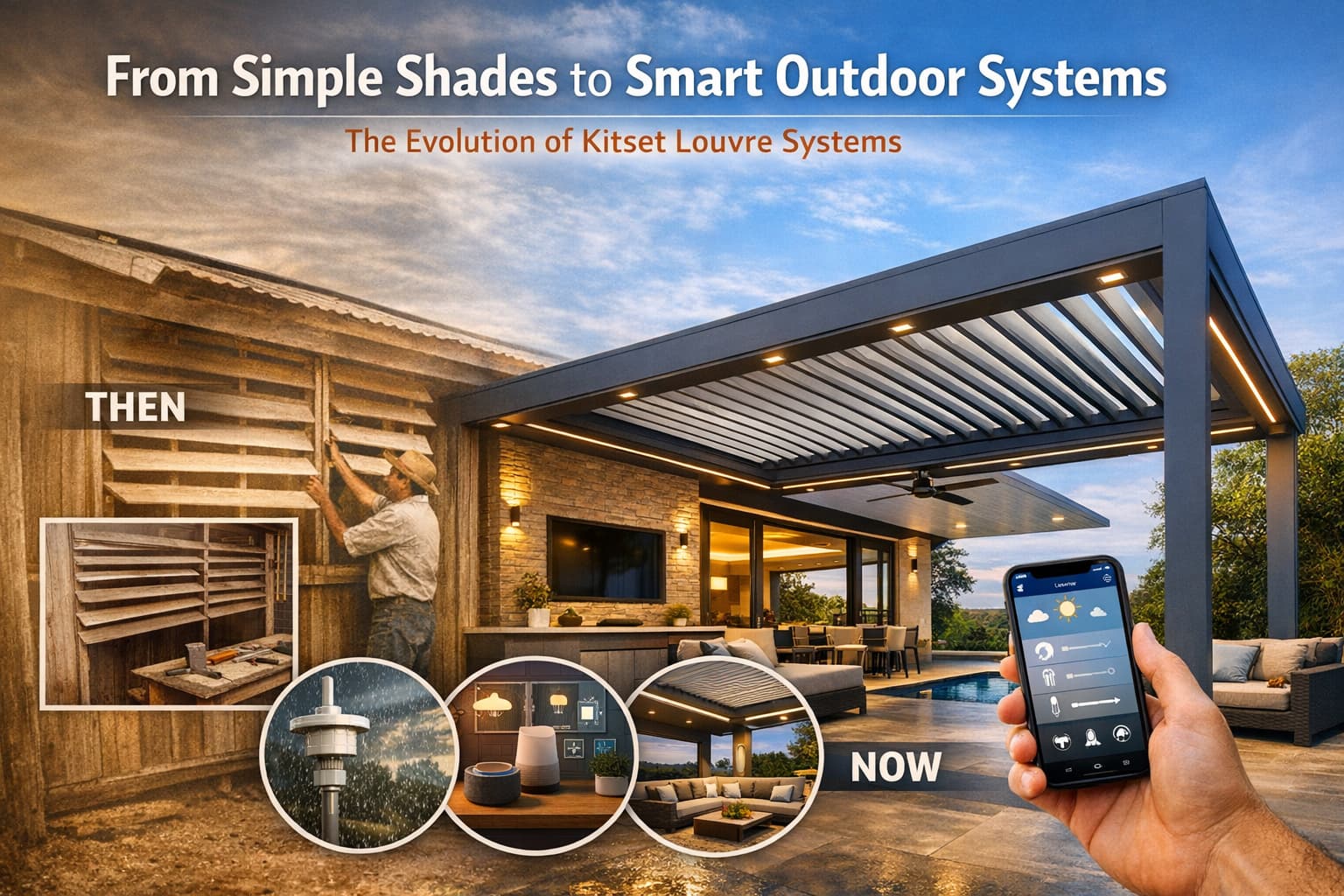
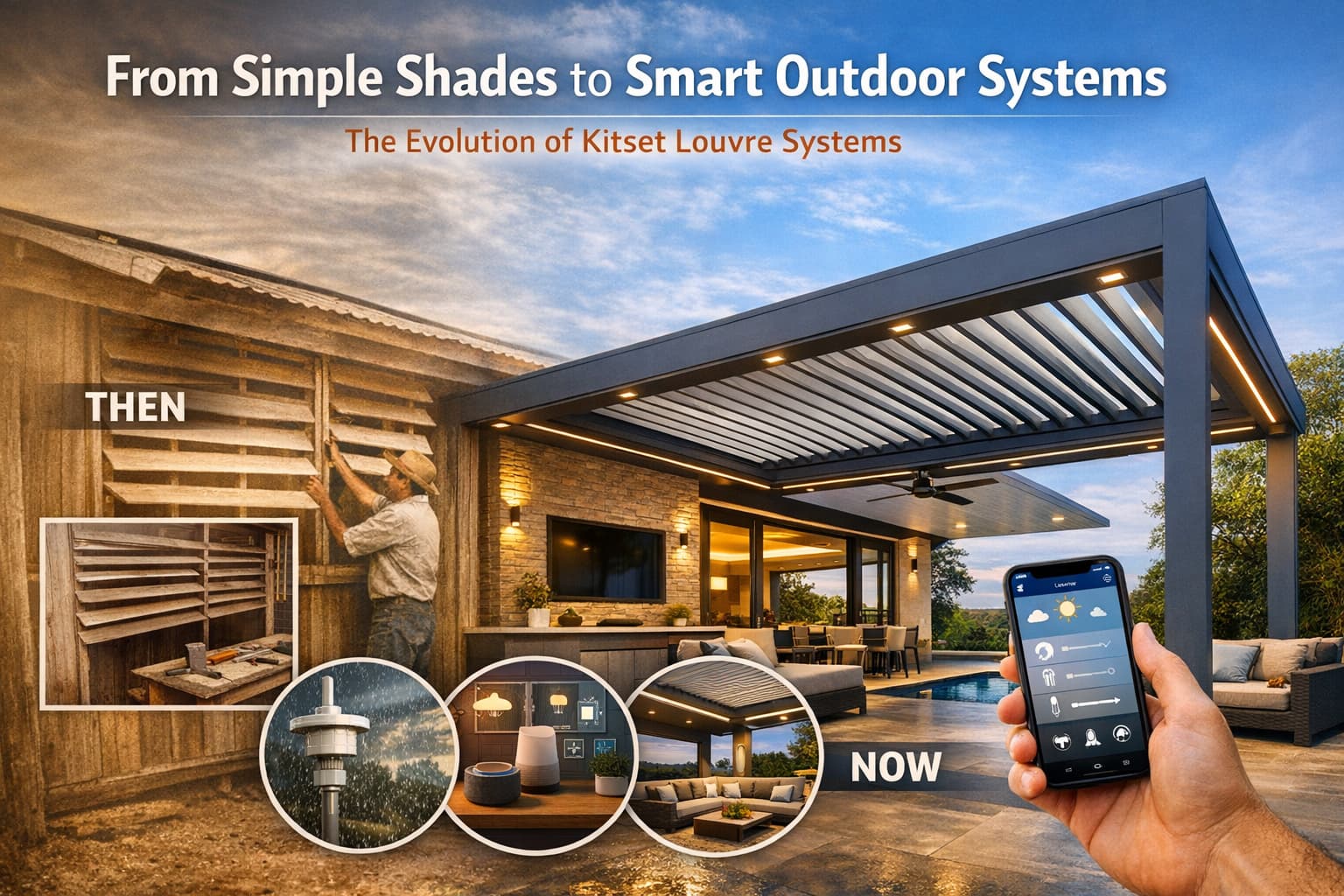
Kitset louvre systems have undergone a quiet but significant transformation over the past few decades. What began as simple, functional shading solutions have evolved into highly engineered architectural systems capable of reshaping how outdoor spaces are designed and used.
Today, kitset louvre systems sit at the intersection of architecture, technology, and lifestyle design — offering flexibility, durability, and control that early systems could never deliver.
This article explores where kitset louvre systems started, how they evolved, and what they are capable of today.
The Early Days: Simple, Fixed Shade Solutions
The earliest louvre systems were born from necessity rather than lifestyle.
Originally used in warmer climates, louvres were designed to:
-
Reduce direct sun exposure
-
Allow airflow through buildings
-
Provide basic weather protection
These early systems were typically made from timber or basic metal profiles and were almost always fixed in position. Once installed, the angle of the blades rarely changed.
They were effective, affordable, and simple — but they offered little flexibility.
At this stage, louvre systems were purely functional building elements, not architectural features.
The Shift to Kitset Systems: Accessibility and Modularity
As outdoor living became more intentional — patios, decks, alfresco dining, and entertainment areas — demand grew for solutions that were easier to install and more adaptable.
This led to the rise of kitset louvre systems.
Kitset systems introduced:
-
Pre-engineered components
-
Modular designs
-
On-site assembly rather than full custom fabrication
For the first time, louvre roofs became accessible beyond bespoke architectural projects. Builders, installers, and even capable homeowners could assemble structured outdoor covers without starting from scratch.
Early kitsets were still largely manual or fixed, but they marked an important shift:
outdoor shade became a repeatable, scalable product.
The Technology Turning Point: Movement and Automation
The next major evolution came with operability.
Rather than static blades, manufacturers began introducing:
-
Manually adjustable louvres
-
Motorised blade rotation
-
Open-and-close roof systems
This fundamentally changed how louvre systems were used.
Instead of choosing between shade or sun, users could now:
-
Adjust blade angles throughout the day
-
Close the roof during rain
-
Open fully for airflow and light
Outdoor spaces became more dynamic — capable of responding to changing weather rather than being limited by it.
Modern Kitset Louvre Systems: What They Can Do Today
Today’s kitset louvre systems are no longer simple roof structures. They are integrated outdoor platforms designed for year-round use.
Smart Control & Automation
Modern systems can now include:
-
Remote and wall-mounted controls
-
Smartphone app integration
-
Scheduled opening and closing
-
Weather-responsive automation
Rain, wind, and sun sensors allow systems to operate automatically — closing during sudden showers or adjusting blades based on sun angle.
Structural Strength and Engineering
Advances in materials and engineering have dramatically improved system capability.
Modern kitset louvre systems now feature:
-
High-grade aluminium construction
-
Improved load handling and wind resistance
-
Larger unsupported spans
-
Integrated drainage systems
This allows systems to be used in:
-
Coastal environments
-
High-wind regions
-
Commercial hospitality spaces
-
Large residential outdoor areas
What was once suitable only for small patios can now cover expansive decks and outdoor dining zones.
Design Integration and Customisation
A major shift has been aesthetic as well as technical.
Today’s systems can be customised with:
-
Architectural colour finishes
-
Integrated LED lighting
-
Outdoor heaters and ceiling fans
-
Side blinds or sliding glass enclosures
Rather than appearing as add-on structures, modern louvre systems are designed to blend seamlessly with the building itself.
From Add-On to Architectural Element
Perhaps the most important evolution isn’t technological — it’s conceptual.
Kitset louvre systems are no longer seen as optional extras.
They are increasingly designed at the same time as the building.
Architects and designers now treat them as:
-
Permanent outdoor rooms
-
Extensions of indoor living
-
Structural elements that add long-term value
This shift has pushed manufacturers to raise standards in engineering, durability, and finish — redefining what “kitset” really means.
Looking Ahead: The Next Phase of Louvre Systems
As outdoor living continues to grow, kitset louvre systems are likely to evolve further with:
-
Greater smart-home integration
-
Energy-conscious operation
-
More refined architectural detailing
-
Continued expansion into commercial and multi-use developments
What started as a simple shading solution has become a sophisticated, modular building system — capable of transforming how outdoor spaces function and feel.
Kitset louvre systems haven’t just improved — they’ve matured.
And in doing so, they’ve reshaped expectations of what outdoor architecture can deliver.