
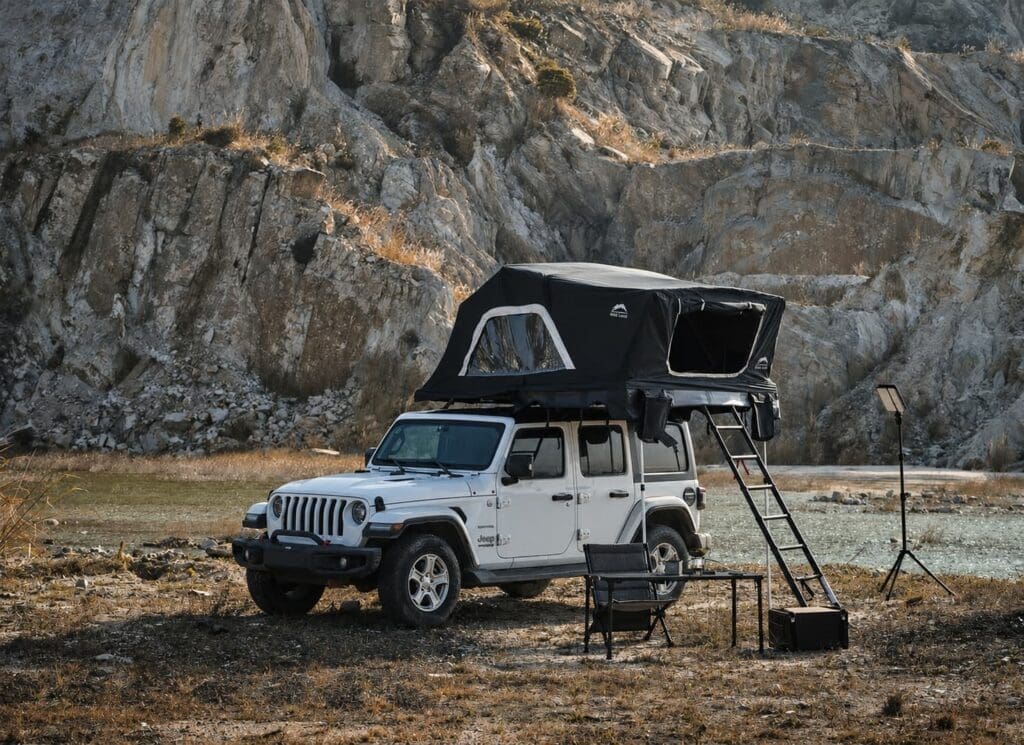
The landscape of outdoor exploration has undergone a significant shift. Traditional ground-based camping is increasingly being replaced by vehicle-integrated ecosystems: highly engineered solutions that turn a standard vehicle into a self-contained mobile basecamp. This evolution is driven by advancements in material science, mechanical engineering, and a focus on reducing "setup friction."
For the modern adventurer, the goal is no longer just "sleeping outdoors," but rather the implementation of a technical system that offers weather resistance, structural safety, and rapid deployment. This guide explores the engineering principles behind modern rooftop tents, modular shelters, and vehicle-integrated equipment.
Rooftop tents represent the pinnacle of vehicle-integrated design. Unlike ground tents, which are subject to terrain irregularities and ground moisture, an RTT utilizes the vehicle’s roof rack system as a stable, elevated foundation.
The primary distinction in RTT engineering lies in the outer structure. Hard-shell rooftop tents are typically constructed from aerospace-grade aluminium or reinforced fiberglass. The use of aluminium honeycomb panels is common in premium designs, providing an exceptional strength-to-weight ratio that can support significant snow loads or additional gear mounted on top of the shell.
Technical Advantages of Hard-Shell Systems:
Soft-shell or Fold-out Systems prioritize footprint. By utilizing a folding floor base, these systems can provide a sleeping area much larger than the vehicle's roof dimensions. While they have a larger aerodynamic profile, they are often lighter and more accessible for mid-sized SUVs.

The ease of setting up a modern camp is a result of mechanical assistance. Modern Automatic Pop-Up Rooftop Tents rely on calibrated gas struts. These components are engineered to provide a specific amount of "lift assist," counteracting the weight of the upper shell so that the user only needs to release a set of latches for the tent to open automatically.
In high-end technical applications, electronic actuators are replacing manual or gas-assisted systems. These 12V-powered mechanisms allow for hands-free deployment via remote control, ensuring that the fabric is tensioned correctly every time, which is critical for water runoff and wind stability.
The integrity of a vehicle-integrated camping system is only as good as the textiles used in its construction. Modern systems have moved away from basic canvas toward sophisticated synthetic blends and coatings.
Most high-performance systems utilize a Poly-Cotton Ripstop fabric with a high denier rating (typically 200D to 600D). "Ripstop" refers to a reinforcement technique where thick threads are interwoven at regular intervals in a crosshatch pattern, preventing small punctures from spreading.
Key Technical Coatings:
For four-season capability, engineering must account for thermal conductivity. Internal insulation liners or dual-layer fabric walls create an "air gap" that acts as a thermal barrier. This prevents condensation: a common issue in small-volume tents: by maintaining a temperature differential between the interior and the cold exterior shell.
A vehicle-integrated system is incomplete without a perimeter shelter. The 270-degree wraparound awning is a feat of cantilever engineering. These systems are designed to pivot from the rear corner of the vehicle, providing coverage over both the side (living area) and the rear (cooking/cargo area).
The primary engineering challenge for a 270-degree awning is the hinge assembly. Because these units often aim to be "freestanding" (not requiring vertical poles in low-wind conditions), the hinge must support the entire weight of the fabric and the aluminium arms. Manufacturers use heavy-duty stainless steel or reinforced aluminium pivots to handle the rotational torque.
Modular Living Space Expansion:
Modern shelter systems are often designed with interchangeable annexes. Using high-strength zippers or sail-track systems, users can attach vertical walls to the awning, creating a fully enclosed room. This modularity allows the system to scale based on the duration of the stay or the severity of the weather.

Engineering a camping system requires a deep understanding of the vehicle's physical limits. There are two critical weight ratings that every system designer and user must consider:
Modern RTTs are designed with integrated mounting tracks (T-slots) in the aluminium base. These tracks allow for universal fitment to various roof rack brands, ensuring the load is distributed evenly across the vehicle’s strongest structural points.
The "ecosystem" approach to camping engineering includes the integration of essential utilities. Instead of relying on portable lanterns, modern rooftop tents and awnings often feature integrated LED lighting systems.
These are typically built into the internal frame or the awning arms. They utilize low-draw 5V (USB) or 12V (Cigarette/Anderson) connections. High-end models incorporate dimmable strips and "Amber Mode" settings to reduce the attraction of insects: a technical solution to a common environmental variable.

The shift toward vehicle-integrated systems has also revolutionized food preparation. Modular camp kitchens are now engineered as slide-out or fold-down units.
Engineering Highlights:

The modern vehicle-integrated camping system is defined by its transition from "gear" to "infrastructure." The engineering priorities are clear:
By focusing on these technical pillars, modern outdoor systems provide a level of safety, comfort, and efficiency that was previously only available in heavy, permanent RV conversions. The result is a more resilient and capable basecamp that allows the adventurer to focus on the journey rather than the setup.
Key Takeaways:


