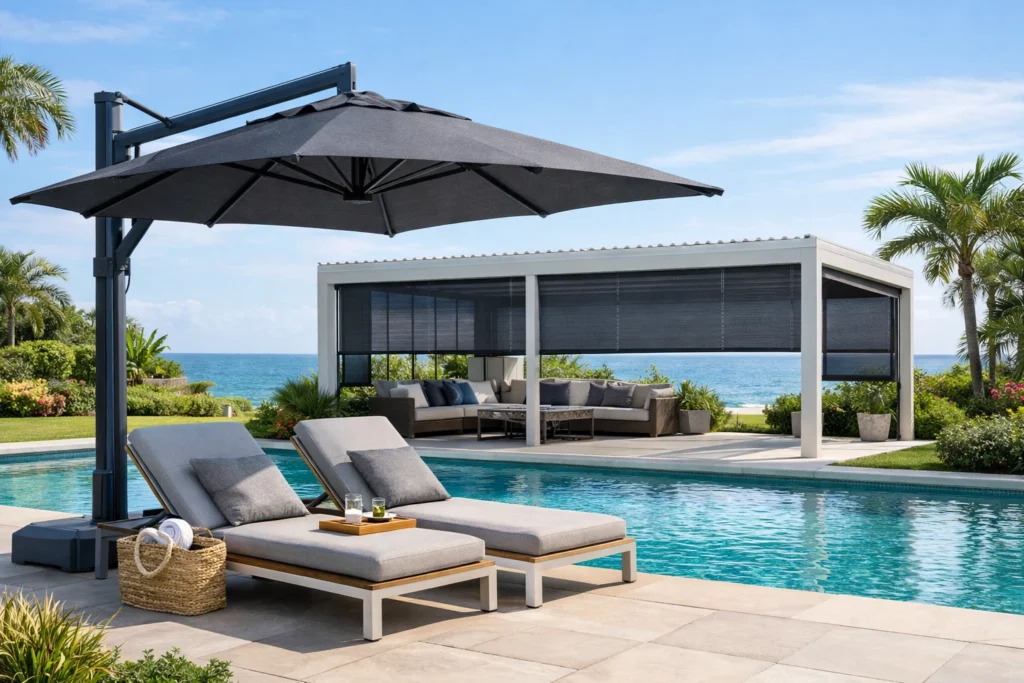
If you’ve started looking into pergolas, louvre roofs, or outdoor shading systems, you’ve probably noticed one thing straight away:
The pricing varies massively.
Some options look surprisingly cheap. Others are priced closer to a full home renovation.
So the real question becomes:
What’s actually worth it?
To answer that properly, you need to understand where the market is heading—and why mid-range outdoor systems are becoming the smart choice for most homeowners.
The outdoor system market can be simplified into three categories.
These are designed to be affordable and accessible.
They typically use lighter materials, simpler construction, and fewer features. While they can work in the short term, they often struggle in demanding conditions like wind, rain, or coastal environments.
These are premium, custom-built solutions.
They offer strong engineering, full integration with lighting and automation, and high-end finishes. They perform extremely well—but they also come with a significant cost and longer lead times.
This is where most of the market is now moving.
Mid-range systems are designed to strike a balance between cost and performance. They provide solid structure, good materials, and upgrade potential—without pushing into full luxury pricing.
Most people are no longer looking for the cheapest option, or the most advanced one.
They’re looking for something that makes sense long-term.
Mid-range systems are built around that idea.
They typically offer:
• Strong aluminium structures instead of lightweight frames
• Proper drainage systems for real weather conditions
• Clean, modern designs that suit a wide range of homes
• Compatibility with add-ons like blinds, lighting, and screens
• Flexibility to upgrade over time
Instead of overcommitting upfront, you’re choosing a system that can grow with your space.
Outdoor areas used to be occasional-use spaces.
Now, they’re part of everyday living.
People are using outdoor areas for:
• Daily meals
• Entertaining
• Working from home
• Creating sheltered indoor-outdoor flow
Because of this, the role of an outdoor system has changed.
It’s no longer just about shade—it’s about making the space usable more often, in more conditions.
A well-designed system can:
• Reduce heat and glare
• Provide shelter from rain
• Add privacy without closing off the space
• Extend how many months of the year the area is usable
When people compare options, they often focus on price.
But the real goal is value.
High-value shading means:
• The system performs well in real conditions
• It suits the look of your home
• It lasts longer than entry-level options
• It stays within a realistic budget
It’s not about having every feature—it’s about having the right combination of performance and practicality.
Two systems can look very similar—but perform completely differently.
Here are the key things to pay attention to:
• Thickness and strength of aluminium
• Beam and post sizing
• Stability in wind
• Quality of powder coating
• Use of stainless steel components
• Resistance to corrosion, especially near the coast
• Whether water is properly managed within the system
• How water exits (gutters, posts, outlets)
• Whether the design prevents overflow in heavy rain
• Ability to add blinds later
• Lighting integration
• Glass or enclosure compatibility
• Motorisation options
• Whether the system is designed for efficient installation
• Flexibility to suit your space
• Level of customization required on site
One of the biggest changes happening right now is how people approach their outdoor spaces.
Instead of doing everything at once, many are choosing to:
• Install a strong base system first
• Add features as needed
• Upgrade over time based on actual use
For example:
Start with a roof system → add blinds later → add lighting when needed.
This approach keeps the initial cost manageable while still building toward a high-performing outdoor area.
The most common mistake is focusing only on upfront price.
Lower-cost systems can look good initially—but often lack:
• Structural strength
• Long-term durability
• Flexibility for future upgrades
At the same time, going straight to a high-end system can mean paying for features you may not fully use.
A better question to ask is:
“Will this system still make sense in 5–10 years?”
Mid-range outdoor systems are growing globally because they match how people actually make decisions.
You want something that:
• Works properly
• Looks right on your home
• Handles real weather conditions
• Doesn’t overcomplicate things
• Still gives you flexibility for the future
That balance is where the real value sits.
And that’s why the middle of the market is becoming the most important part of outdoor living today.