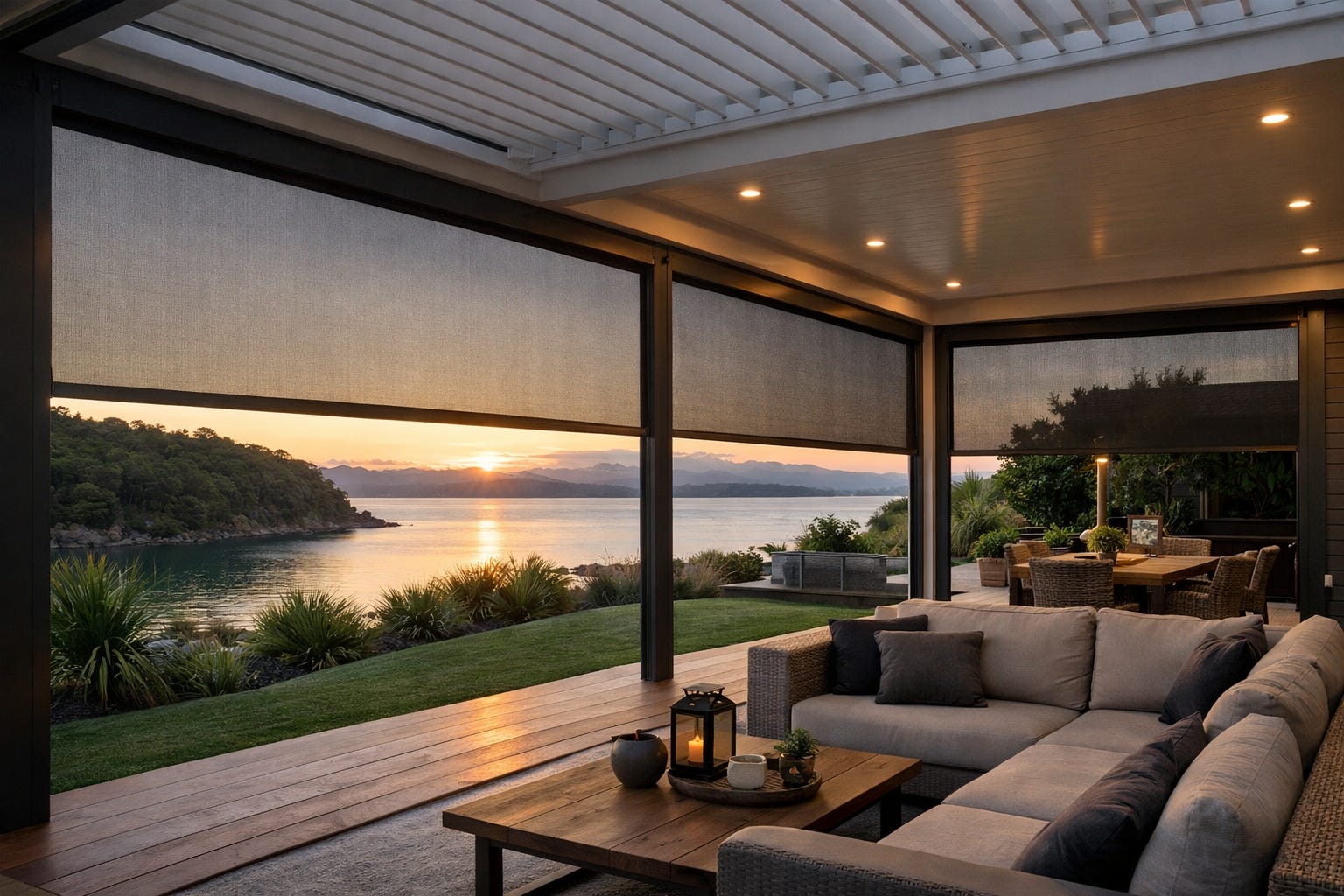
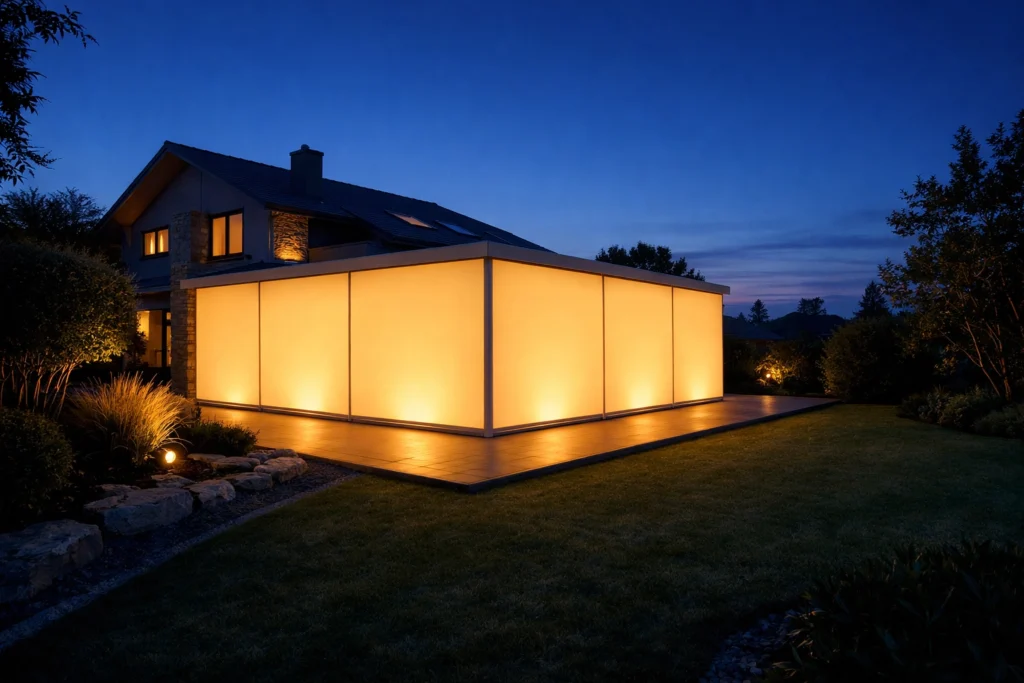
Outdoor spaces are no longer optional extras — they are extensions of how we live, work, and entertain. As homes evolve, so does the expectation that outdoor areas perform just as well as indoor spaces.
At the center of this shift is one product quietly becoming essential: outdoor blinds.
Once considered a simple add-on for shade, outdoor blinds are now a core component of modern home design — transforming exposed patios into controlled, usable environments year-round.
Traditionally, outdoor areas were used only in ideal weather — warm, calm, and dry. But modern homeowners are demanding more.
• More usability
• More comfort
• More control
Outdoor blinds play a key role in removing the limitations of weather, allowing spaces to function regardless of conditions.
Wind, glare, rain, and even temperature fluctuations can now be managed — turning outdoor zones into reliable, everyday living areas rather than occasional-use spaces.
One of the biggest advantages of outdoor blinds is their ability to create micro-environments without fully enclosing a space.
Instead of building permanent walls or glass systems, blinds offer flexibility:
• Block strong winds while maintaining airflow
• Reduce harsh sunlight without losing natural light
• Provide shelter from rain without closing off the space
This balance is what makes them so powerful — they sit between open-air living and fully enclosed rooms.
Modern homes are shifting toward adaptable spaces, not fixed ones.
Outdoor blinds support this concept perfectly.
With manual or motorised operation, spaces can change instantly:
• Open for a summer breeze
• Partially enclosed for shade
• Fully enclosed for protection
This level of control aligns with how people actually live — dynamic, changing, and responsive to the environment.
Privacy has become increasingly important, especially in urban and high-density areas.
Outdoor blinds provide a solution that doesn’t sacrifice design or openness:
• Maintain views while limiting visibility from outside
• Create separation between neighbouring properties
• Enhance comfort in outdoor entertaining areas
This is particularly valuable for decks, pergolas, and poolside spaces where traditional fencing or walls can feel restrictive.
Outdoor blinds are also contributing to smarter, more energy-efficient homes.
By reducing heat gain and controlling sunlight exposure:
• Indoor temperatures can be better regulated
• Air conditioning demand can be reduced
• Glare inside the home is minimized
In many cases, outdoor blinds act as the first layer of thermal control, stopping heat before it even reaches the building envelope.
Outdoor blinds are no longer standalone products — they are part of a larger ecosystem.
They integrate with:
• Louvre roof systems
• Fixed roof pergolas
• Smart home controls
• Weather sensors
Motorised options allow for automation based on wind, sun, or rain, creating a fully responsive outdoor space.
This is where outdoor living starts to resemble indoor convenience.
Function alone isn’t enough — modern homeowners expect products to align with architectural design.
Outdoor blinds now come with:
• Minimalist tracks and clean finishes
• Neutral colour palettes (greys, blacks, whites)
• Discreet integration into structures
Rather than feeling like an add-on, they are increasingly designed as part of the structure itself.
What was once seen as a premium upgrade is quickly becoming a baseline expectation in new builds and renovations.
Outdoor blinds are now:
• Specified in architectural plans
• Included in pergola and louvre system packages
• Considered essential for outdoor usability
As outdoor areas become more valuable, the demand for control and comfort follows.
Outdoor blinds are not just about shade — they represent a broader shift in how homes are designed and used.
They enable:
• Year-round outdoor living
• Greater flexibility in space usage
• Improved comfort without heavy construction
• A seamless transition between indoor and outdoor environments
In many ways, they are part of a larger movement where outdoor spaces are no longer secondary — they are infrastructure.
The modern home is no longer defined by its walls alone.
It extends outward — into decks, patios, pergolas, and open-air living zones.
And as those spaces become more important, the need to control them becomes essential.
Outdoor blinds are no longer optional.
They are becoming one of the most practical and impactful upgrades in modern living.