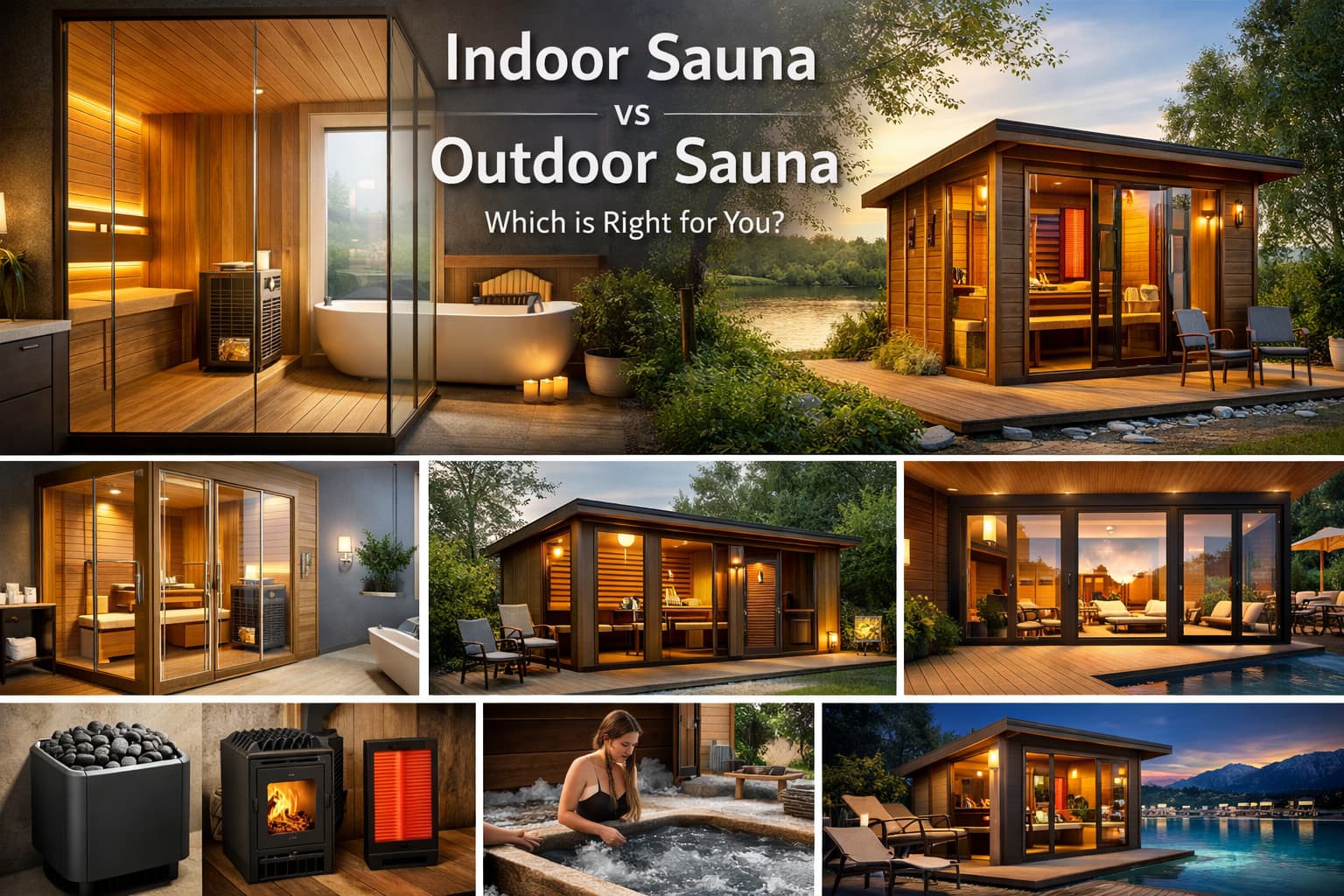
Description
Saunas are no longer limited to gyms or luxury resorts. Across New Zealand and internationally, indoor and outdoor saunas are becoming a core part of modern wellness design—used for recovery, relaxation, mental wellbeing, and lifestyle enhancement.
But choosing between an indoor sauna and an outdoor sauna isn’t just about space. It affects installation complexity, long-term durability, user experience, and how the sauna integrates into your home or property.
This cornerstone guide breaks down indoor vs outdoor saunas, compares their benefits, costs, and use cases, and helps you decide which sauna type best suits your lifestyle, climate, and project goals.
What Is an Indoor Sauna?
An indoor sauna is installed within the main building envelope of a home or facility—typically in a bathroom, spare room, gym, or wellness area.
Common Indoor Sauna Types
-
Traditional Finnish saunas
-
Infrared saunas
-
Hybrid sauna systems
-
Compact modular sauna cabins
Benefits of Indoor Saunas
-
Convenient year-round access
-
Protected from weather exposure
-
Easier electrical integration
-
Often lower upfront structural costs
-
Ideal for apartments or limited outdoor space
Considerations for Indoor Saunas
-
Moisture management and ventilation are critical
-
Requires waterproofing and vapour barriers
-
Less immersive “outdoor wellness” experience
-
Space limitations may restrict size
What Is an Outdoor Sauna?
An outdoor sauna is a freestanding or attached structure located outside the main dwelling. These are often purpose-built sauna cabins or modular sauna buildings designed for external use.
Common Outdoor Sauna Formats
-
Standalone sauna cabins
-
Sauna room + shed or changing room combos
-
Barrel saunas
-
Sauna + cold plunge setups
Benefits of Outdoor Saunas
-
Dedicated wellness space separate from the home
-
Better ventilation and moisture control
-
Larger design flexibility
-
Strong connection to nature
-
Ideal for cold climates and recovery use
Considerations for Outdoor Saunas
-
Requires weather-resistant construction
-
Electrical and foundation work required
-
Slightly higher initial setup cost
-
Must be designed for local climate conditions
Indoor vs Outdoor Saunas: Key Differences at a Glance
| Feature | Indoor Sauna | Outdoor Sauna |
|---|---|---|
| Location | Inside the home | Freestanding outdoor structure |
| Moisture Control | Requires active ventilation | Naturally ventilated |
| Space Flexibility | Limited by room size | Highly flexible |
| Installation Complexity | Moderate | Moderate to high |
| Weather Exposure | None | Designed for exposure |
| Wellness Experience | Convenient | Immersive, nature-focused |
| Best For | Urban homes, apartments | Backyards, lifestyle properties |
Which Sauna Is Better for New Zealand Conditions?
New Zealand’s climate varies significantly—from coastal humidity to alpine cold zones. This makes outdoor saunas particularly popular in many regions, especially when designed with:
-
Weatherproof roofing
-
Sauna-grade timber
-
Proper insulation
-
Outdoor-rated electrical components
Indoor saunas still perform well in urban and compact homes, but outdoor saunas offer greater longevity and flexibility in high-moisture or cold environments when correctly specified.
Energy Use & Heating Options
Both indoor and outdoor saunas can be configured with different heating systems:
Electric Sauna Heaters
-
Most common
-
Precise temperature control
-
Suitable for both indoor and outdoor use
Wood-Fired Sauna Heaters
-
Popular for outdoor saunas
-
Authentic sauna experience
-
Requires ventilation and fire safety planning
Infrared Heating
-
Lower operating temperatures
-
Faster warm-up
-
Often used indoors or in hybrid systems
Design, Size & Customisation Options
Whether indoor or outdoor, modern sauna systems can be customised to suit:
-
Available space
-
User capacity
-
Glass types and thickness
-
Lighting and ambience
-
Smart controls and audio integration
Outdoor saunas often allow larger layouts, including:
-
Changing rooms
-
Covered sheds
-
Outdoor showers
-
Cold plunge zones
Cost Comparison: Indoor vs Outdoor Saunas
While pricing varies by size and specification:
-
Indoor saunas typically have a lower base cost but may require additional waterproofing and ventilation upgrades.
-
Outdoor saunas often cost more upfront but offer better durability, scalability, and resale value.
Long-term value often favours outdoor saunas for lifestyle properties and wellness-focused builds.
Residential vs Commercial Sauna Applications
Residential Use
-
Home wellness rooms
-
Backyard recovery zones
-
Lifestyle property retreats
Commercial Use
-
Hotels and lodges
-
Glamping and Airbnb accommodation
-
Gyms and recovery centres
-
Boutique wellness studios
Outdoor saunas are especially popular in hospitality due to durability and guest appeal.
How to Choose the Right Sauna for Your Project
Ask yourself:
-
How much space do I have?
-
Do I want a dedicated wellness structure?
-
Will moisture control be an issue indoors?
-
Do I want a nature-connected experience?
-
Is this for private or commercial use?
There is no one-size-fits-all answer—the best sauna is the one that fits your environment, lifestyle, and long-term plans.
Final Thoughts: Indoor or Outdoor Sauna?
Both indoor and outdoor saunas offer powerful health and lifestyle benefits. The right choice depends on how you plan to use the sauna, where it will be installed, and how it integrates into your property.
For many modern homes and hospitality projects, outdoor saunas are becoming the preferred option—but indoor saunas remain a practical and effective solution where space or planning constraints exist.