Description
Outdoor living has matured.
What was once a simple shade decision is now a balance of engineering, budget, speed, customisation, and long-term performance.
Most buyers eventually land in one of two camps:
made-to-measure systems
or
kitset systems
The mistake is assuming one is universally better.
It isn’t.
Each solution serves a different type of project, environment, and expectation.
Real expertise lies in knowing which situation demands which approach.
First, What’s the Difference?
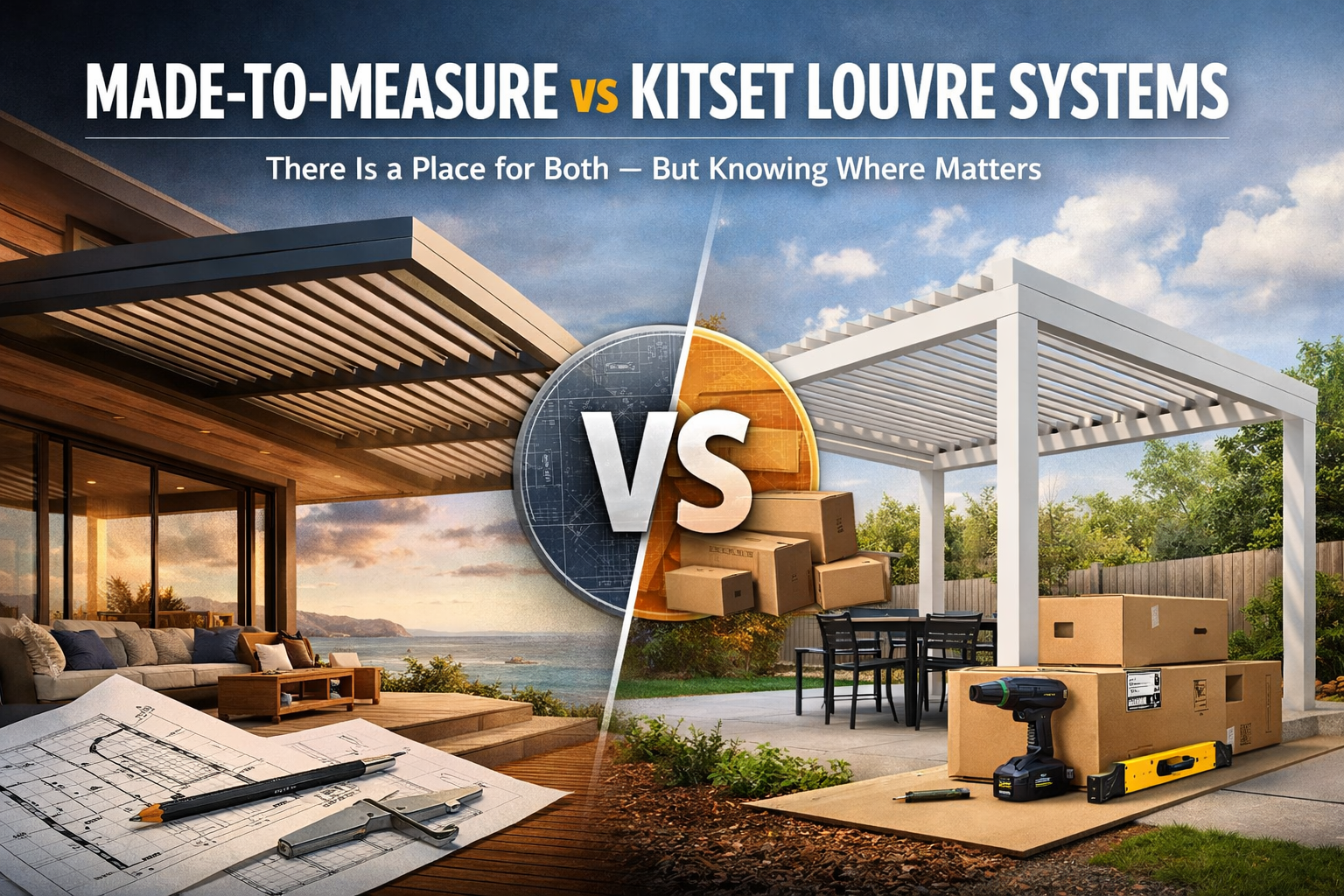
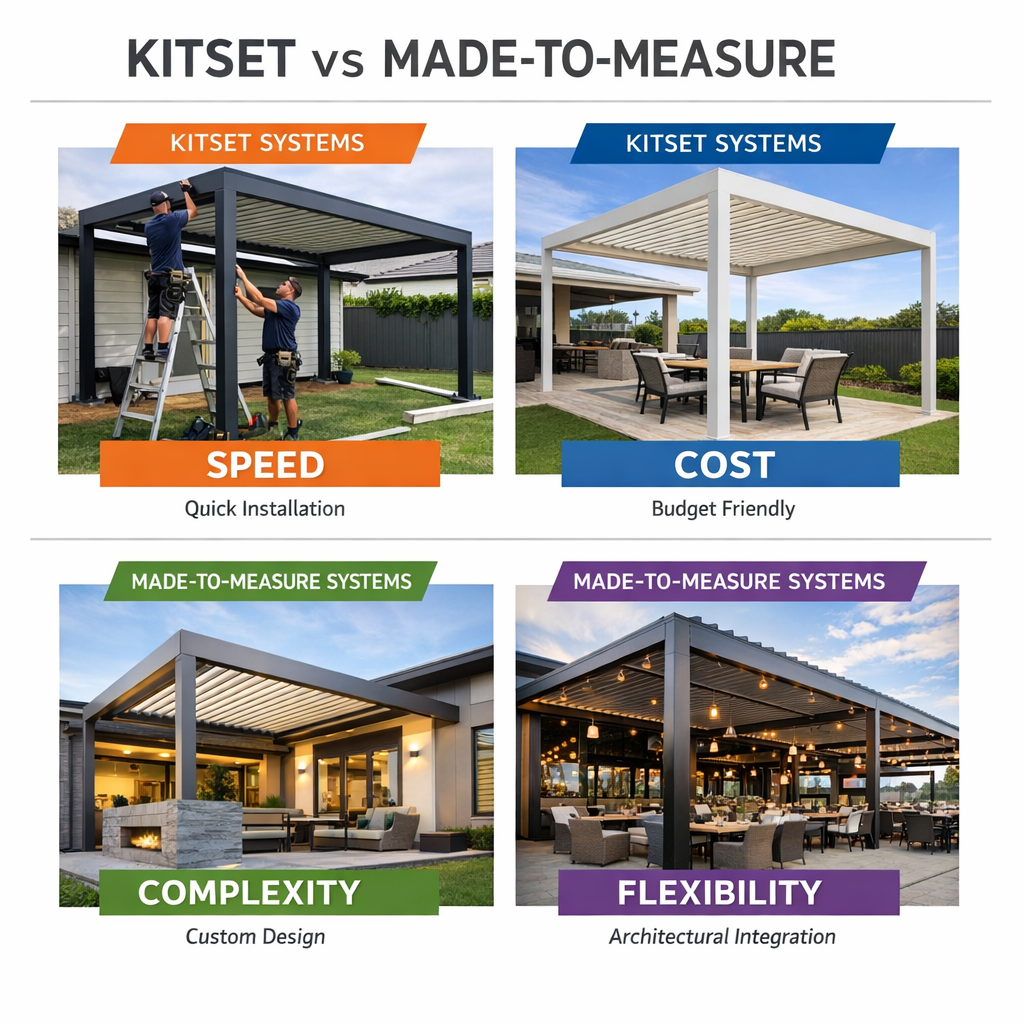
Made-to-Measure Louvre Systems
Custom designed, engineered, and manufactured for a specific site.
Almost everything can change:
• spans
• beam sizes
• post placement
• roof configuration
• drainage engineering
• building integration
• wind requirements
• architectural detailing
These are often specified by architects or required for complex commercial builds.
Kitset Louvre Systems
Pre-engineered, repeatable structures supplied in defined sizes and formats.
They focus on:
• fast supply
• predictable pricing
• simplified installation
• strong value for money
• modular upgrade paths
They satisfy the majority of residential projects and a growing share of light-commercial work.
The Psychology Behind the Choice
Most decisions begin emotionally.
Buyers want:
✔ something that looks impressive
✔ reliable protection from weather
✔ confidence in durability
✔ minimal ongoing hassle
But practical constraints quickly enter the conversation:
• budget ceilings
• council or engineering demands
• available installers
• project timelines
• access to the site
This is where the direction usually becomes clear.
Where Made-to-Measure Systems Win
Custom solutions dominate when a project contains constraints or design ambition.
Typical scenarios include:
• irregular footprints
• large or unusual spans
• integration into existing buildings
• high wind or coastal exposure
• compliance requirements
• premium architectural statements
Here, the pergola becomes part of the building identity.
Flexibility becomes more important than speed.
Where Kitset Systems Dominate
Kitsets lead when efficiency, repeatability, and timing are critical.
Common examples:
• homeowners upgrading patios
• subdivision developments
• hospitality expansions
• education facilities
• retirement communities
• multi-site builds
• remote or regional installs
Decision makers in these environments usually prioritise:
• certainty
• affordability
• product availability
• rapid installation
• reduced engineering complexity
And modern kitsets have evolved far beyond the “budget option” label.
They are refined systems designed for real-world performance.
The Rise of the High-Performance Kitset
This is the shift many people underestimate.
Today’s premium kitset louvre systems often include:
• marine-grade aluminium
• integrated drainage
• motorised operation
• weather sensors
• LED lighting
• enclosure compatibility
• serious wind resistance
They arrive faster, cost less, and still meet demanding expectations.
For many projects, they deliver most of the outcome with far less complication.
Budget Reality Few People Talk About
Let’s be direct.
Made-to-measure builds can cost two to three times more than kitsets.
Not necessarily because they are superior.
But because customisation introduces:
• design hours
• engineering review
• fabrication complexity
• longer manufacturing timelines
• specialised installation teams
Sometimes that investment is critical.
Sometimes it isn’t.
Speed Changes the Outcome
Deadlines influence decisions more than design ideals.
Think about:
• venue opening dates
• peak seasonal usage
• scheduled events
• funding timelines
A kitset that arrives quickly and installs within days can outweigh months of custom development.
Time carries financial weight.
Maintenance & Lifecycle Thinking
Complexity often follows projects long after installation.
Custom builds may require:
• proprietary components
• specific technical knowledge
• return involvement from original suppliers
Kitsets benefit from repeatability.
Parts are accessible.
Installers recognise the systems.
Servicing becomes predictable.
The Smart Buyer’s Question
Instead of asking:
❌ Which system is better?
A more accurate question is:
✅ What does my project genuinely require?
Overspecify and budgets blow out.
Underspecify and dissatisfaction follows.
Balance is everything.
The Future: The Line Is Blurring
We are entering a period where kitsets increasingly adopt ideas from custom engineering.
Expect to see:
• wider spans
• higher ratings
• smarter automation
• modular adaptability
• architectural finishes
The performance gap continues to narrow.
And that benefits buyers.
Final Perspective
Made-to-measure equals precision.
Kitset equals efficiency.
Both are legitimate.
Both can be transformative.
The winner is always the option that aligns with:
• environment
• budget
• timeline
• user expectation
Match the system to the situation, and the outcome usually speaks for itself.