Description
New Pickleball Rules in 2026: What’s Changed and How Different Are They?
Pickleball continues to grow rapidly across New Zealand and internationally, and with that growth comes refinement of the rules to improve fairness, consistency, and the overall experience for players.
The 2026 pickleball rule updates focus less on reinventing the game and more on clarifying grey areas, tightening enforcement, and improving game flow.
Whether you’re a casual player, competitive athlete, club organiser, or court operator, here’s a clear breakdown of what’s new in 2026 and how it differs from previous rules.
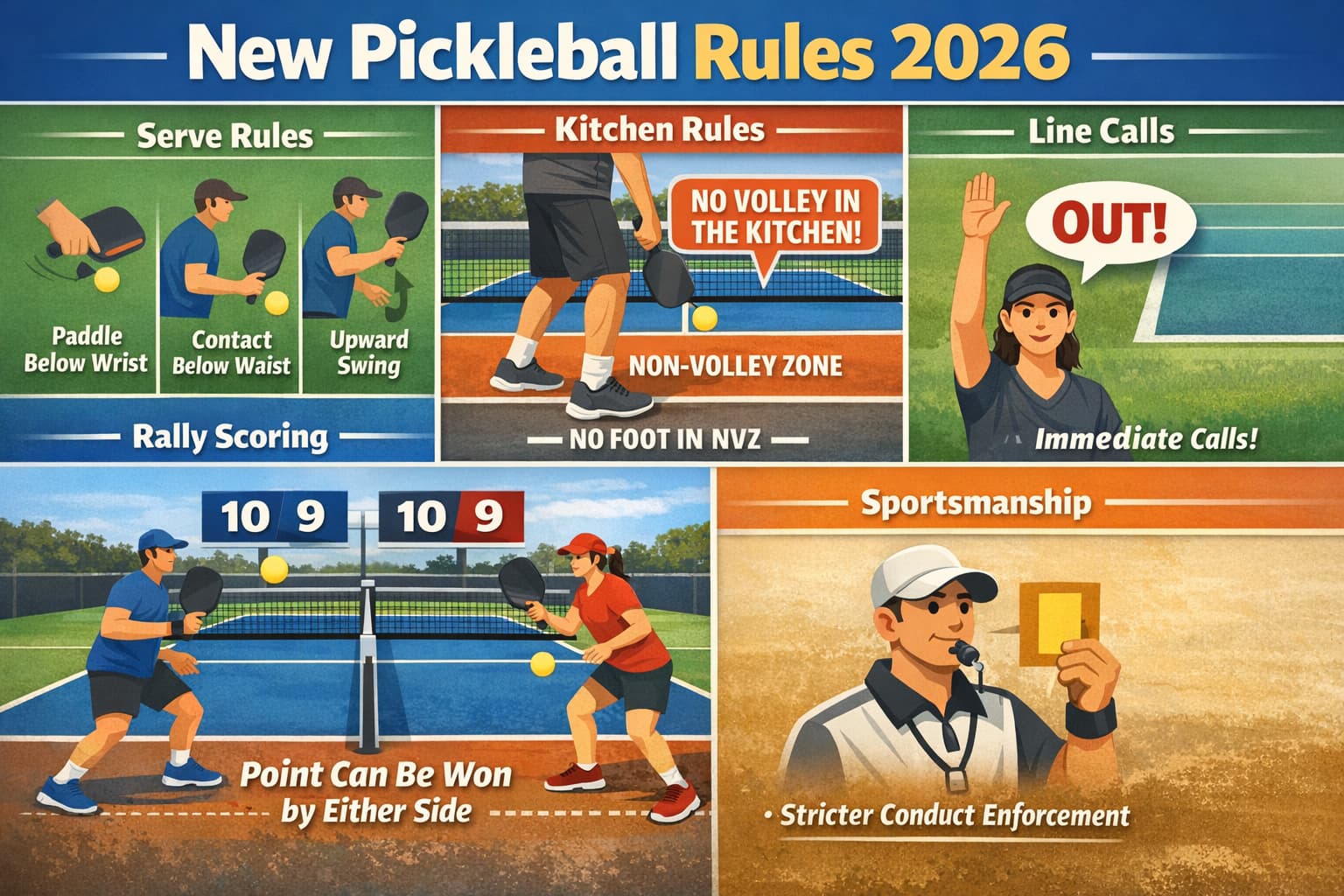
1. Rally Scoring Adjustments at Game Point
One of the most talked-about changes in 2026 involves rally scoring at the end of games.
What’s changed:
-
Under previous rules, teams often needed to be serving to score the winning point.
-
In 2026, either team can now score the final point, whether serving or receiving.
Why this matters:
-
Games finish more naturally
-
Fewer stalled or “frozen” endings
-
Better pacing for social and competitive play
This change is especially noticeable in recreational leagues and timed matches.
2. Clearer and Stricter Serve Enforcement
The serve itself hasn’t fundamentally changed — but how it is judged has.
2026 emphasis:
-
Serves must be clearly legal
-
Any serve that looks borderline may now be called a fault
-
Officials and referees have clearer authority to enforce serve rules
Key serve requirements remain:
-
Contact below the waist
-
Paddle head below the wrist
-
Upward swing motion
Difference from previous years:
-
Previously, ambiguous serves often benefited the server
-
In 2026, clarity is required, not interpretation
3. Immediate Line Calls Are Now Required
Line calling has been tightened to reduce disputes.
New expectation:
-
“Out” calls must be made immediately
-
Verbal call, hand signal, or both
-
Delayed calls are no longer allowed
Practical impact:
-
Players can’t wait to see if their partner returns the ball
-
Faster rallies and fewer arguments
-
Clearer responsibility on players for honest calls
4. Stronger Sportsmanship and Conduct Rules
The 2026 rules place a stronger focus on player behaviour and respect.
What’s new:
-
Officials can issue warnings before matches begin, including warm-ups
-
Clearer escalation for unsportsmanlike behaviour
-
More authority to address verbal abuse, aggression, or unsafe conduct
Why this matters:
-
Better atmosphere at clubs and tournaments
-
Protection for referees and volunteers
-
More welcoming environment for new players
5. Court & Equipment Clarifications
Several technical situations have been clarified to remove uncertainty.
Notable updates:
-
If a ball legally lands in play and then contacts a permanent object after the bounce, the rally ends
-
Extra balls entering the court during a rally now result in a dead ball
-
Players may not seek assistance from spectators for line calls
These updates aim to improve consistency and safety, especially in busy venues.
6. Expanded Adaptive & Inclusive Play Rules
A major positive step in 2026 is the formal expansion of adaptive standing divisions.
What’s included:
-
Allowance for a two-bounce return for eligible players
-
Clear definitions for adaptive competition
-
Consistency across sanctioned events
Why it’s important:
-
Improves accessibility without altering the core game
-
Encourages broader participation
-
Supports inclusive club and tournament structures
How the 2026 Rules Compare to Previous Years
Key differences at a glance:
-
Rally scoring now allows any team to win the final point
-
Serve rules are enforced more strictly
-
Line calls must be immediate
-
Behaviour rules apply before and during matches
-
Adaptive play rules are more clearly defined
Overall, the 2026 update is about clarity, fairness, and smoother gameplay, not major structural change.
What This Means for Pickleball in 2026
For most recreational players, pickleball will still feel the same — but matches will:
-
Flow better
-
Finish faster
-
Have fewer disputes
-
Be easier to officiate
For clubs, venues, and court operators, the updated rules align well with the sport’s continued growth and increasing professionalism.