Description
Outdoor living in the South Pacific has always been central to daily life.
Homes open outward.
Hospitality flows toward decks and terraces.
Restaurants expand toward the view.
But the environment is unforgiving.
High UV levels, humidity, salt-laden air, tropical downpours, and the ever-present possibility of cyclonic weather create a serious performance challenge for any outdoor space.
What once worked as a casual shade solution is no longer enough.
Across the Pacific — and especially in Fiji — outdoor blinds are rapidly moving from optional extras to critical infrastructure.
The Problem: Beautiful Spaces That Fail in Real Conditions
An outdoor dining or lounge area might look perfect in calm weather.
But introduce:
• intense afternoon sun
• horizontal rain
• gusting winds
• airborne salt
• high moisture levels
and usability can disappear in minutes.
Furniture deteriorates faster than expected.
Guests retreat indoors.
Cooling costs rise.
Maintenance becomes constant.
For hospitality venues, this isn’t an inconvenience.
It’s lost revenue.
Fiji: The Acceleration Point
Few environments expose design weaknesses faster than Fiji.
The combination of tropical heat, sudden storms, and coastal corrosion creates a proving ground for products that claim durability.
As tourism grows and expectations rise, property owners are under pressure to provide outdoor areas that remain comfortable in a wide range of conditions.
As a result, performance-engineered outdoor blinds are becoming standard in new builds and retrofits.
They allow operators to maintain openness while gaining control.
Heat Is the First Battle
Solar radiation is relentless in the Pacific.
Direct sunlight dramatically increases surface temperatures in flooring, furniture, and structural materials. Once heat builds, comfort drops quickly.
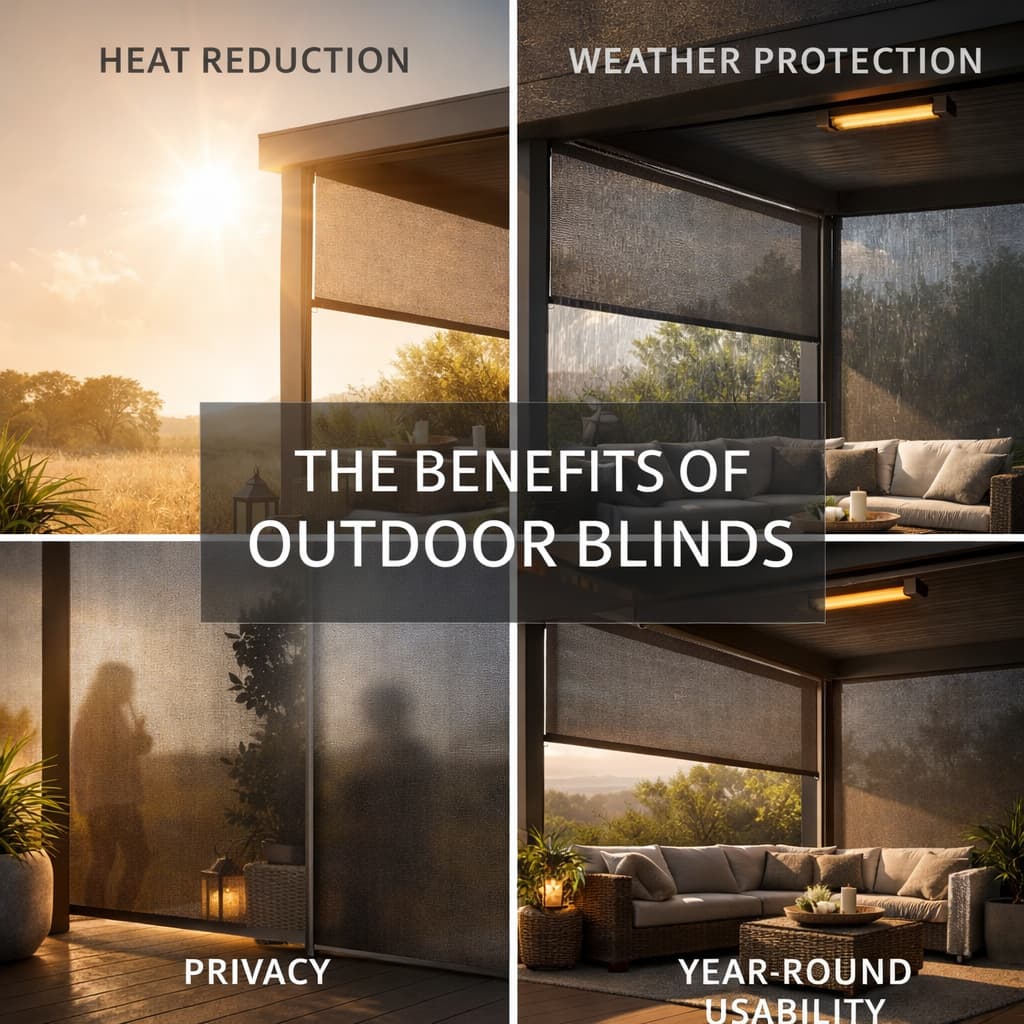
Outdoor blinds act as a front-line filter, stopping a large portion of that solar load before it reaches the space.
This leads to:
• lower perceived temperatures
• reduced glare
• more stable comfort
• less stress on cooling systems
Importantly, blinds achieve this without sealing the environment off from airflow or views.
Wind Changes Everything
Wind is often underestimated in design.
Even moderate airflow strips warmth in cooler periods, disrupts table settings, and makes otherwise premium areas unpleasant.
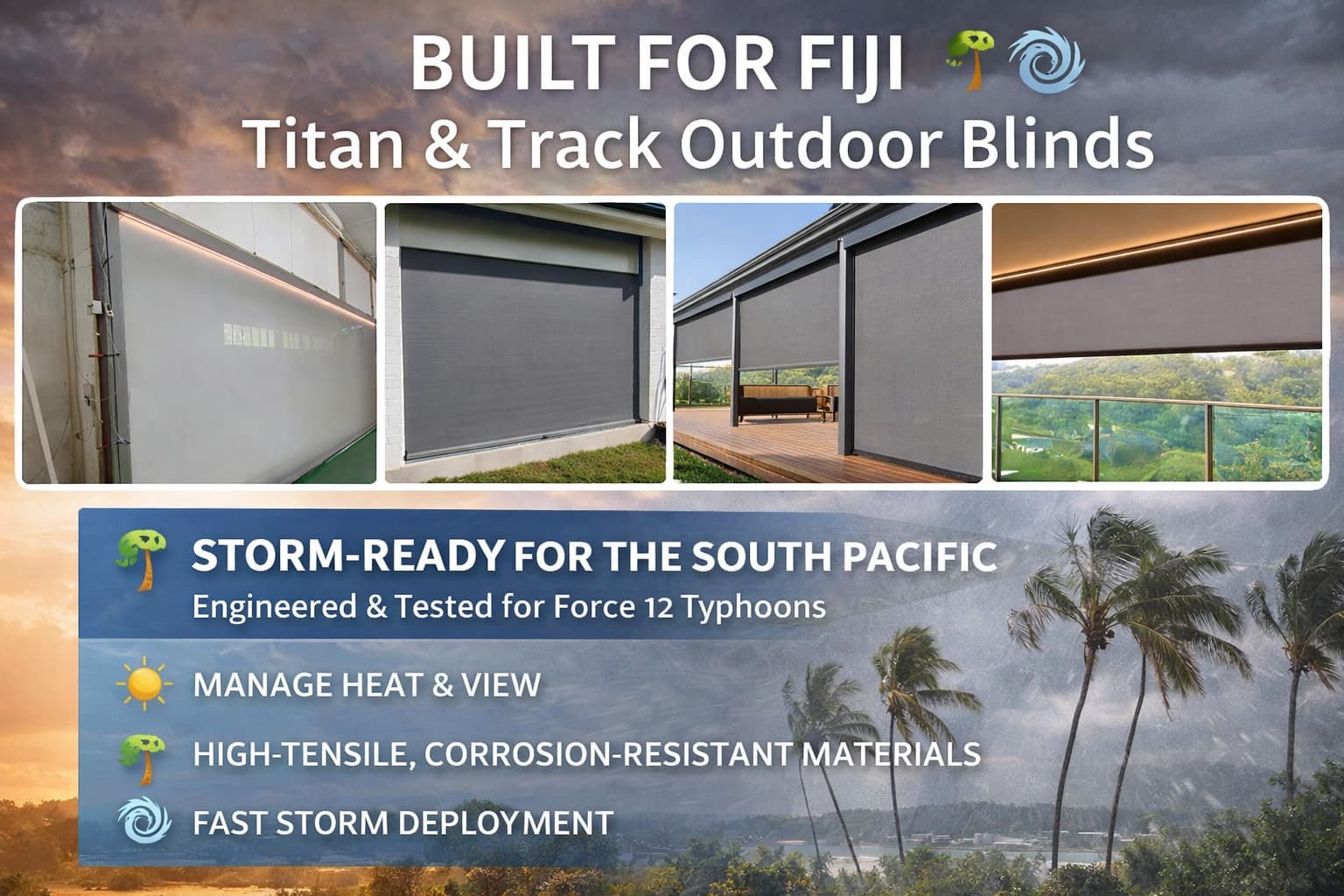
Modern Track / Titan systems are built around fabric retention and lateral stability, allowing them to manage wind pressures that older drop blinds simply could not handle.
Instead of flapping or failing, they remain controlled and functional.
🌀 Storm Readiness Becomes Non-Negotiable
In Fiji and neighbouring islands, storm resilience is no longer a luxury feature.
It is an expectation.
Titan systems are engineered and tested toward Force 12 Typhoon performance levels, giving property owners confidence that protective measures are in place when extreme weather approaches.
Fast deployment matters.
Strength matters.
Reliability matters.
🌴 Built for Salt, Moisture, and Time
The Pacific is brutal on materials.
Corrosion, UV degradation, and humidity destroy inferior hardware quickly.
Modern outdoor blind systems therefore rely on:
• high-tensile components
• anti-corrosion finishes
• UV-stabilised fabrics
• mechanical designs intended for constant exposure
This is a shift away from decorative shading toward long-term asset protection.
Privacy Without Sacrificing Openness
Resort and residential design often depend on views.
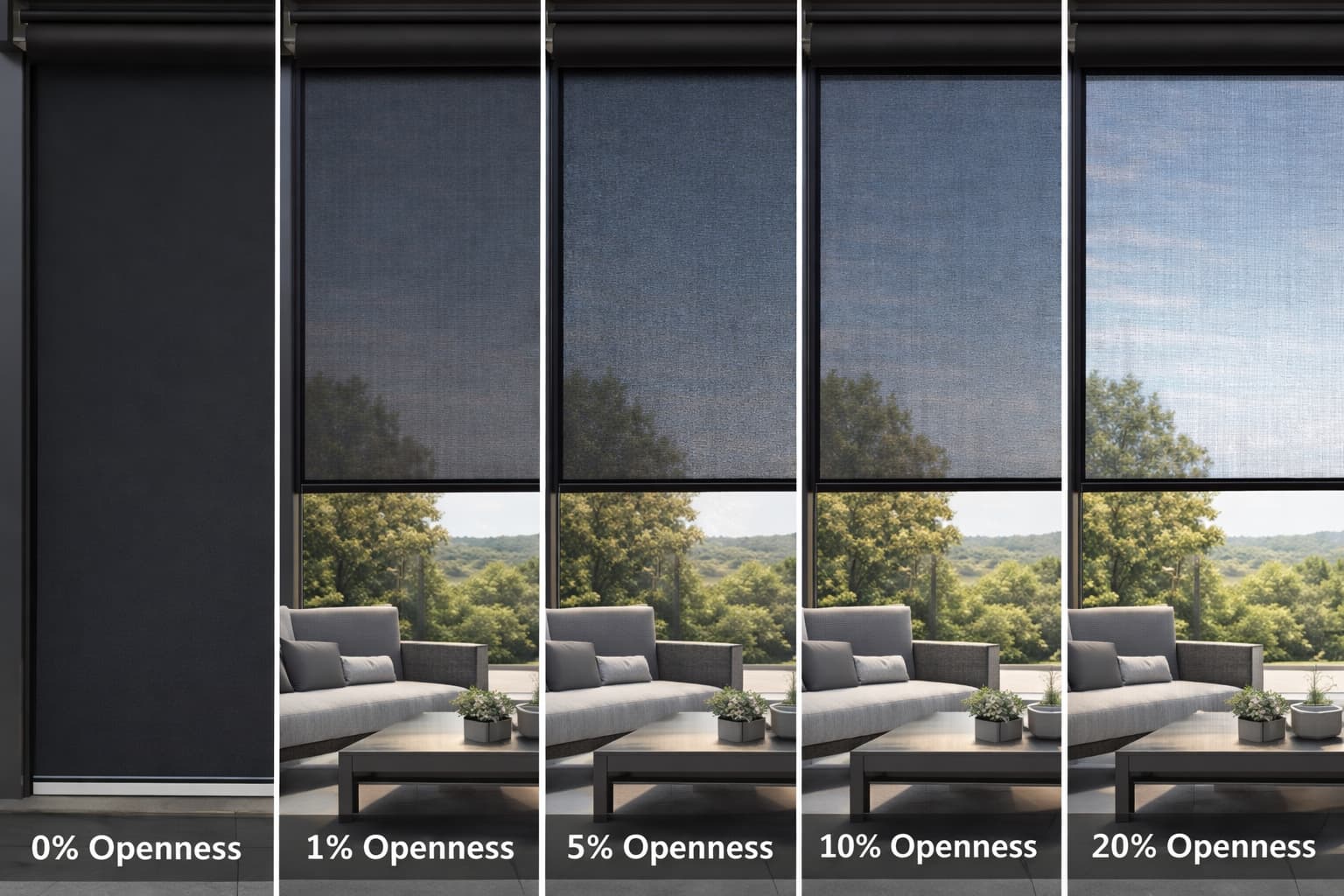
Outdoor blinds offer graduated control — reducing inward visibility while maintaining outward sightlines.
The result is comfort without enclosure.
From Feature to Infrastructure
Perhaps the biggest change is philosophical.
Outdoor blinds are no longer added at the end of a project.
They are increasingly considered from the start because they determine whether a space can actually function.
Without environmental control, architecture is only aesthetic.
With control, it becomes usable.
What This Means for the Future
As climate volatility increases, demand for adaptable systems will grow.
Designers and operators who plan for:
• heat management
• storm response
• corrosion resistance
• rapid usability adjustments
will outperform those who rely on fair-weather solutions.
Fiji is showing where global outdoor design is heading.
And outdoor blinds are at the centre of that movement.