Description
Why One Percentage Can Change Your Entire Outdoor Experience
Outdoor blinds have become a staple in modern outdoor living—used on pergolas, patios, cafés, balconies, and hospitality spaces.
But one of the most misunderstood (and most important) decisions isn’t the colour, the motor, or even the size.
It’s mesh openness.
Get it right, and your space feels comfortable, usable, and connected to the outdoors.
Get it wrong, and the area feels dark, hot, or boxed in.
Let’s unpack why openness matters—and how to choose it properly.
What Is Mesh Openness?
Mesh openness refers to the percentage of open space in the fabric.
In simple terms, it controls how much:
- Light passes through
- Air flows through
- Visibility you keep
- Heat and glare are reduced
Common openness ranges include:
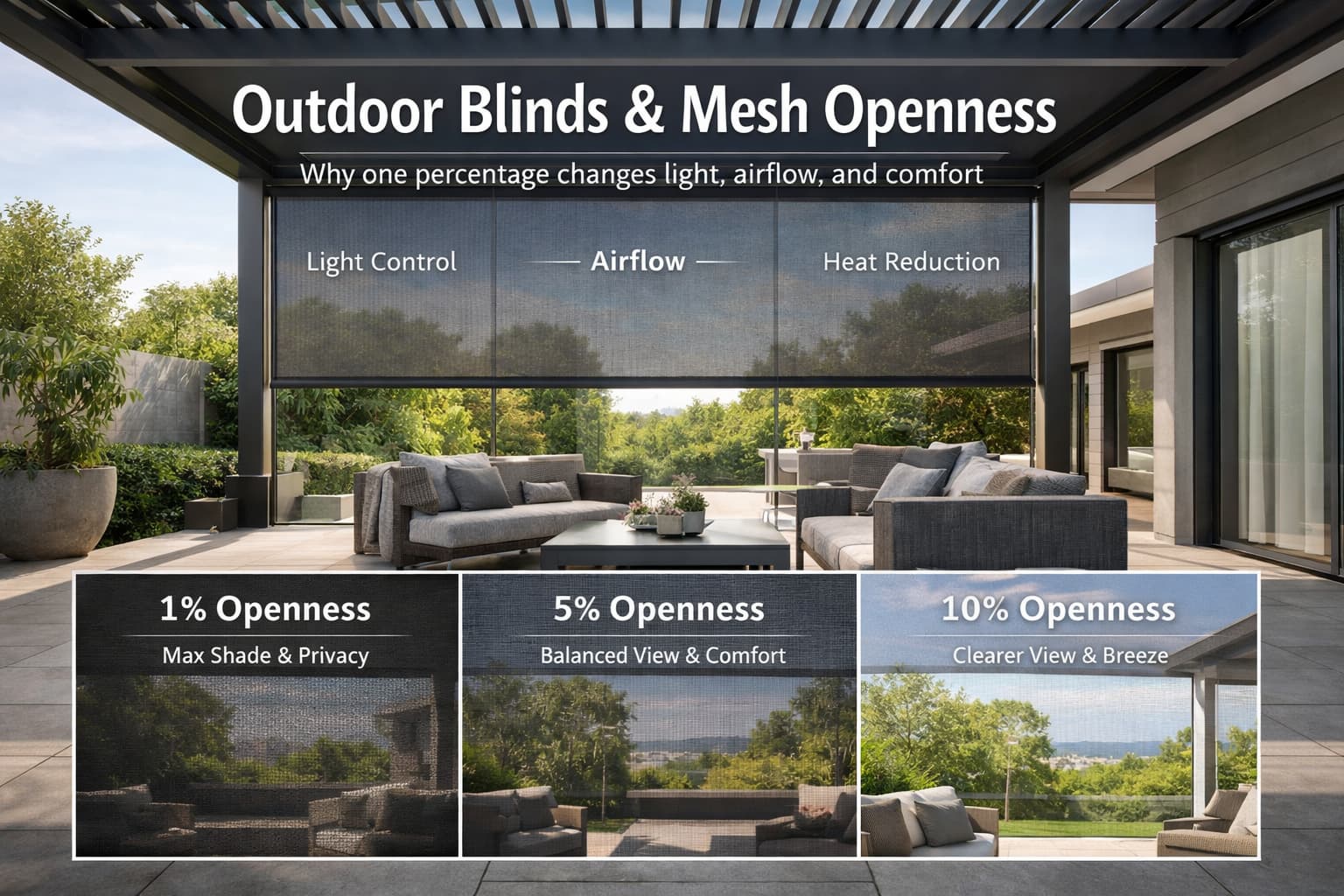
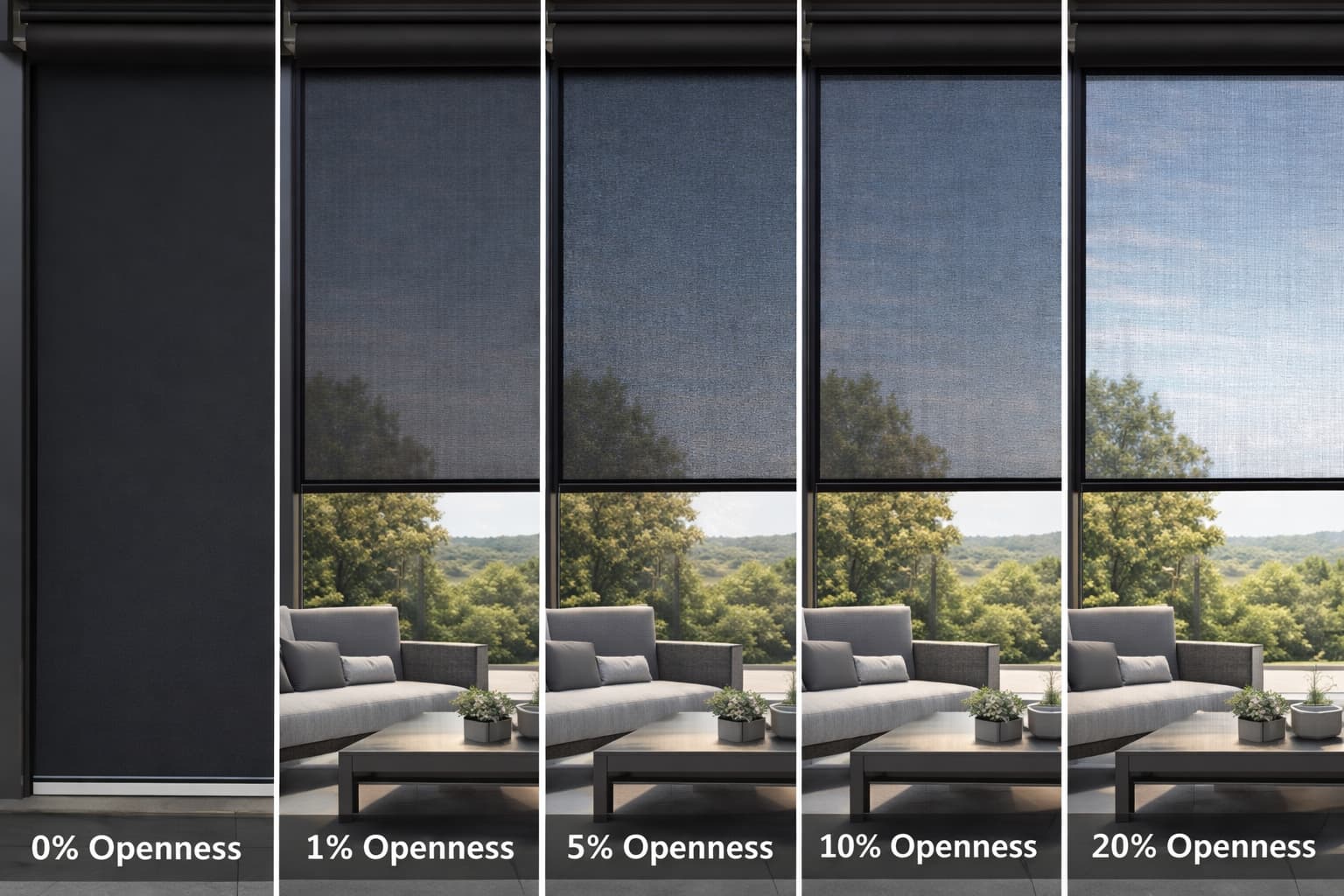
- 1–3% (very tight weave)
- 5% (balanced, most common)
- 10%+ (more open, lighter feel)
Each behaves very differently in real-world conditions.
Why Openness Matters More Outdoors Than Indoors
Indoor blinds mostly deal with light and privacy.
Outdoor blinds must manage:
- Sun angle changes throughout the day
- Wind pressure
- Heat buildup
- Reflected glare (from paving, water, glass)
- Long-term exposure to UV and weather
That’s why mesh openness isn’t just a preference—it’s a performance decision.
Low Openness (1–3%)
Maximum Protection, Strong Enclosure
Lower openness meshes offer:
- Strong sun and glare reduction
- Better wind and rain deflection
- Increased privacy
- More shade during peak summer sun
Trade-offs:
- Darker feel
- Reduced airflow
- Less visibility through the blind
Best for:
- West-facing areas
- High sun exposure
- Commercial spaces needing consistency
- Wind-prone locations
Mid Openness (5%)
The Sweet Spot for Most Outdoor Areas
This is the most popular choice—and for good reason.
5% openness provides:
- Effective sun and heat control
- Good airflow
- Maintained outward visibility
- Balanced brightness
It allows the space to feel outdoor, not enclosed—while still being functional in changing conditions.
Best for:
- Pergolas and louvre systems
- Residential patios
- Cafés and hospitality areas
- Multi-season use
If someone isn’t sure what to choose, this is usually the safest starting point.
High Openness (10%+)
Light, Airy, Minimal Obstruction
Higher openness meshes prioritise:
- Maximum airflow
- Clearer views
- Brighter spaces
But they offer:
- Less sun and glare control
- Reduced wind protection
- Limited privacy
Best for:
- Shaded areas
- Mild climates
- Spaces where view matters more than control
Openness, Heat & Comfort (The Bit People Miss)
A tighter mesh doesn’t just block light—it reduces radiant heat.
That’s critical in outdoor spaces where:
- Paving and concrete reflect heat
- Glass doors amplify sunlight
- Still air traps warmth
Choosing the wrong openness can make a space technically “covered” but practically unusable in summer.
Wind Matters Too
More open mesh:
- Lets wind pass through
- Reduces pressure on the blind
- Feels lighter in breezy areas
Lower openness:
- Blocks wind more effectively
- Creates stronger enclosure
- Requires proper fixing and guidance systems
This is why wind exposure should always be part of the decision—not an afterthought.
There Is No “Best” Openness—Only the Right One
The right mesh openness depends on:
- Orientation (north, west, coastal, sheltered)
- Intended use (all-day living vs occasional cover)
- Climate and wind conditions
- Whether the goal is shade, enclosure, or airflow
Outdoor blinds aren’t just accessories.
They are environmental control systems.
And mesh openness is the tuning dial.
If an outdoor blind makes your space darker, hotter, or less inviting—something wasn’t specified correctly.
Openness isn’t a technical detail.
It’s the difference between a space you have and a space you use.