Description
Pickleball is one of the fastest-growing sports in New Zealand and globally. Its compact court size, simple rules, and minimal equipment requirements make it ideal for residential homes, schools, councils, clubs, and commercial developments.
This Pickleball 101 guide covers official court dimensions, layout, rules, paddles, balls, and essential equipment, providing a complete reference for anyone planning, building, or playing pickleball.
Standard Pickleball Court Dimensions
Pickleball courts follow the same dimensions worldwide for both indoor and outdoor play.
-
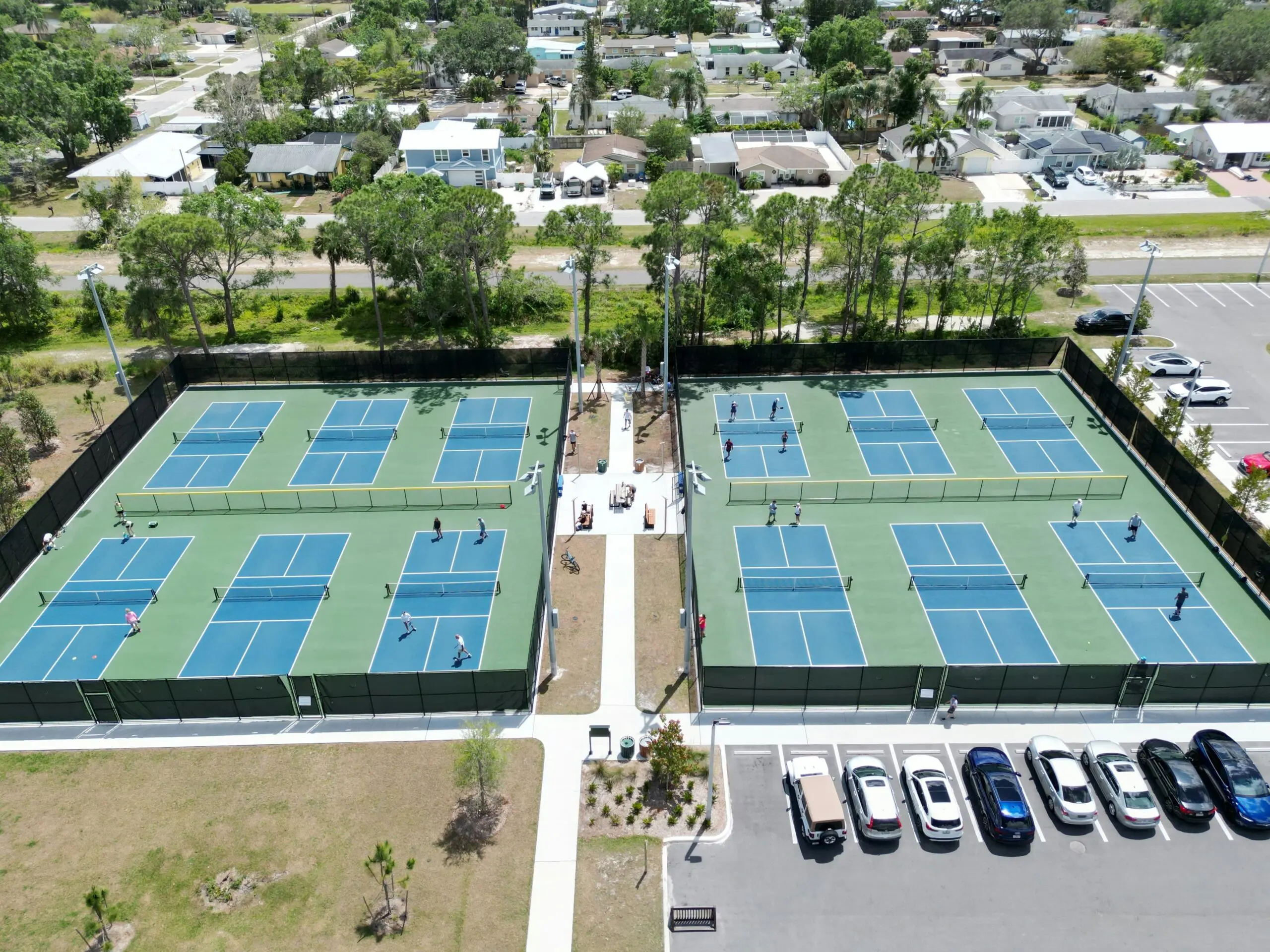
Court size: 13.41 m × 6.10 m (44 ft × 20 ft)
-
Same size as a badminton doubles court
-
Used for singles and doubles
Recommended Run-Off Space
-
Ideal total area: 18.3 m × 9.1 m
-
Minimum clearance: 1.5–2.0 m on all sides
Correct clearance is important for safety, especially for permanent and commercial installations.
Pickleball Court Layout
The Non-Volley Zone (The “Kitchen”)
-
2.13 m (7 ft) from the net on each side
-
Players cannot volley while standing in this zone
-
Encourages strategy and longer rallies
Service Courts
-
Divided into left and right service boxes
-
Serves must be diagonal
-
The serve must clear the kitchen line
Court Lines
-
Baselines and sidelines define play boundaries
-
All lines are considered in
Pickleball Net Height
-
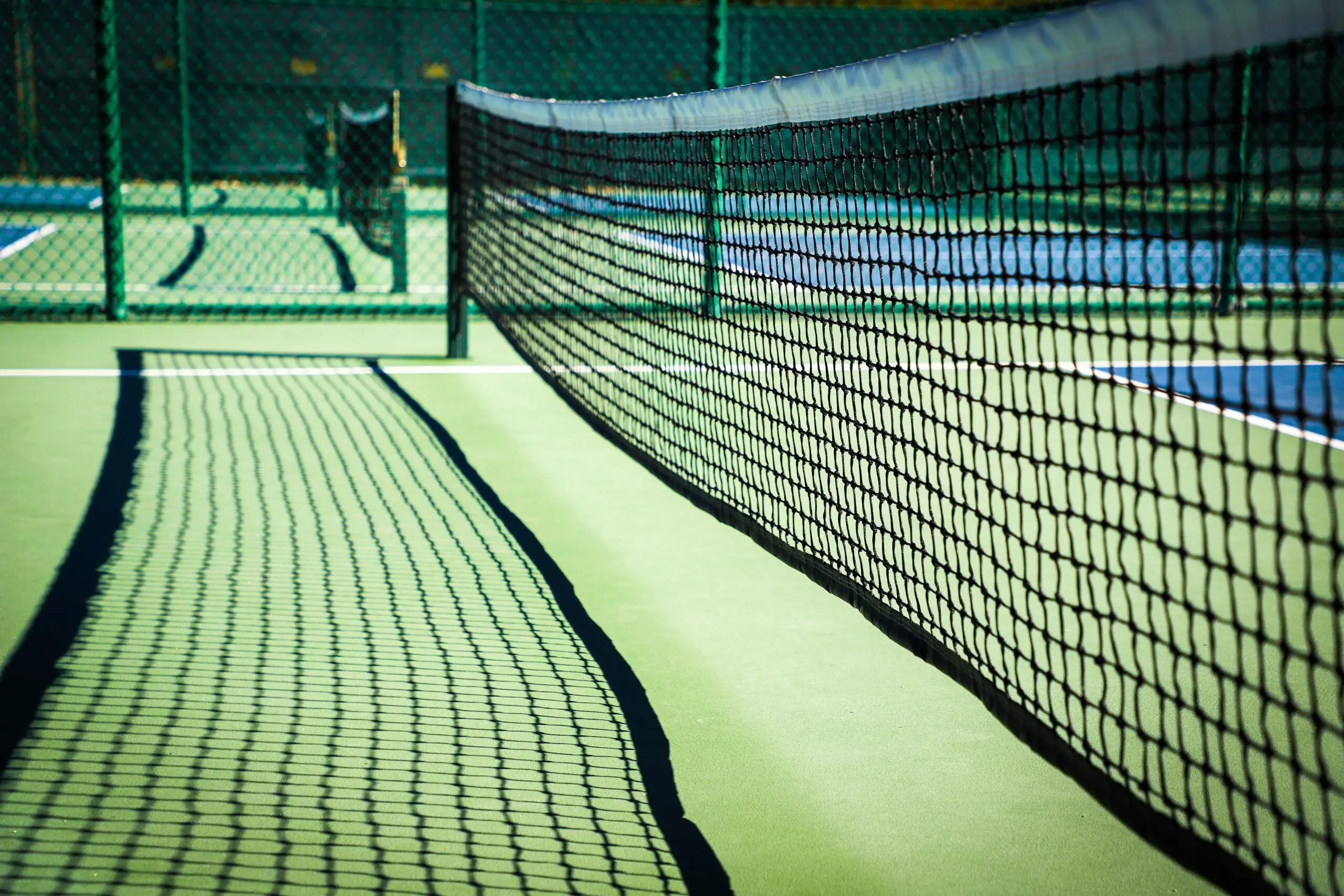
Sidelines: 914 mm (36")
-
Centre: 864 mm (34")
The lower centre net height supports controlled play and consistent rallies.
Pickleball Rules – 101 Overview
Serving Rules
-
Underhand serve only
-
Paddle contacts ball below the navel
-
At least one foot behind the baseline
-
Serve must land diagonally
-
One serve attempt (excluding lets)
The Double Bounce Rule
-
Receiving team lets the serve bounce once
-
Serving team lets the return bounce once
-
Volleys allowed after two bounces
This rule keeps rallies accessible and balanced for all skill levels.
Pickleball Scoring System
-
Games typically played to 11 points
-
Must win by 2 points
-
Only the serving team scores
-
Doubles teams receive two serves, except at the start of the game
Score format:
Server score – Receiver score – Server number
Pickleball Paddles (Bats)
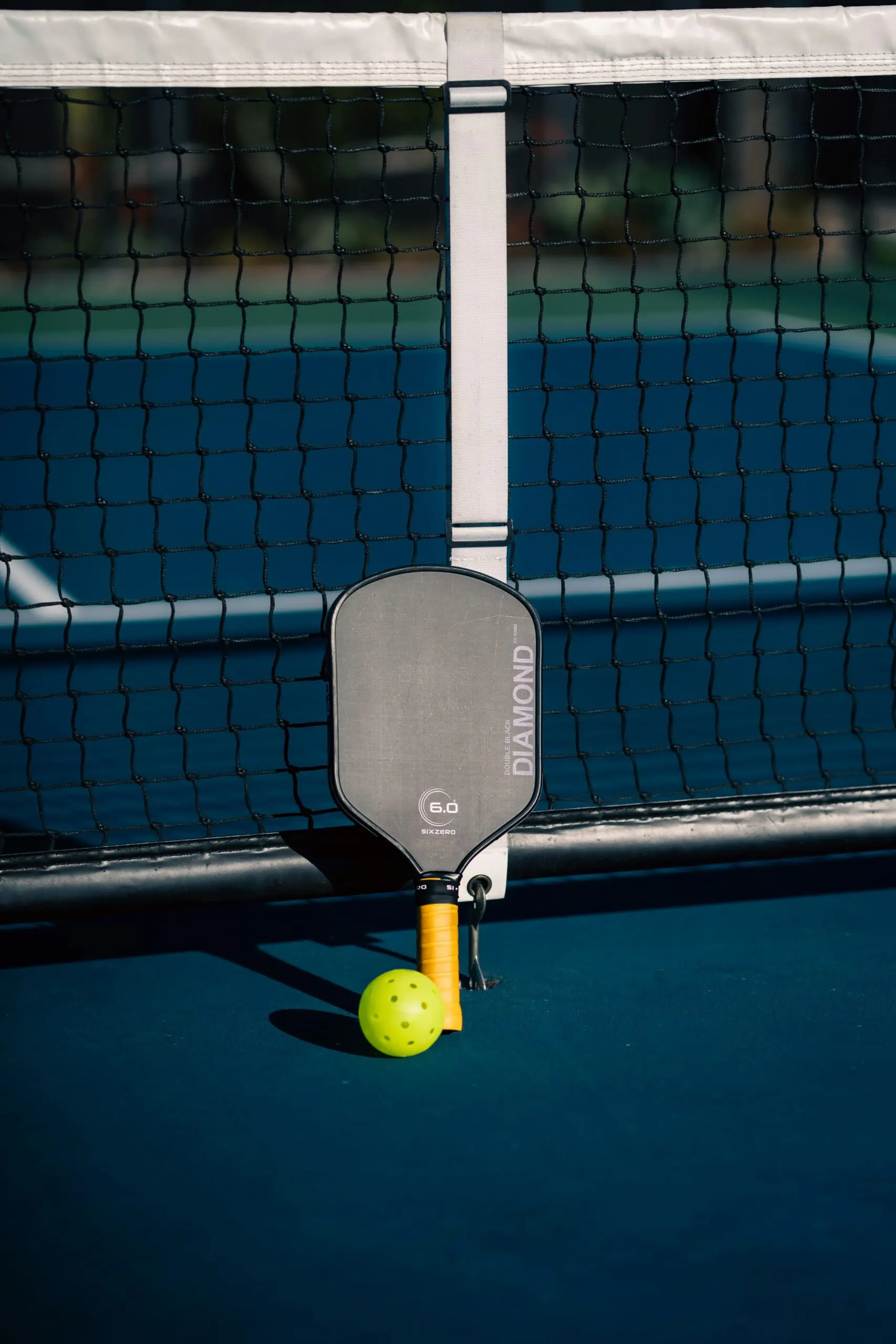
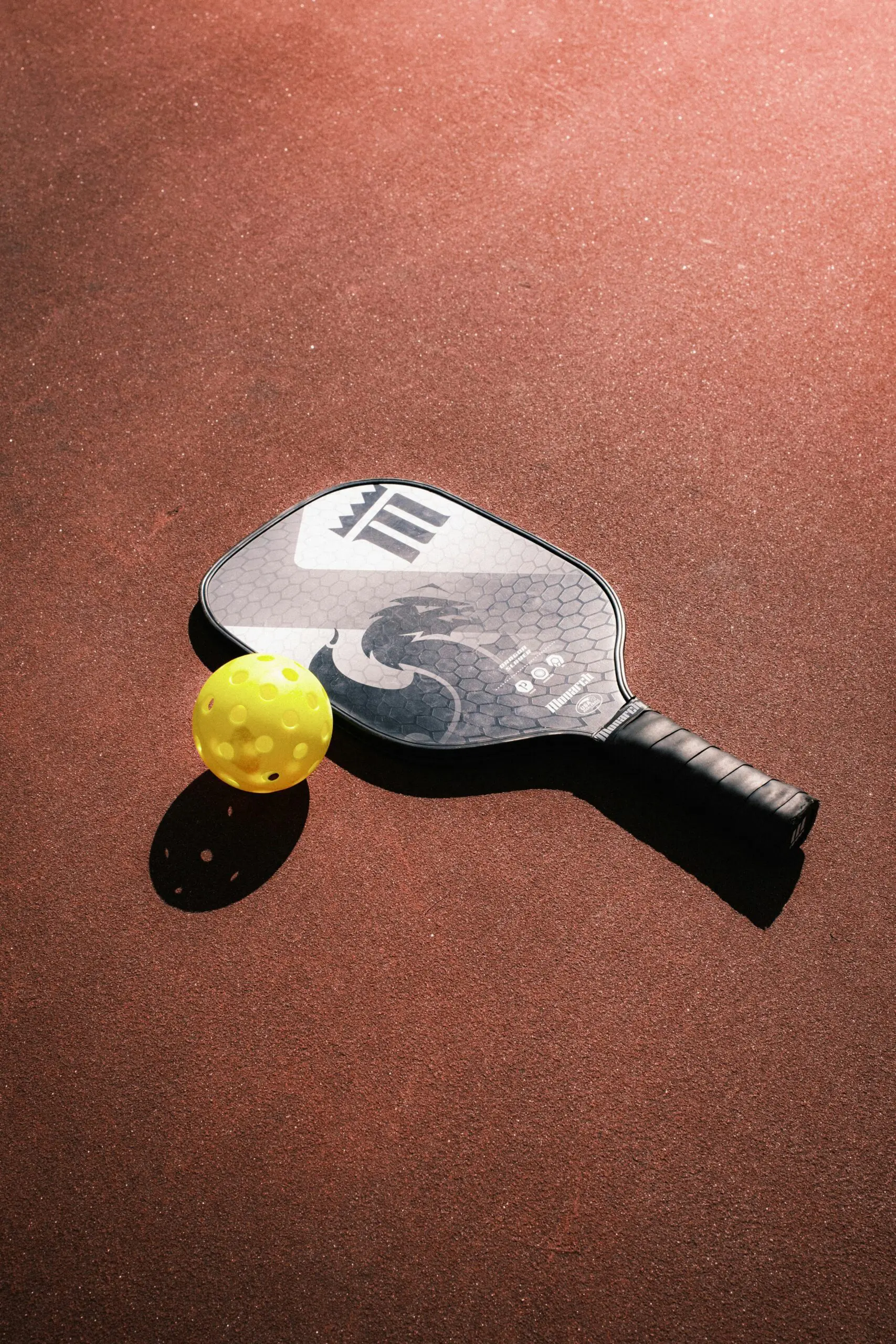
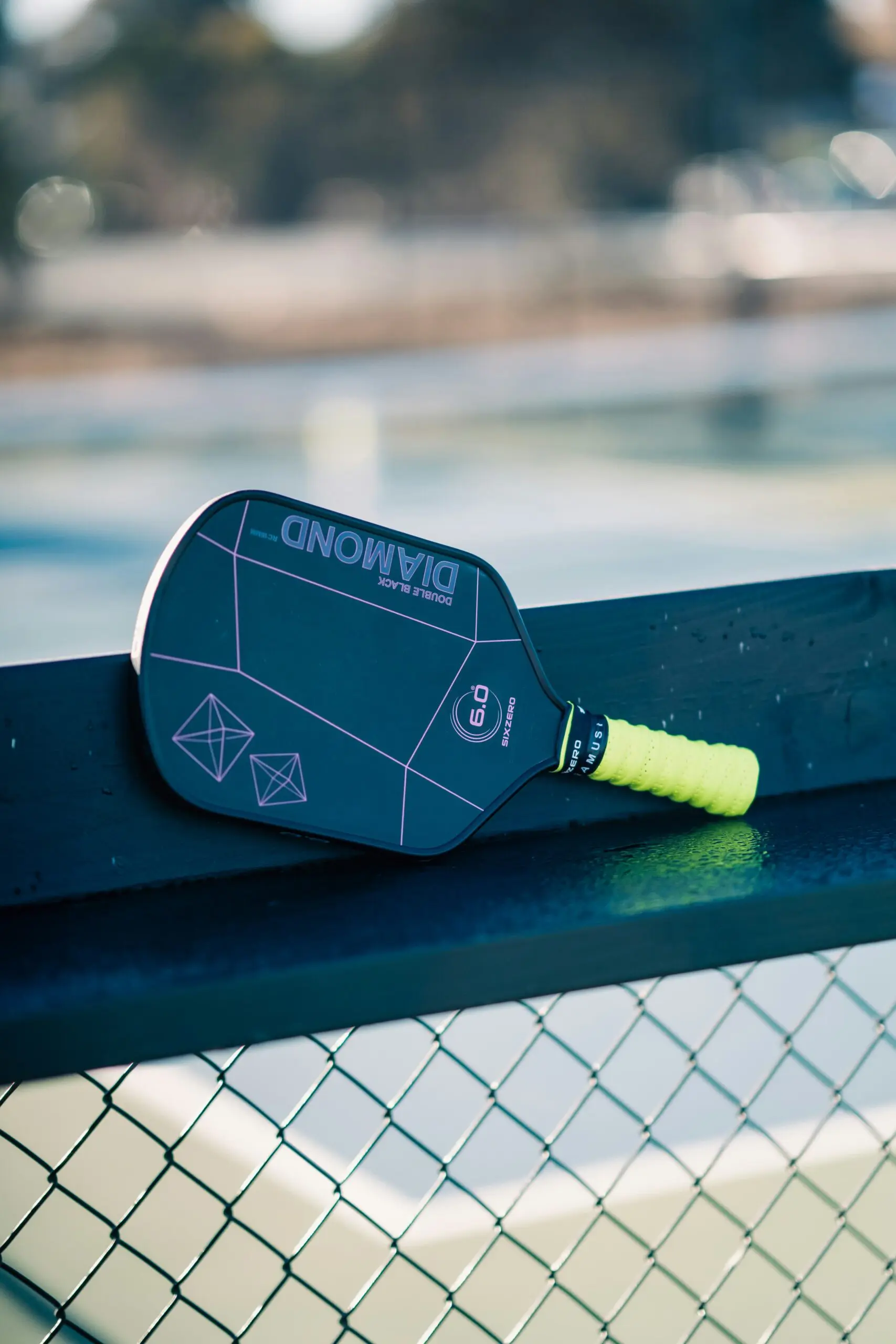
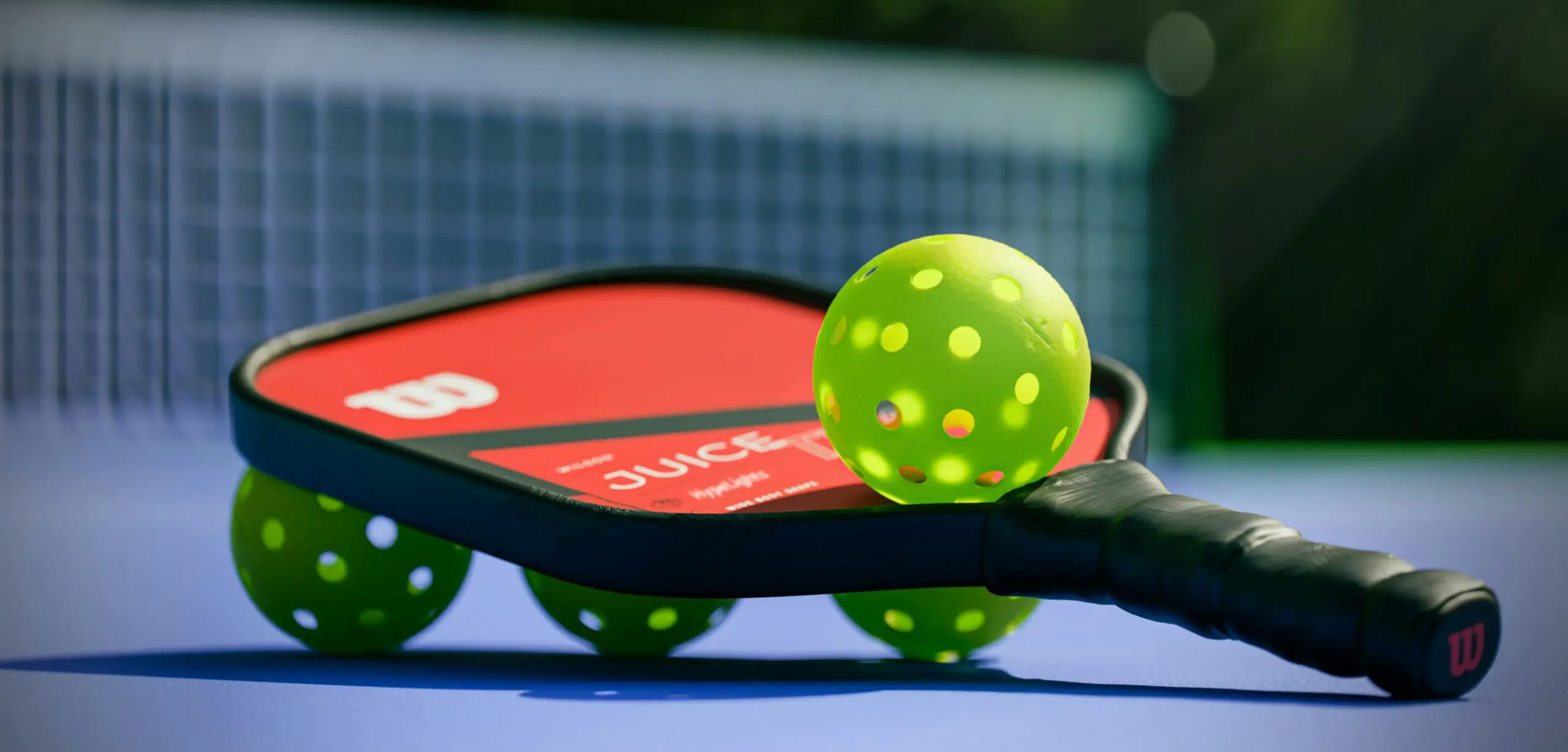
Pickleball paddles (also known as bats) are solid-faced paddles with no strings.
Paddle Size Regulations
-
Maximum combined length and width: 610 mm (24")
-
Typical paddle size: approx. 400 mm long × 190 mm wide
Paddle Core Materials
-
Polymer core – softer feel, quieter play
-
Nomex core – firmer feel, louder impact
-
Aluminium core – lightweight and controlled
Paddle Face Materials
-
Fibreglass
-
Carbon fibre
-
Composite laminates
Paddle Weight Ranges
-
Light: 200–215 g (control-focused)
-
Mid: 215–230 g (balanced play)
-
Heavy: 230+ g (power-focused)
Pickleball Balls
Pickleball balls are perforated plastic balls designed for consistent bounce and flight.
Outdoor Pickleball Balls
-
Smaller holes
-
Heavier construction
-
Better wind resistance
-
Used on acrylic or PP tile courts
Indoor Pickleball Balls
-
Larger holes
-
Lighter weight
-
Softer bounce
-
Designed for smooth indoor surfaces
Using the correct ball improves performance and reduces surface wear.
Additional Pickleball Equipment
-
Net systems (portable or permanent)
-
Court surfaces (acrylic, PP interlocking tiles, or indoor flooring)
-
Court line markings
-
Sports lighting for evening play
-
Fencing, seating, and shade structures
Indoor vs Outdoor Pickleball Courts
Outdoor Courts
-
Acrylic or PP interlocking sports tiles
-
Heavier pickleballs
-
Drainage and UV resistance important
Indoor Courts
-
Timber, vinyl, or multi-sport flooring
-
Lighter pickleballs
-
Faster rallies due to controlled conditions
Common Pickleball Court Installations
-
Dedicated pickleball courts
-
Tennis court conversions
-
Permanent tiled courts
-
Temporary or pop-up courts
-
Social and commercial pickleball precincts
Why Standard Pickleball Specifications Matter
Using correct court sizing and approved equipment:
-
Ensures consistent gameplay
-
Supports coaching and organised play
-
Improves safety and durability
-
Protects long-term facility value