Description
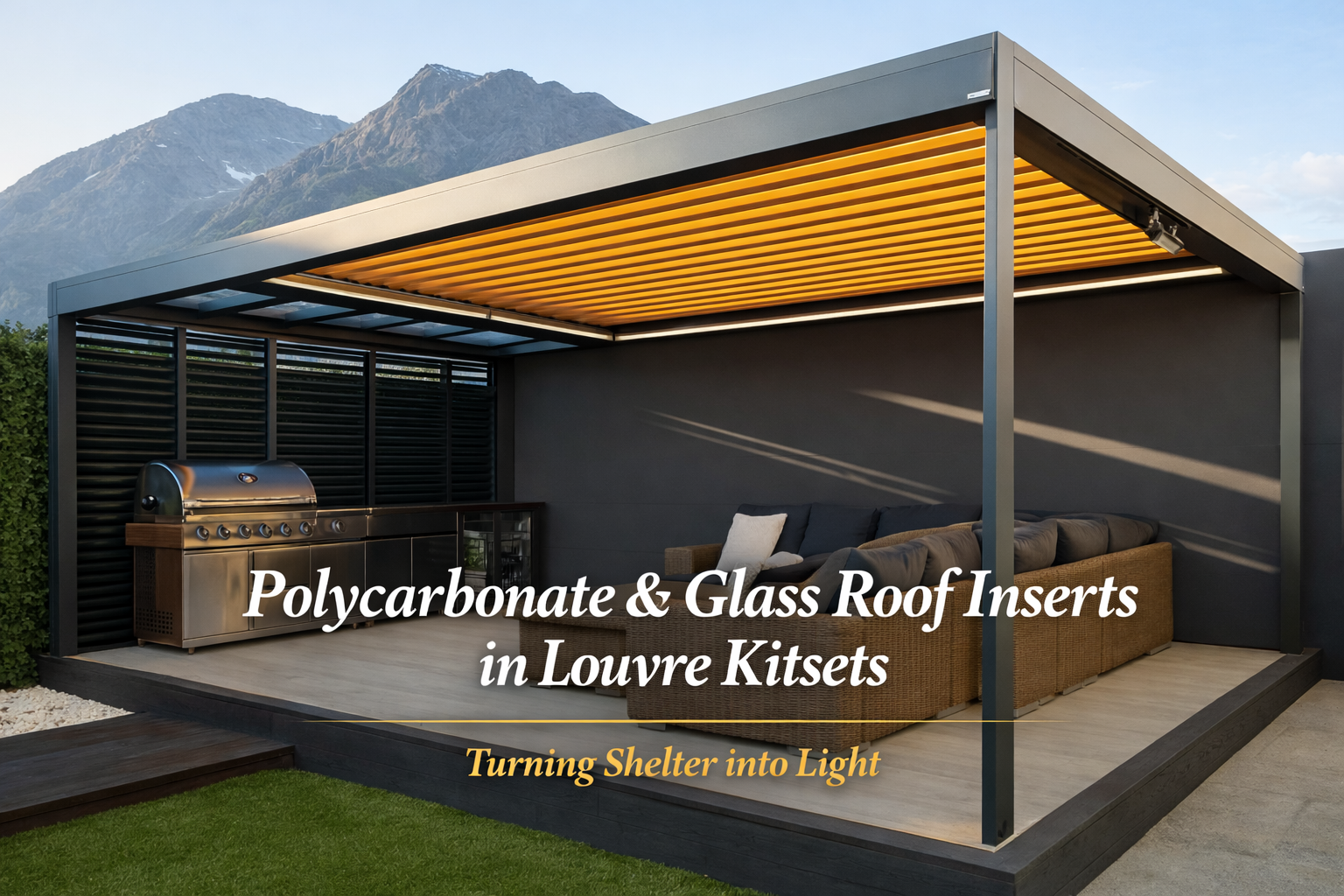
Turning Shelter into Light
Louvre roofs are famous for control. Open them for sun and airflow. Close them for rain protection.
But there is a challenge many owners discover after installation:
When the roof is closed, the space can become darker than expected.
Transparent roof inserts solve this problem without sacrificing performance. They allow daylight to enter selected areas while the rest of the system continues to manage shade, ventilation, and weather.
Instead of choosing between light or shelter, you design with both.
And that is what makes them special.
Why Inserts Are Becoming a Premium Upgrade
Outdoor living at home has changed.
These are no longer occasional-use patios opened only for summer weekends. They’ve become everyday living zones that support how families cook, relax, and spend time together.
Today, covered outdoor areas function as:
• dining spaces
• lounge and entertainment zones
• poolside retreats
• work-from-home spots
• evening gathering areas
• outdoor kitchens and BBQ stations
And most of these sit directly alongside interior rooms.
When a roof blocks too much daylight, the effect isn’t limited to the pergola. Nearby kitchens and living rooms can suddenly feel darker too.
The BBQ Reality People Notice Later
Many homeowners only realise this after installation.
When louvres close for wind or rain — exactly when you still want to cook — the BBQ area can lose a significant amount of light.
Food preparation becomes harder.
Benches fall into shadow.
Lights are switched on in the middle of the day.
A transparent insert positioned above the grill or preparation bench solves this instantly.
You maintain full weather protection while natural daylight continues to fall exactly where it’s needed.
Light Without Losing Shelter
Transparent sections bring back brightness while the roof continues to do its job.
They:
• keep rain out
• reduce glare
• soften heavy shade
• maintain privacy
• preserve the feeling of being outdoors
Instead of the area feeling enclosed, it remains open and comfortable.
Why Homeowners Notice the Difference Immediately
The change is felt the moment you step underneath.
The space appears larger.
More welcoming.
Less like being under a ceiling and more like being connected to the sky.
It becomes somewhere people naturally spend longer — from morning coffee to evening entertaining.
A Small Upgrade, Big Everyday Return
Inserts are rarely the largest cost item in a project.
Yet they often produce one of the most noticeable improvements in daily use.
More natural light.
Better visibility for cooking.
Brighter adjacent interiors.
Available Materials
Polycarbonate
Thickness: typically 4–10 mm
Colour options: clear, bronze, grey
Polycarbonate is lightweight, strong, and impact resistant. It allows generous light transmission while softening glare. Because it is lighter than glass, it is often ideal for kitset installations where practicality and handling are important.
High-quality sheets are UV stabilised, helping maintain clarity over time.
Laminated Glass
Thickness: commonly 10.76 mm
Finish options: clear, smoke grey, frosted
Glass introduces a sharper architectural look. It provides excellent transparency, superior scratch resistance, and a premium finish that suits high-end residential or commercial projects.
Frosted versions diffuse sunlight beautifully, reducing harsh brightness while keeping the area naturally lit.
Design Without Compromise
The true power of inserts lies in precision placement.
You are not changing the entire roof.
You are introducing light exactly where it matters.
Common locations include:
• above outdoor dining tables
• adjacent to sliding doors
• near kitchen connections
• along internal walls
• over walkways
• above service counters in hospitality settings
The remainder of the structure continues to provide shade and environmental control.
Think of it as applying skylight strategy to an outdoor room.
Technical Parameters
Most louvre kitset systems operate within similar structural limits.
Maximum panel depth is generally around 500 mm.
This maintains compatibility with rafter spacing, water management systems, and engineering loads while allowing meaningful daylight penetration.
Functional Advantages
Beyond appearance, inserts bring practical improvements.
• Brighten shaded areas
• Maintain full rain protection
• Reduce dependence on artificial lighting
• Help interiors adjacent to the pergola stay lighter
• Preserve outdoor ambience even when closed
• Provide UV stability for long-term performance
For commercial operators, brighter daytime environments often translate into more inviting spaces and longer customer stays.
High Sun, Frequent Rain = Greater Value
In regions where roofs are often closed due to intense sun or unpredictable weather, fully solid coverage can unintentionally create dark zones.
Transparent sections counteract this.
Even when weather forces the louvres shut, the area still feels connected to the sky.
Covered, Not Enclosed
This might be the most important point.
A ceiling blocks connection.
Light restores it.
When daylight filters through, people still feel outdoors. The structure protects without isolating.
That emotional difference significantly affects comfort, relaxation, and the way spaces are used.
Where the Trend Is Moving
Designers are increasingly using inserts to:
• highlight seating areas
• define pathways
• create visual rhythm
• enhance photography and social media appeal
• bring architectural sophistication to kitset structures
The roof is no longer just protection.
It is becoming part of the design language.
Final Thought
Polycarbonate and glass inserts do not change the purpose of a louvre roof.
They improve the experience beneath it.
You still have control.
You still have shelter.
Now you also have light.