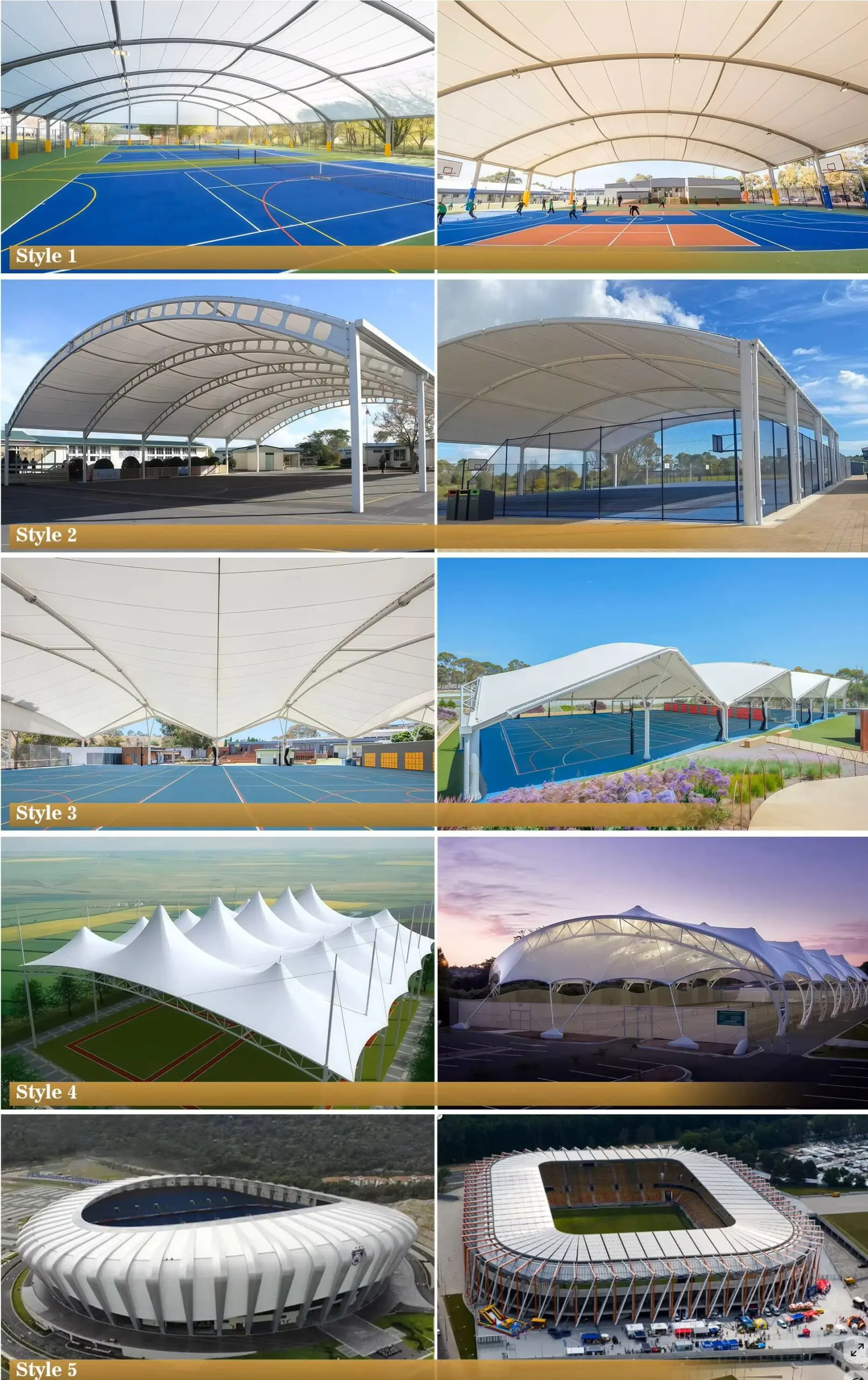
Description
Global demand for covered sports environments is rising rapidly. Facility owners, schools, and developers are under increasing pressure to deliver year-round playability while controlling build time and project costs.
Traditional construction methods often struggle to meet these requirements.
This is where engineered rapid-deploy stadium covers are gaining serious traction.
Apollo NZ is expanding its modular sports infrastructure portfolio with high-performance stadium cover systems designed to bridge the gap between lightweight shelters and fully permanent stadium buildings.
These systems combine structural aluminium or steel frameworks with advanced membrane roofing to create scalable, weather-resistant sports environments with significantly faster deployment timelines.
Why Engineered Stadium Covers Are Growing
Several global trends are driving adoption of modular sports enclosures.
Key market drivers
-
Rising construction and labour costs
-
Demand for year-round sports access
-
Faster project delivery expectations
-
Growth of modular construction methods
-
Ongoing upgrades of school and community facilities
Modern stadium tent systems are no longer temporary event structures. Today’s engineered solutions are built for long-term structural performance and operational reliability.
Apollo NZ Stadium Cover Range
Apollo NZ offers multiple structural formats to suit different project requirements. Each configuration is engineered to balance span capability, environmental performance, and installation efficiency.
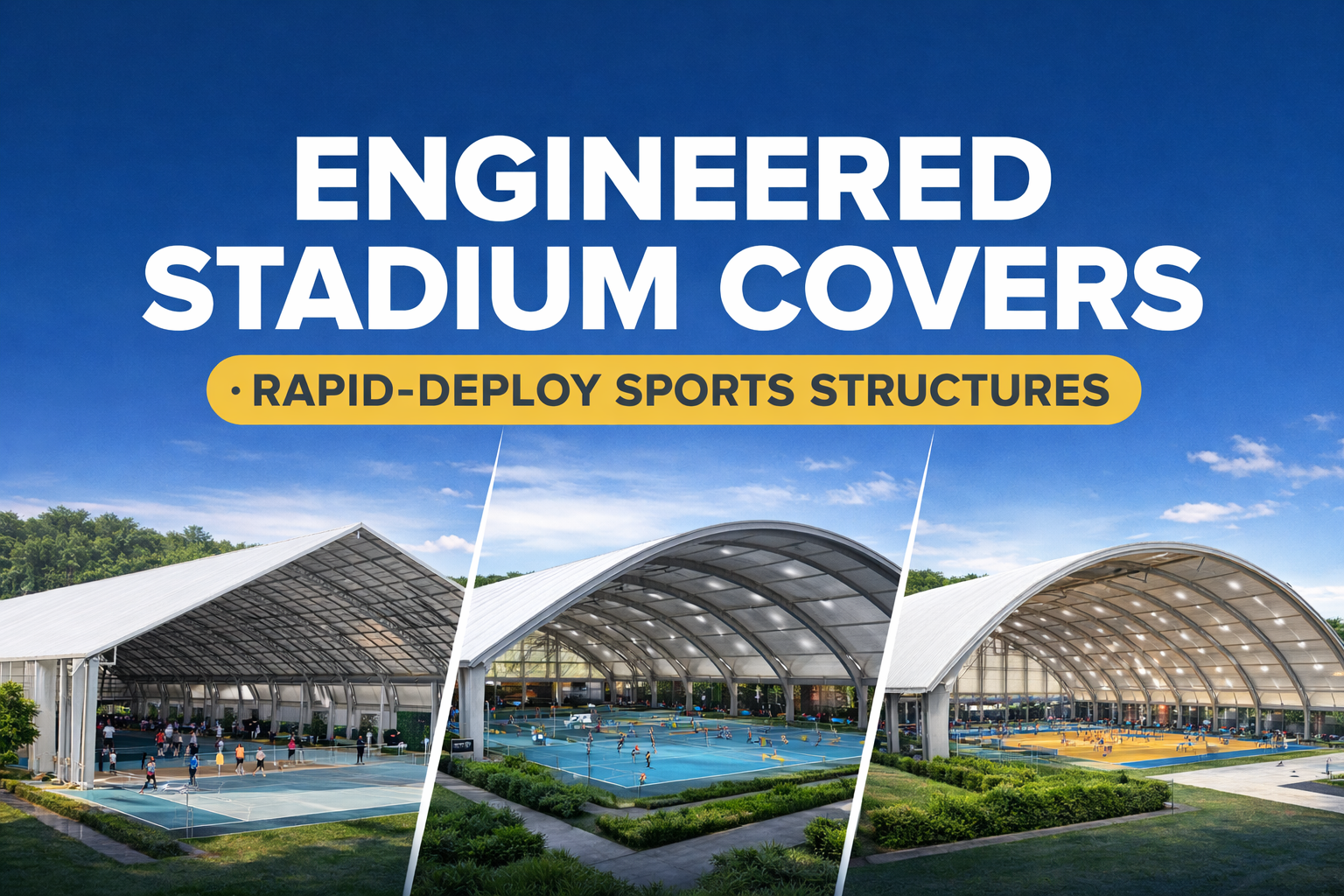
A-Frame Stadium Structure
Proven high-clearance sports enclosure
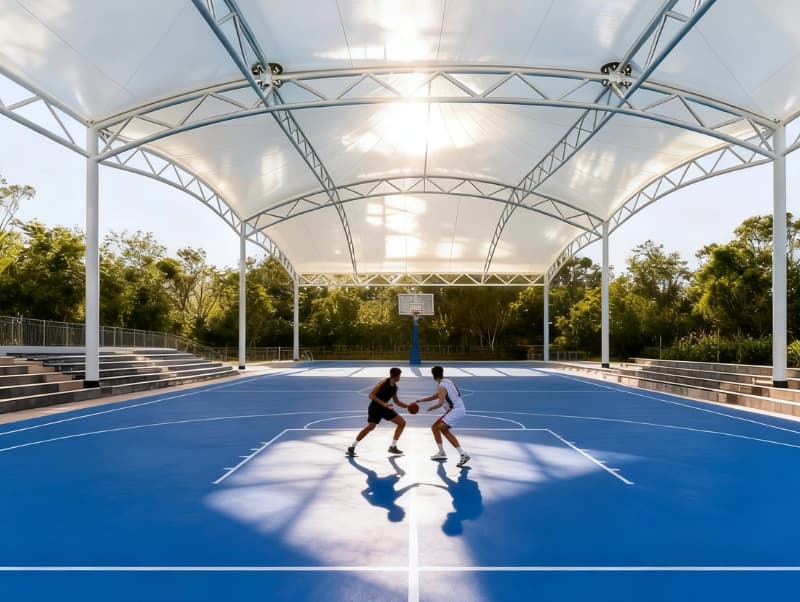
The A-Frame configuration is one of the most established engineered sports cover profiles. Its peaked roof geometry promotes effective water runoff while maintaining strong vertical clearance for indoor sports.
Key features
-
Aluminium alloy structural frame
-
Heavy-duty PVC membrane roof
-
Strong internal clearance
-
Efficient structural load distribution
-
Suitable for multi-court spans
The peaked roof form creates generous internal air volume, making it well suited for sports that require vertical play space.
Typical applications
-
School gym upgrades
-
Community basketball courts
-
Multi-sport training halls
-
Indoor court conversions
Arch Stadium Structure
Aerodynamic all-weather performer
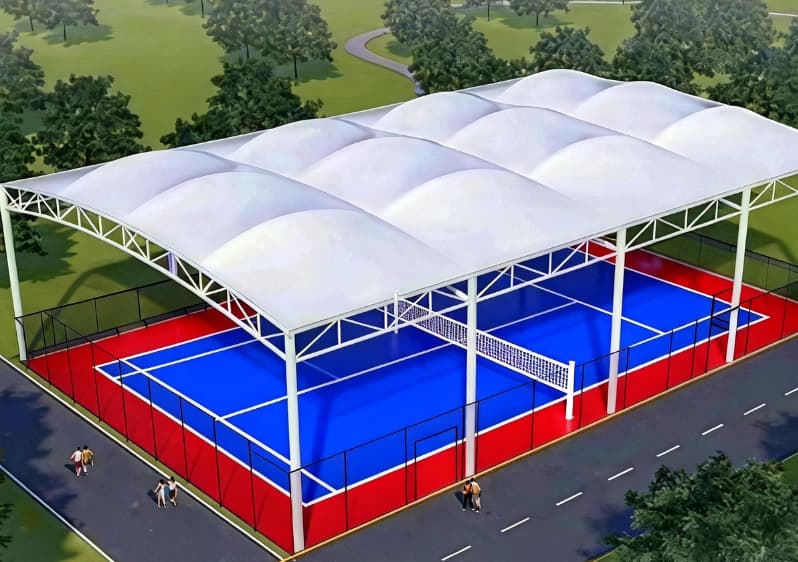
The Arch configuration features a curved roof profile that improves wind behaviour and delivers a modern architectural appearance.
Its streamlined geometry helps manage wind uplift forces while maintaining wide clear-span capability.
Key features
-
Curved aerodynamic roof design
-
Enhanced wind performance
-
Wide clear-span capability
-
Contemporary visual profile
-
Multi-court compatible layout
Typical applications
-
Tennis court covers
-
Pickleball facilities
-
Club training environments
-
Multi-use sports centres
Arcum Wide-Span Stadium Structure
Large-scale multi-court solution
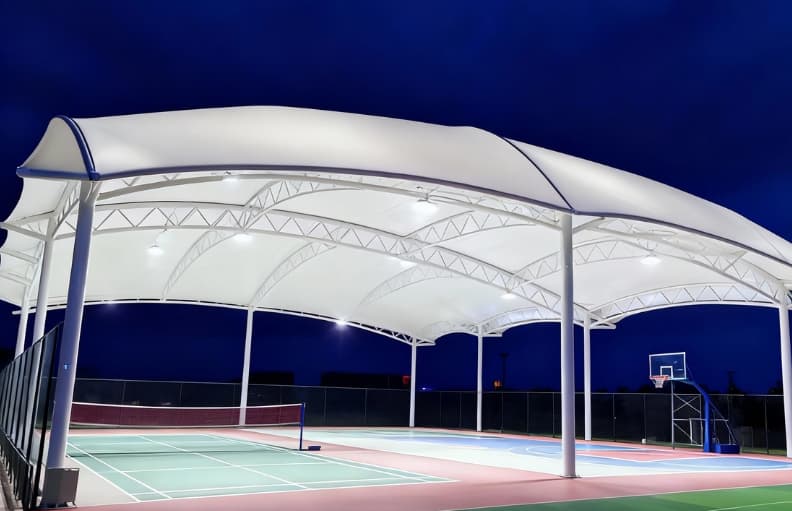
Arcum-style structures are designed for projects requiring maximum internal volume and efficient long spans. These systems are commonly specified where multiple courts must be covered under one roof.
Key features
-
Wide clear-span engineering
-
Optimised internal volume
-
Modern curved membrane profile
-
Efficient weight-to-span ratio
-
Suitable for precinct-scale facilities
Typical applications
-
Multi-court basketball hubs
-
Indoor tennis centres
-
Regional sports complexes
-
Large school court upgrades
Structural Engineering Platform
Modern stadium covers differ significantly from legacy marquee structures due to their engineered design approach.
Structural components
-
High-grade aluminium alloy frames
-
Optional structural steel membrane systems
-
High-strength bolt assemblies
-
Site-specific wind and snow load design
-
Engineered roof pitch for effective drainage
This engineering depth supports long-term durability and predictable structural performance.
Advanced Membrane Technology
Roof membrane performance plays a critical role in overall system lifespan and usability.
Material advantages
-
PVDF self-cleaning surface treatment
-
High UV resistance
-
Anti-mildew protection
-
High tensile tear-resistant fabric
-
Optional premium fabric upgrades
These features help maintain appearance, light transmission, and weather resistance over time.
Manufacturing and Quality Control
Precision manufacturing is essential for modular systems that rely on efficient on-site assembly.
Production highlights
-
CNC laser cutting for dimensional accuracy
-
Full-penetration structural welding
-
Heavy galvanised corrosion protection
-
Multi-layer protective coating systems
-
Pre-assembly testing before shipment
These processes improve installation efficiency and long-term structural reliability.
Deployment and Logistics Advantages
One of the strongest benefits of engineered stadium covers is rapid deployment capability.
Modular advantages
-
Optimised container loading
-
Pre-engineered component systems
-
Detailed installation documentation
-
Remote technical support availability
-
Fast on-site assembly
This approach helps reduce project timelines and improves cost predictability.
Where These Systems Deliver the Most Value
Engineered stadium covers sit in a powerful middle ground between lightweight shade solutions and permanent stadium construction.
High-value use cases
-
School facility modernisation
-
Emerging court sports growth
-
Community indoor training spaces
-
Multi-sport precinct development
-
Fast-track sports infrastructure projects
For many operators, modular stadium covers provide the right balance of speed, performance, and scalability.
Sports infrastructure is evolving toward faster, smarter, and more adaptable building solutions.
Engineered rapid-deploy stadium covers represent one of the most important emerging categories in modern sports facility development.
Apollo NZ continues to refine and expand its modular sports infrastructure range to support this global shift toward high-performance, rapidly deployable covered sports environments.