Description
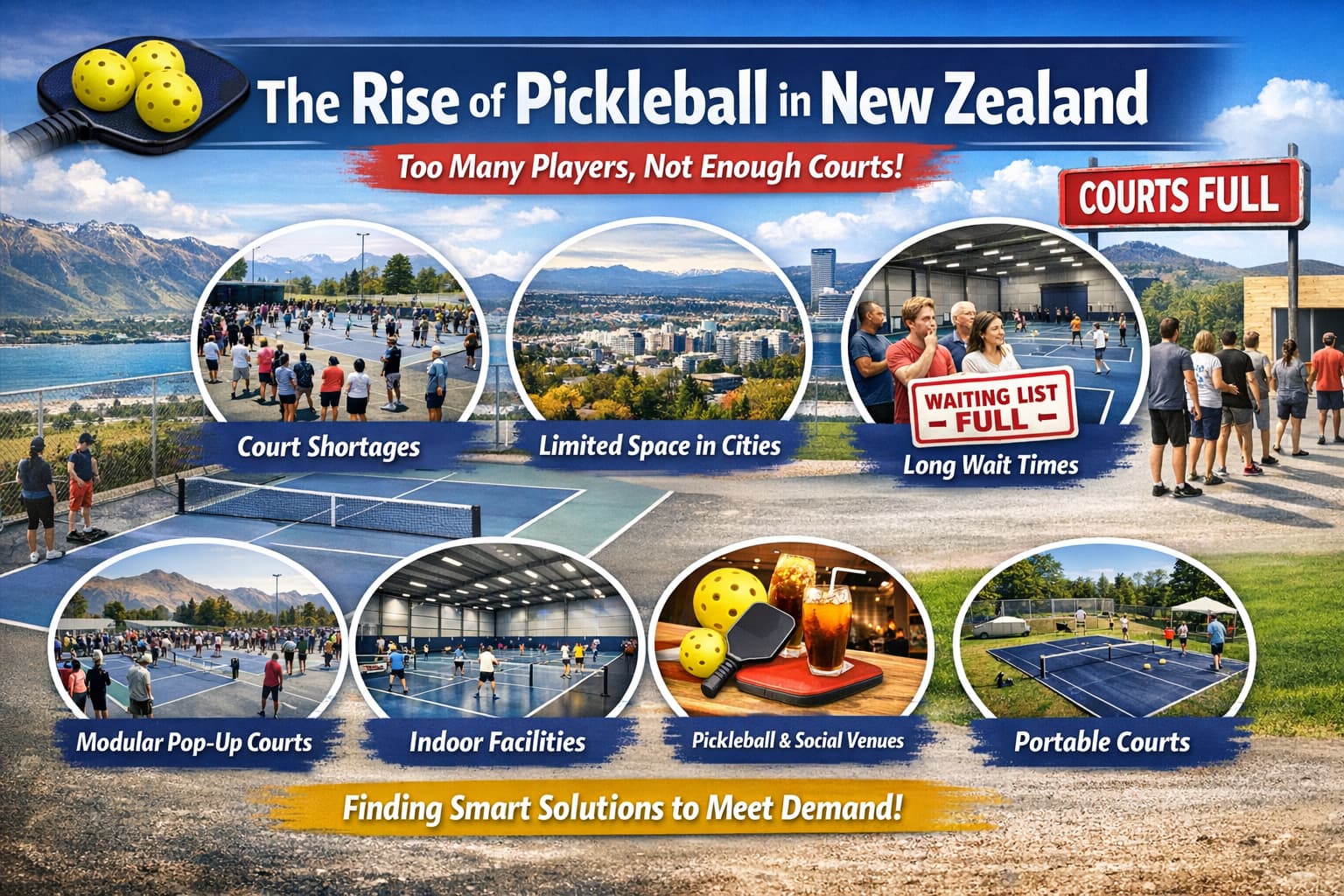
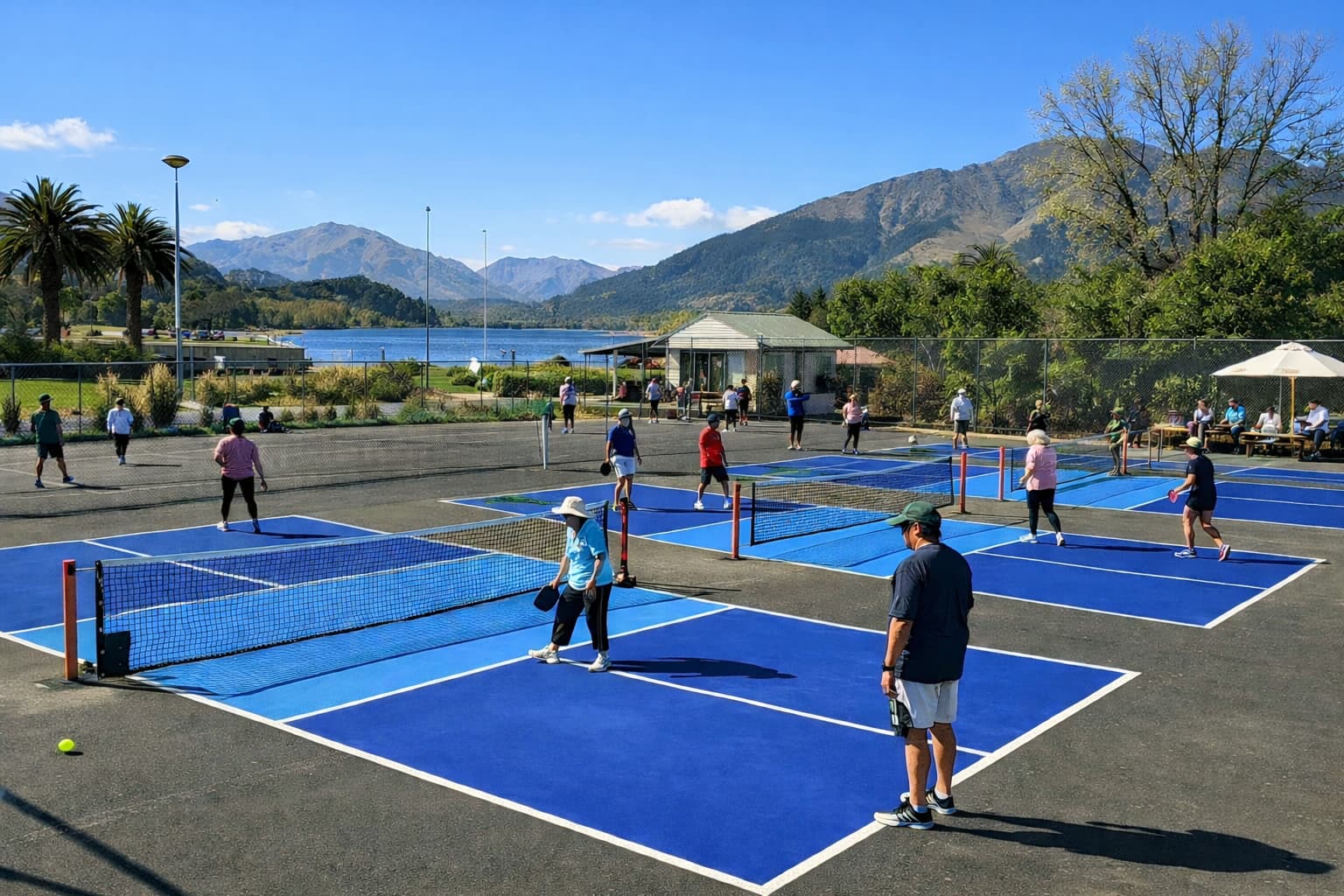
Pickleball has moved from niche sport to nationwide phenomenon in New Zealand at remarkable speed. Clubs are forming faster than facilities can be built, memberships are surging, and court booking systems are stretched to breaking point.
The biggest challenge now facing the sport isn’t interest — it’s space.
This article looks at why court shortages are happening, the real impact on players and clubs, and the practical solutions that can help New Zealand keep up with pickleball’s explosive growth.
Why Pickleball Is Growing So Fast in NZ
Pickleball’s popularity is no accident. Several factors have combined to make it one of the fastest-growing sports in the country:
-
Easy to learn, regardless of age or fitness level
-
Low-impact on joints compared to tennis or squash
-
Social and inclusive — ideal for families, retirees, and mixed-age groups
-
Small court size encourages conversation and community
-
Minimal equipment required
As a result, many clubs report waiting lists, full sessions, and limited access for new players.
The Court Space Problem
1. More Players Than Courts
Most New Zealand pickleball courts currently fall into one of three categories:
-
Shared tennis courts with temporary pickleball lines
-
Converted badminton or squash courts
-
Multi-use community halls
These spaces were never designed for high-volume pickleball use. As player numbers rise, demand quickly exceeds availability.
2. Urban Space Is Limited
In cities and larger towns, land availability is already tight. Building dedicated outdoor courts competes with housing, parking, and green space priorities — making expansion slow and expensive.
3. Peak-Time Bottlenecks
Pickleball’s social nature means players tend to cluster at the same times:
-
Mornings for retirees
-
Evenings for working adults
-
Weekends for families
This creates overcrowding and long wait times even when courts exist.
The Impact on Clubs and Players
Without intervention, court shortages lead to:
-
Reduced play time per player
-
Frustration among members
-
Difficulty attracting new players
-
Burnout for volunteer organisers
-
Lost opportunities for youth and school programmes
Long-term, this risks slowing the sport’s growth — not because people lose interest, but because they simply can’t get court time.
Practical Solutions for New Zealand
1. Modular & Temporary Courts
One of the fastest solutions is modular pickleball court systems that can be installed:
-
On car parks
-
On unused hardstand areas
-
In community spaces
-
Inside warehouses or large sheds
These systems allow councils, clubs, and private operators to expand capacity quickly without permanent construction.
2. Indoor Pickleball Facilities
Indoor spaces offer several advantages:
-
Year-round play regardless of weather
-
Better noise control in residential areas
-
Extended operating hours
-
Multi-court layouts in compact footprints
Converted warehouses, sports halls, and purpose-built indoor centres are becoming a key growth pathway internationally.
3. Multi-Court Optimisation
Better use of existing space can significantly increase capacity:
-
Converting one tennis court into 4 pickleball courts
-
Optimised court orientation for safe spacing
-
Clear scheduling systems to reduce downtime
-
Dedicated beginner, social, and competitive sessions
This approach often delivers immediate improvements with minimal investment.
4. Picklebar & Social Play Venues
A growing global trend is pickleball combined with hospitality — often referred to as “Picklebar” venues.
These venues:
-
Spread play across longer time windows
-
Encourage off-court socialising
-
Generate revenue to fund more courts
-
Attract casual players who don’t join clubs
For urban areas with limited land, this hybrid model can unlock entirely new playing capacity.
5. Portable & Pop-Up Courts
For events, schools, and regional areas, portable court systems offer flexibility:
-
Fast setup and removal
-
Shared use across multiple locations
-
Ideal for tournaments, festivals, and trials
-
Low upfront cost
Pop-up courts help introduce pickleball to new communities without long-term commitment.
The Bigger Picture
Pickleball in New Zealand isn’t facing a popularity problem — it’s facing a success problem.
Demand has outpaced infrastructure, but the solutions already exist. With smarter space usage, modular court systems, indoor facilities, and innovative venue models, New Zealand can continue growing the sport without waiting years for traditional builds.