
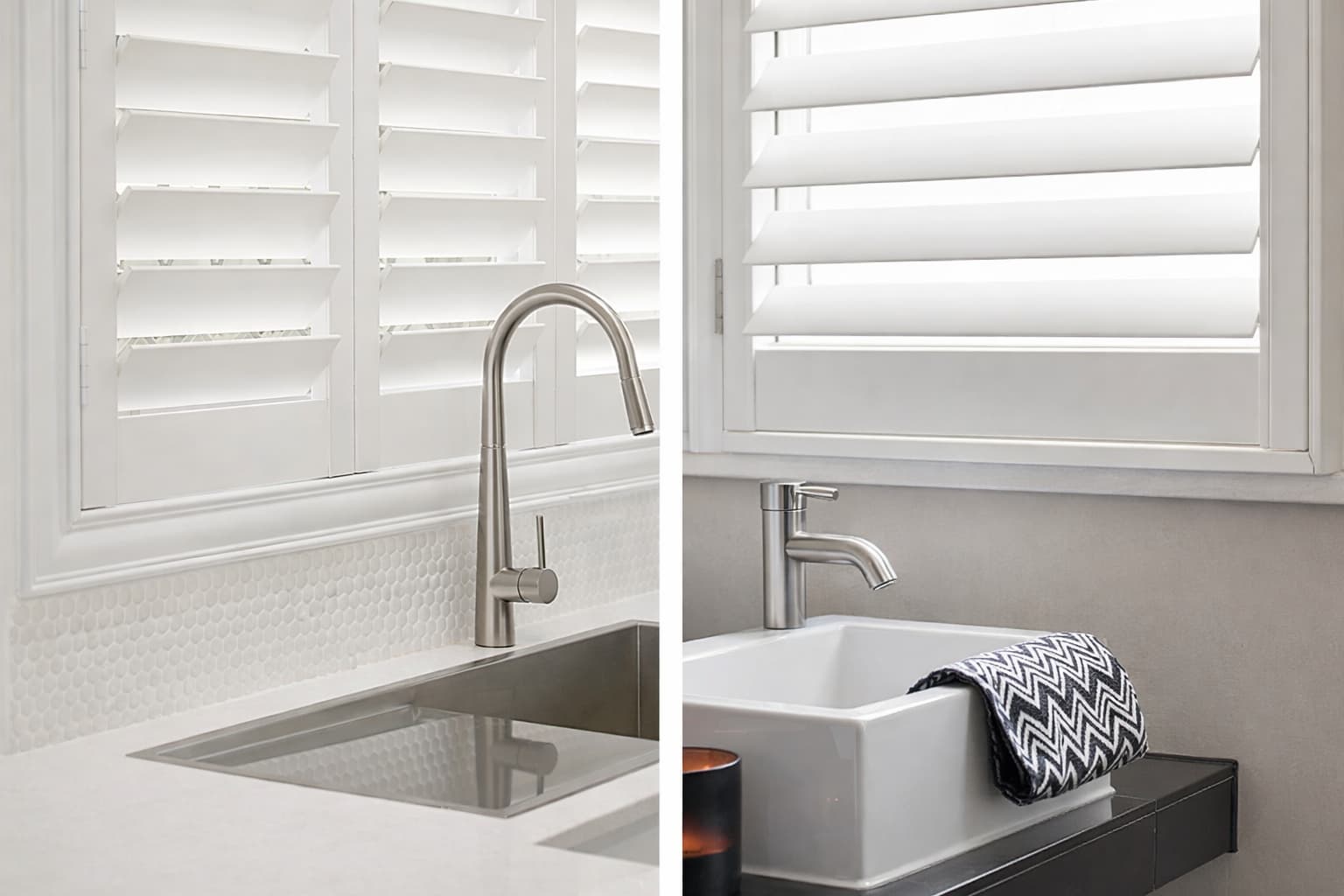
Description
Windows are the eyes of a building — but shutters are far more than decorative eyebrows. Beneath their clean lines sits a blend of physics, material science, architecture, and environmental engineering.
Whether you’re a homeowner, designer, or just someone curious about how everyday systems work, understanding the science of shutters reveals how they quietly influence comfort, efficiency, and long-term performance.
Shutters as Passive Climate Control Systems
At their core, shutters are environmental regulators. They manage three critical forces inside a building:
• Light
• Heat
• Air movement
Unlike active systems such as heating or air conditioning, shutters work passively — using positioning, material choice, and geometry to influence indoor conditions.
When closed, shutters limit solar radiation and slow heat transfer.
When adjusted, they allow daylight and airflow without full exposure.
This makes shutters one of the simplest yet most effective tools for controlling microclimates within a home or building.
The Physics of Heat, Insulation, and Air
Heat moves in three ways:
• Conduction – through materials
• Convection – through moving air
• Radiation – via energy waves
Shutters interact with all three.
When closed, shutters trap a pocket of still air between the shutter and the glass. This air layer reduces convection and slows conduction. At the same time, the shutter surface reflects or absorbs radiant heat before it enters the interior.
The result is improved thermal stability around one of the weakest points in any building: the window.
Material Science: Why Shutter Materials Matter
The effectiveness of a shutter is dictated largely by its material behaviour over time.
Timber
• Naturally insulating
• Sensitive to moisture
• Expands and contracts with humidity
Aluminium
• Structurally strong
• Highly durable
• Thermally conductive unless insulated
PVC
• Moisture-proof
• Dimensionally stable
• Low thermal conductivity
As buildings become more airtight and energy-focused, material predictability becomes just as important as strength or appearance.
Why PVC Shutters Have Become the New Norm
For a long time, PVC shutters were seen as an alternative option — sometimes unfairly associated with lower-end construction. That perception no longer reflects modern reality.
Today, PVC shutters are increasingly the standard choice across residential, hospitality, and commercial projects. This shift hasn’t happened because PVC is cheaper. It has happened because PVC solves problems other materials struggle with.
Engineered for Real-World Conditions
Modern PVC shutters are engineered materials, not basic plastics. From a scientific standpoint, PVC offers a rare combination of performance characteristics:
• Low thermal conductivity
• Zero moisture absorption
• High dimensional stability
• UV-stabilised formulations
• Uniform internal density
This makes PVC exceptionally suited to environments where shutters are most exposed to stress — bathrooms, kitchens, coastal homes, and high-use spaces.
Thermal Performance Without Complexity
PVC conducts heat far more slowly than metal. Around windows, this matters.
In practice, PVC shutters:
• Reduce temperature swings near glazing
• Lower condensation risk
• Improve perceived indoor comfort
• Support energy efficiency without automation
They act as passive thermal buffers, quietly improving performance without mechanical systems.
Moisture Resistance Changed Everything
Moisture is the enemy of long-term performance.
Timber absorbs it.
Metal reacts to it.
PVC ignores it.
PVC’s closed-cell structure prevents water ingress entirely. There is no swelling, warping, corrosion, or decay — even in persistently damp or salty environments.
This single property is one of the main reasons PVC shutters have become dominant in modern construction.
Consistency at Scale
PVC shutters are extruded to exact tolerances. That consistency matters.
• Panels stay aligned
• Louvres operate smoothly
• Hardware experiences less stress
• Large installations behave uniformly
For modern homes with wide openings and repeating panels, predictability is a performance feature — not just a manufacturing benefit.
Airflow, Louvres, and Ventilation Science
Shutters are not simply open-or-closed systems.
Adjustable louvres allow:
• Controlled ventilation
• Reduced reliance on open windows
• Improved moisture management
• Privacy without stagnation
The angle, spacing, and depth of louvres determine airflow behaviour. Well-designed shutter systems apply basic fluid dynamics to maintain air movement while limiting exposure.
Light Control and Human Comfort
Daylight affects more than visibility.
It influences circadian rhythm, productivity, mood, and visual comfort. Shutters allow precise modulation of daylight — reducing glare while maintaining natural light.
Unlike curtains or blinds, shutters let users fine-tune light direction rather than simply blocking it.
Acoustic Effects: The Hidden Benefit
While not designed as acoustic panels, shutters add mass and air gaps at windows — helping reduce external noise transmission.
This is especially noticeable in:
• Urban environments
• Coastal wind zones
• Homes near roads or hospitality areas
It’s a secondary benefit — but a measurable one.
Smart Shutters and the Future
Modern shutters increasingly integrate with smart systems:
• Automated sun tracking
• Temperature-based positioning
• Timed shading cycles
• Integration with broader building controls
This moves shutters from static fittings into adaptive building components — responding in real time to environmental conditions.
Final Thought
Shutters may appear simple, but the science behind them spans thermodynamics, materials engineering, airflow physics, and human comfort.
The rise of PVC shutters isn’t a trend — it’s the natural outcome of performance-based design. As buildings demand materials that last longer, perform better, and require less intervention, PVC has moved from alternative to default.
Shutters are no longer just about style.
They’re about control, efficiency, and intelligent material choice.