
Basketball in New Zealand has undergone a massive transformation over the last decade. While traditional 5v5 full-court games remain a staple, the rise of 3 x 3 basketball has taken the country by storm. From urban street courts in Auckland to school yards in Christchurch, the speed, accessibility, and high-energy nature of the game have made it the fastest-growing urban team sport in the world.
As the popularity of the game grows, so does the demand for high-quality playing surfaces. For many homeowners, schools, and community centers, the goal is to replicate a professional-grade experience in a limited space. This is where PP interlocking tiles have become the industry standard for a backyard basketball court NZ wide.
This guide provides a comprehensive technical overview of what is required to build a premium 3x3 court, focusing on regulation dimensions, foundational requirements, and why polypropylene (PP) surfaces are superior for the New Zealand climate.
The inclusion of 3x3 basketball in the Commonwealth Games and the Olympic program has elevated the sport's profile significantly. Unlike the full-court game, 3x3 is played on a half-court with one hoop. It requires quick thinking, physical stamina, and precision.
In New Zealand, the "3x3 Quest Tour" and various national leagues have inspired a new generation of players. This cultural shift has led to a surge in residential and community installations. Instead of a simple concrete slab with a hoop, players now seek high-performance sports tiles that provide professional bounce, safety, and aesthetic appeal.
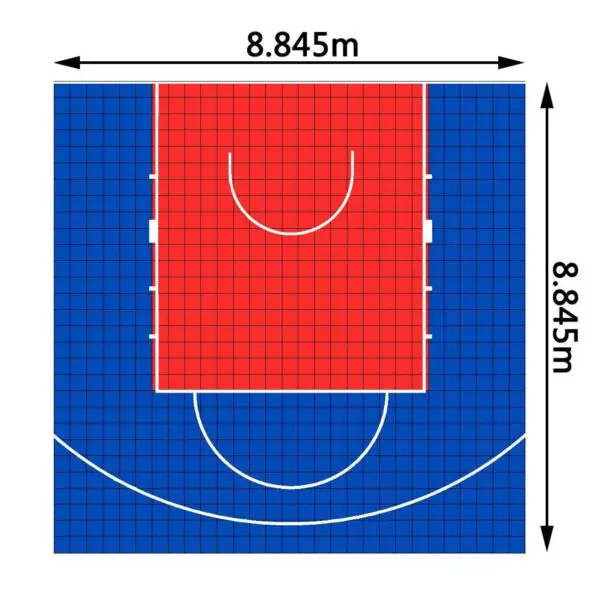
When planning a court, the first step is determining the footprint. While a full FIBA-regulation 3x3 court measures 15 meters wide by 11 meters long, this is often too large for residential properties or smaller community spaces.
The most common "pro-sumer" standard for a high-end backyard basketball court NZ is the 8.845m x 8.845m configuration.
This specific size is not arbitrary. It is designed to accommodate the standard 3-point arc (which is a 2-point arc in 3x3 rules) and the key while fitting perfectly with the modular nature of PP interlocking tiles.
The performance of your court is only as good as the ground it sits on. While PP interlocking tiles are incredibly durable, they require a flat, hard, and stable base to ensure consistent ball bounce and player safety.
A reinforced concrete pad is the recommended base for any professional sports surface.
Asphalt is a common alternative, often found in school settings or large driveways.
For those looking for a non-permanent or more cost-effective base, a heavily compacted GAP20 (General All Purpose 20mm) aggregate base can work.
To maintain the integrity of the 3x3 basketball court, you must avoid the following surfaces:
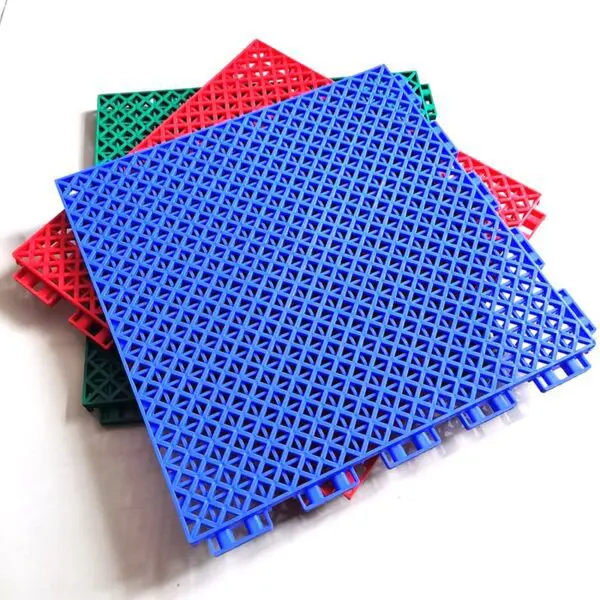
Polypropylene (PP) is a thermoplastic polymer used in high-performance sports environments globally. Here is why it is the preferred choice for New Zealand conditions.
Concrete and asphalt are unforgiving on joints. Running, jumping, and pivoting on hard surfaces can lead to shin splints and knee strain. PP interlocking tiles are engineered with a "suspended" structure. This provides vertical give and lateral forgiveness, absorbing the impact that would otherwise be transferred to the player's body.
The New Zealand climate is notoriously unpredictable. Traditional surfaces stay wet long after the rain stops, creating slippery hazards. PP tiles feature a perforated grid design. Water drains through the surface instantly to the sub-base, meaning the court is playable almost immediately after a downpour.
New Zealand has some of the harshest UV levels in the world. Lower-quality plastics will fade and become brittle within a couple of seasons. High-grade sports tiles are infused with UV stabilizers during the manufacturing process, ensuring the vibrant blues, reds, or blacks of your court stay sharp for years.
Unlike wooden indoor courts that require sanding or outdoor concrete that requires repainting and crack sealing, PP tiles are virtually maintenance-free.
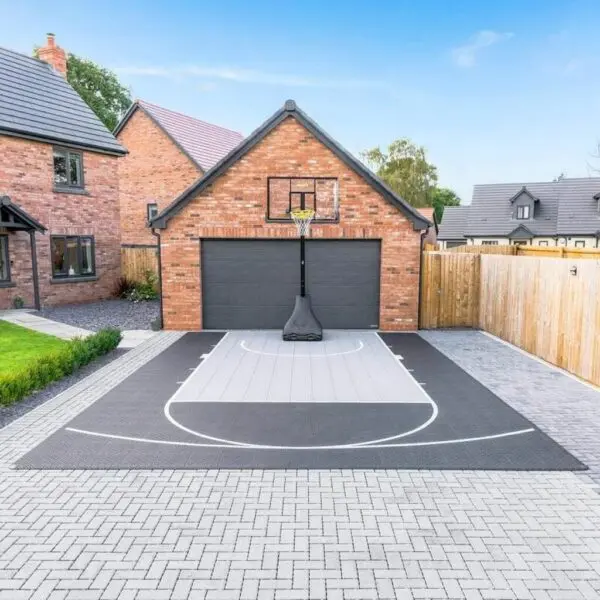
The versatility of the 3x3 modular system makes it suitable for a wide range of environments.
For families, a 3 x 3 basketball court provides a safe, dedicated space for kids to practice. It increases property value and encourages an active lifestyle. Because the tiles can be custom-colored, they can be designed to complement the home’s landscaping.
Schools often have underutilized asphalt areas. Installing PP interlocking tiles transforms these spaces into professional-grade sports hubs. The added safety of shock absorption reduces the risk of playground injuries during PE classes or lunchtime games.
Council-managed parks are increasingly adopting modular tiles for 3x3 courts because they are resistant to graffiti and can be moved if the park layout needs to change in the future.
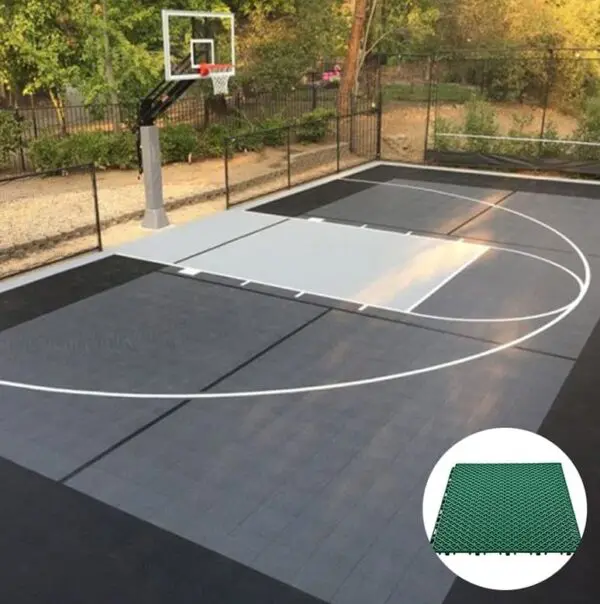
While many choose to install the tiles themselves as a weekend project, the preparation of the base is where professional help is often required.
For those unsure about the technical requirements of the base, consulting with approved installers can ensure the longevity of the project.
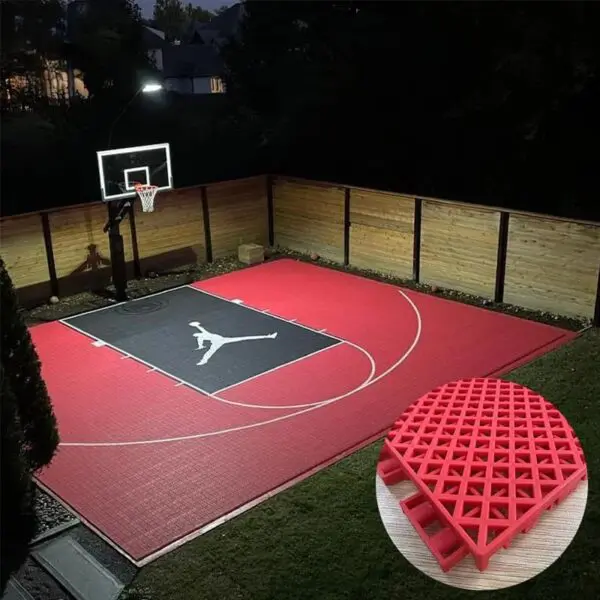
Building a world-class 3x3 basketball court requires a focus on precision and material quality. By following these core principles, you can create a high-performance space that lasts:
Investing in a proper 3x3 court setup is about more than just basketball; it is about creating a durable, safe, and professional environment for athletes of all levels to develop their skills in one of the world's most exciting sports.


