
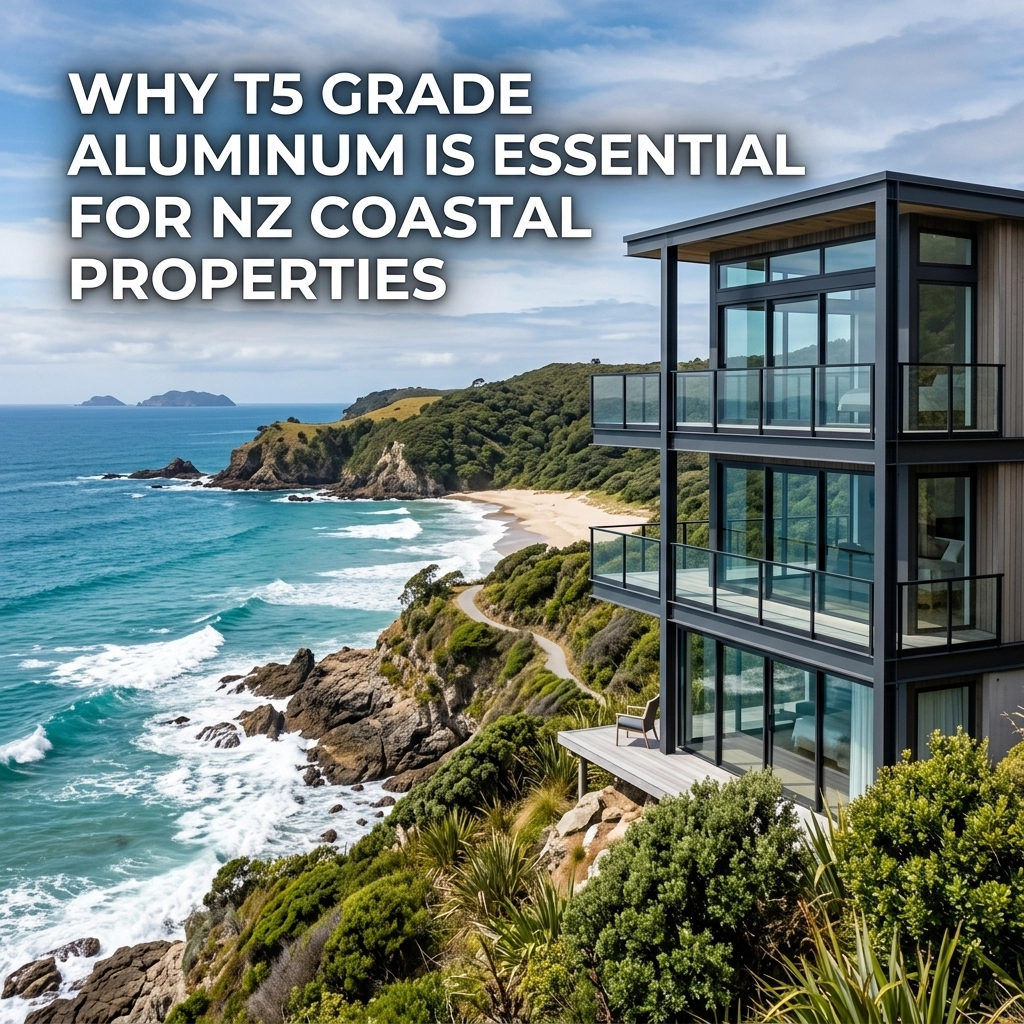
New Zealand is defined by its coastline. With over 15,000 kilometers of shore, most Kiwis live within a stone's throw of the Pacific Ocean or the Tasman Sea. While this proximity offers stunning views and a relaxed lifestyle, it presents a brutal environment for building materials. Between the relentless salt spray, high humidity, and some of the harshest UV levels in the world, ordinary metal structures simply don't stand a chance.
When planning outdoor structures: whether it's a sleek aluminium louvre system or a comprehensive kitset louvre for a deck: the choice of material is the single most important factor in determining longevity. This is where 6063-T5 grade aluminum enters the frame.
Understanding the science behind why T5 is the superior choice for coastal New Zealand isn’t just for engineers; it’s essential knowledge for any homeowner or builder looking to make a lasting investment.
To understand the value of T5 aluminum, we first have to understand the enemy: Sodium Chloride (Salt).
In coastal regions, salt is carried by the wind as an aerosol. These tiny droplets of seawater settle on surfaces and, as the water evaporates, the salt concentration increases. For most metals, this creates an electrolyte that triggers rapid electrochemical corrosion.
New Zealand’s environment is particularly aggressive because:

Aluminum is categorized by series and "tempers." The 6000 series is an alloy group where aluminum is mixed with Magnesium and Silicon. This specific combination creates a material that is highly resistant to corrosion while remaining strong and easy to shape into complex profiles like louvre blades.
The T5 designation refers to the tempering process. To achieve a T5 temper, the aluminum is extruded at high temperatures and then cooled (quenched) by air, followed by a process called artificial aging. This specific thermal treatment gives the aluminum a unique set of physical properties:
Aluminum is naturally a reactive metal, but it has a "superpower" known as passivation. When exposed to oxygen, aluminum instantly forms a microscopic layer of aluminum oxide on its surface. This layer is incredibly hard and acts as a shield, preventing further oxygen from reaching the metal underneath.
In a coastal environment, however, chlorides (salt) can attack this oxide layer. This is where the T5 Advantage becomes clear.
Lower-grade or improperly tempered aluminum is susceptible to pitting. This is a localized form of corrosion where small "pits" or holes form on the surface. Once a pit starts, the salt and moisture get trapped inside, creating a micro-environment that eats away at the structural integrity of the metal from the inside out.
6063-T5 aluminum is engineered to have a highly uniform grain structure. This uniformity means the protective oxide layer is more consistent and resilient. By resisting the initiation of pits, T5 ensures that the structural core of your louvres or frames remains solid for decades, rather than years.
In New Zealand, we don't just leave aluminum raw; we powder coat it for aesthetic and protective reasons. The success of a powder coat depends entirely on the metal underneath. The T5 tempering process produces a surface that is exceptionally receptive to pre-treatment and coating.

New Zealand’s building codes are some of the strictest in the world regarding wind loads. Outdoor structures like louvre roofs act like sails in a storm.
While some might assume a "harder" temper is always better, the T5 temper offers a perfect balance of tensile strength and ductility. Ductility is the material's ability to deform slightly under extreme pressure without snapping. In a violent coastal gale, you want a structure that has the "give" to handle the load while maintaining the strength to stay standing.
T5 aluminum provides the high strength-to-weight ratio required for these architectural applications, ensuring that your outdoor living area remains safe and secure regardless of the weather.
Even the best materials require a degree of care in a salt-heavy environment. However, the maintenance profile of T5 aluminum is significantly lower than that of steel or timber.
Because T5 aluminum doesn’t rust in the traditional sense, maintenance is focused on removing the accumulated salt crust that can eventually dull the finish.

For professionals, the choice of T5 is about risk management. Using sub-standard aluminum in a coastal New Zealand build is a recipe for expensive remedial work.
Choosing the right material for the New Zealand coast isn't just an aesthetic choice; it's a structural necessity. T5 grade aluminum stands out as the industry standard for a reason.
When investing in your home's outdoor environment: whether it's a basketball court frame, a louvre system, or custom outdoor blinds: ensuring the metal components are 6063-T5 aluminum is the most effective way to protect your investment against the elements.


