
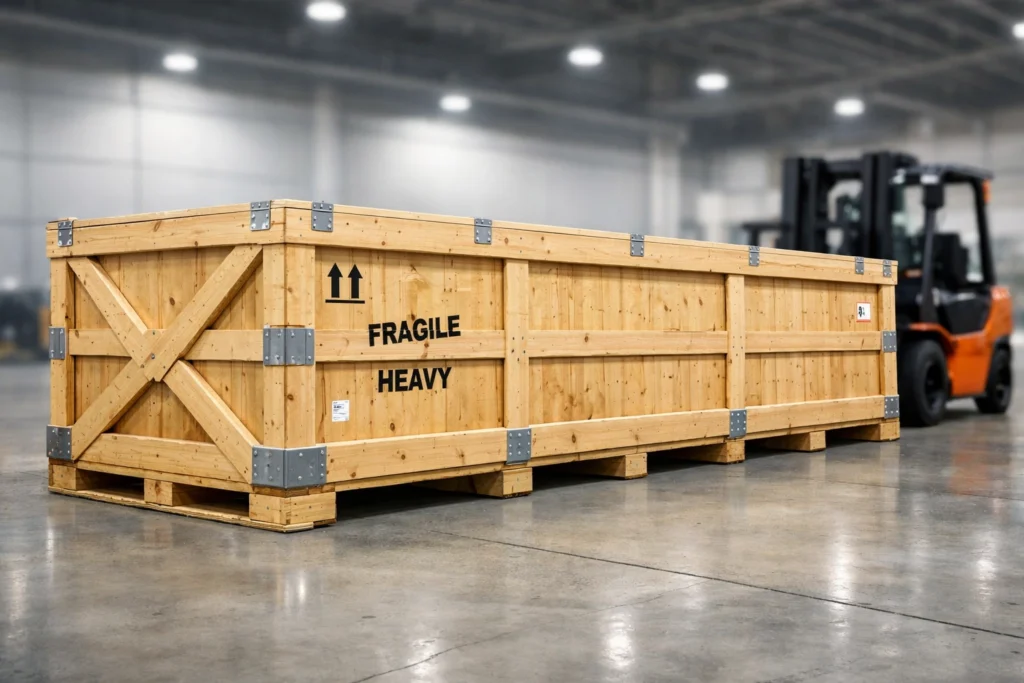
When you are deep in the planning stages of a major outdoor design project, your mind is likely filled with visions of sleek aluminium lines, the perfect shade of charcoal or white, and the way the light will filter through your new louvre roof. You are thinking about the end result. What you are almost certainly not thinking about is a 4-meter-long wooden crate sitting in a freight depot at 2:00 AM.
However, in the world of high-end outdoor kitsets, that crate is the most important factor in whether your project starts on schedule or descends into a nightmare of insurance claims and back-ordered replacement parts.
In the logistics industry, there is a massive divide between "parcel shipping" and "heavy-duty crating." When it comes to louvre kitsets, which are essentially heavy, long, and surprisingly delicate pieces of precision-engineered aluminium, the choice of packaging isn't just a detail. It is the difference between a successful install and a pile of scrap metal.
Before we dive into why the crate is king, we need to understand the material being moved. Aluminium extrusions are the backbone of the modern louvre system. Aluminium is prized for being lightweight and rust-resistant, making it perfect for the New Zealand climate. But from a shipping perspective, it presents a "Goldilocks" problem.
It is heavy enough to crush cardboard, yet soft enough to be scratched, dented, or bent if it isn't supported correctly. A 4-meter beam has a lot of leverage; if a courier grabs one end and the other end is unsupported, that beam can "kink" or bow. Once an aluminium extrusion is bent, it loses its structural integrity. You can’t just "bend it back" and expect it to hold a motor or withstand a wind load.
Many entry-level or mass-produced kitsets are shipped in individual cardboard boxes. On paper, this seems logical. It’s easier for a couple of people to lift a single box, and it’s cheaper to produce the packaging. However, this method is fraught with risks that often lead to project delays.
When you ship a 4-meter-long item in a cardboard sleeve, that item is at the mercy of every bump and vibration in the road. More importantly, it is at the mercy of how it is stacked in a truck. If a heavy pallet is placed on top of a long, thin box containing a louvre gutter or frame, the cardboard offers zero structural protection. The result? A "bananaed" extrusion that will never sit flush during installation.
A standard louvre kitset can consist of anywhere from 5 to 15 different components: louvre blades, gutters, posts, beams, and hardware boxes. When these are shipped as individual boxes, they are treated as individual "units" by the freight company.
This "fragmented shipping" is the number one cause of frustration for DIYers and installers alike. You have a team ready to build, but you’re missing the very first part you need to get the frame standing.
Powder-coated aluminium looks stunning, but it hates friction. In a cardboard box, parts can shift during transit. Micro-movements over a 500km journey act like sandpaper. By the time the parts arrive, the beautiful matte finish is marred by "transit rub", shiny spots or scratches where the cardboard has vibrated against the metal.
Crating is a different beast entirely. It involves building a rigid, structural "exoskeleton" around the entire kitset. This isn't just a bigger box; it is a piece of engineered logistics. Here is why it is the industry benchmark for high-end systems.
A professional crate is built on a "skid" or a pallet base. This means the entire weight of the kitset is distributed across a rigid wooden frame. This frame prevents the aluminium from bowing or kinking. Because the crate is rigid, the freight company must use a forklift or a hiab to move it. This actually makes the product safer. When a package is too heavy or awkward to be moved by hand, it is treated with the mechanical respect it deserves.
When a kitset is crated, every single component, from the 4-meter beams down to the smallest bag of stainless steel screws, is contained within one single, sealed unit.
Road transport is violent. Trucks hit potholes, drivers brake suddenly, and cargo shifts. A wooden crate acts as a shield. If another pallet in the truck tips over, it hits the wooden exterior of the crate, not your expensive louvre blades. The wood absorbs the energy of the impact, leaving the contents pristine.
It’s not enough to just throw wood around a product. Internal packing is where the real "art" happens. An expert crating process involves several layers of protection:
Is crating more expensive than cardboard? Yes, absolutely. It requires more material, more labor to build, and it often costs more in freight because of the added weight of the timber.
However, experienced designers and builders know that the "cost" of a damaged shipment is far higher.
In the high-end outdoor design world, crating is an insurance policy. It ensures that the quality leaving the warehouse is the exact same quality that arrives at your driveway.
If you are sourcing a louvre kitset for a project, don't be afraid to ask about the logistics. It’s a technical question that separates the high-quality suppliers from the "flat-pack" volume sellers.
We often say that a louvre system is only as good as its installation. But the truth is, an installation is only as good as the parts provided. By insisting on heavy-duty crating over individual boxes, you are protecting the integrity of the aluminium, ensuring all parts arrive together, and preventing the surface damage that can ruin the aesthetic of a premium outdoor space.
Proper packaging might be the "unsung hero" of the industry, but once you’ve seen the difference between a pristine crate and a crushed cardboard box, you’ll never look at logistics the same way again.


