
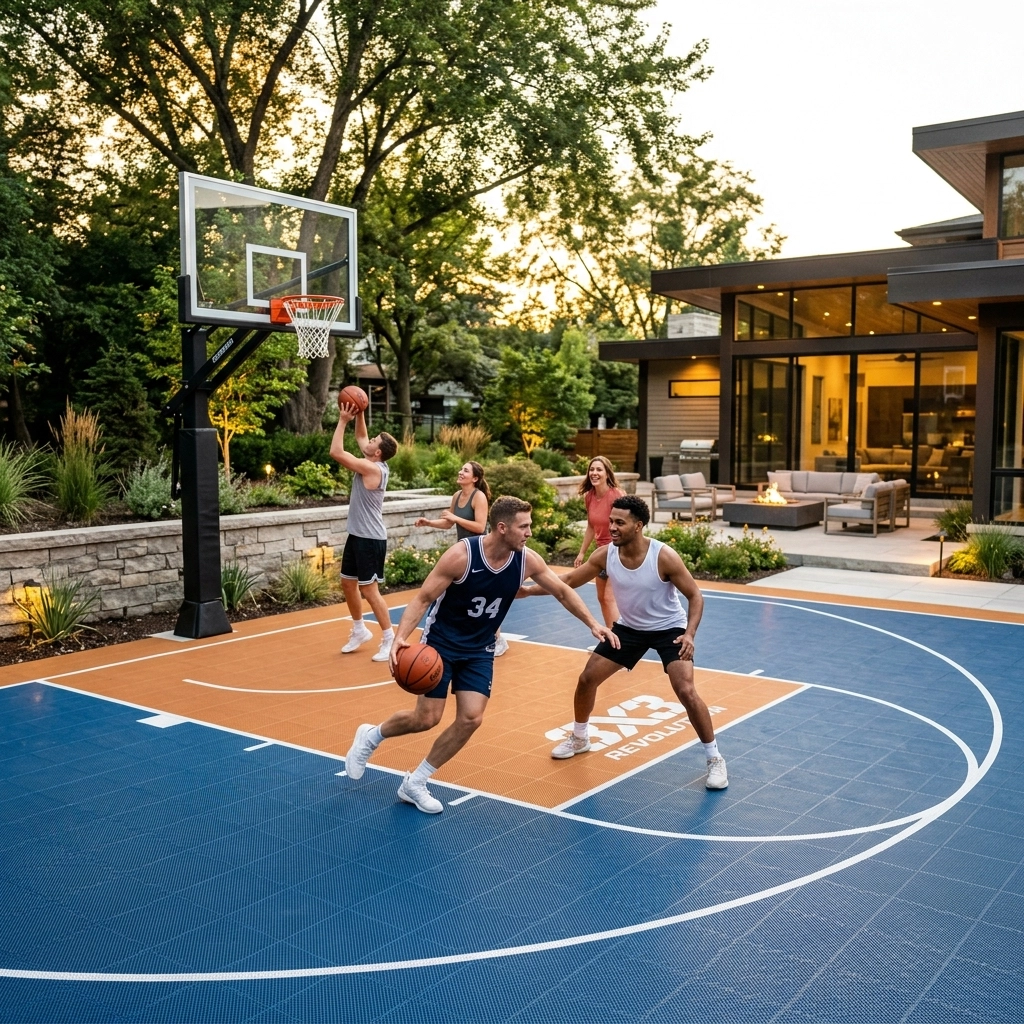
Backyards are being redesigned with function, flexibility, and low maintenance in mind. One of the clearest examples is the rise of the 3x3 backyard court: a compact playing surface that supports basketball, skill training, general recreation, and, in many cases, multiple sports on a single footprint.
This shift is not just about sport. It reflects a broader lifestyle trend toward outdoor spaces that are used regularly rather than simply maintained. Instead of allocating valuable space to a lawn that demands constant upkeep, many households are choosing hard-wearing surfaces that support movement, social use, and year-round activity.
For designers, renovators, and homeowners, the appeal is straightforward: a 3x3 court delivers high utility in a relatively compact area while also offering flexibility in layout, surface choice, and long-term use.
The popularity of compact backyard courts is being driven by a few clear factors:
✅ Highlight the core trend: people want outdoor areas that do more than look tidy. They want spaces that are durable, active, and easy to use.
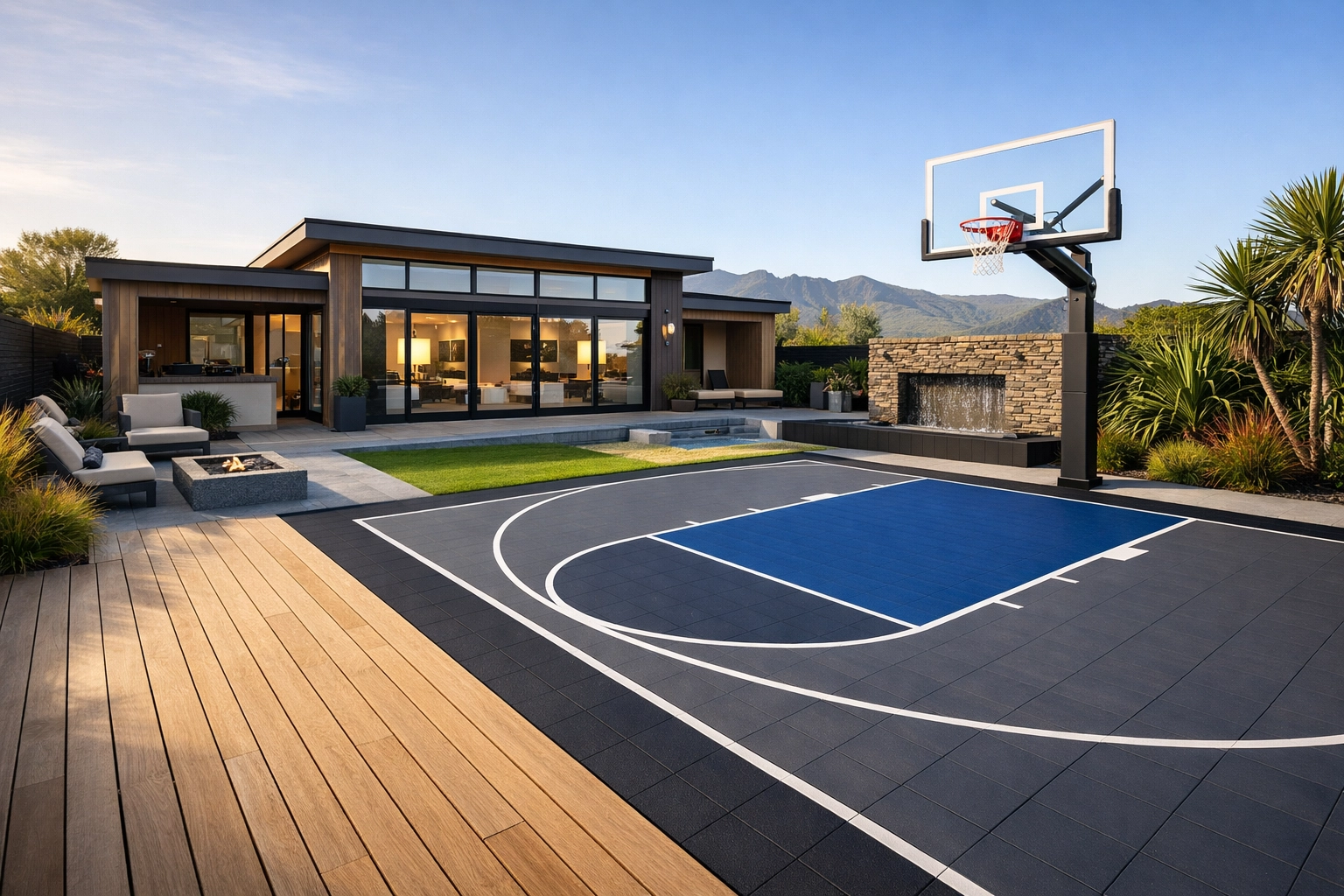
The 3x3 format is especially well suited to residential projects because it is compact, flexible, and skill-focused. It captures the essential movements of basketball—shooting, passing, defending, change of direction, and short-burst conditioning—without requiring the land area of a full court.
That smaller format makes it practical for suburban sections, side-yard layouts, and renovation projects where outdoor space has to work hard.
There is no single mandatory backyard dimension, but these are common planning ranges:
✅ Specify the design priority: the usable play area matters more than trying to force regulation sizing into a site that cannot support safe run-off space.
When planning dimensions, allow for:
The current trend is not just about adding a hoop. It is about creating an outdoor area that feels intentional, usable, and technically resolved.
A well-designed backyard court usually includes:
In other words, the difference between a casual paved area and a proper court comes down to surface performance, layout accuracy, and safe installation details.
Surface choice has a major impact on comfort, drainage, ball response, maintenance, and cost over time. In most backyard projects, the main comparison is between a plain concrete finish and a modular sports tile system installed over a suitable base.
Concrete remains a common foundation and, in some projects, the finished playing surface itself.
Benefits of concrete:
Limitations of concrete as the final playing surface:
Modular sports tiles are commonly used to improve playing comfort and drainage performance. These systems are generally installed over a firm, level base.
Benefits of sports tiling:
Key technical considerations:
✅ Describe the trade-off clearly: concrete provides structure; sports tiles often improve playability and comfort.
One reason these courts are trending is their versatility. A compact hard-surface area can support more than one type of activity, especially when line marking and equipment choices are planned early.
Common uses include:
To support multi-sport use, provide:
✅ Highlight the main advantage: one compact court can serve children, teenagers, and adults in different ways across the week.
The popularity of backyard courts is also tied to how people now think about outdoor living. The court is not only a place to play. It can also become a daily-use lifestyle space.
Key benefits include:
There is also a practical design benefit: a court creates a defined activity zone. That can improve how the rest of the site functions by separating play space from planting, dining, or circulation areas.
Installing a backyard court requires more than choosing a hoop location. The long-term result depends on base preparation, drainage, layout accuracy, and safe clearances.
Start with a surface that is:
If the base moves, settles, or drains poorly, the finished court will underperform regardless of the top surface.
Do not plan only for the marked playing zone. Include:
A slightly smaller court with safe margins is usually a better result than an oversized layout squeezed into the site.
Drainage should be designed into the project from the start. Provide:
Check whether the project triggers any local requirements for:
Also consider practical neighbour impacts such as noise, evening light spill, and rebound space near boundaries.
The broader reason 3x3 backyard courts are trending is simple: they align with how people want to use their homes now. Outdoor areas are increasingly expected to support exercise, social connection, flexible recreation, and lower maintenance.
A compact court answers all of those needs in one move. It gives households a place to train, play casually, host friends, and keep outdoor activity close to home. For many properties, that makes the court less of a novelty and more of a practical lifestyle upgrade.
A well-planned backyard court succeeds when it balances performance, safety, durability, and everyday usability.


