The "Supply-Only" Shift: Why Builders are Taking Control of Louvre Installations

May 10, 2026
Spread the love

For decades, the installation of high-end architectural louvre systems was treated as a "black box" by most builders. It was a specialized trade, often shrouded in high margins and controlled by a handful of installation companies that managed everything from site measure to the final screw. If a client wanted an automated roof, the builder simply stepped back, added a small coordination fee, and let the specialists deal with the engineering and the inevitable scheduling headaches.

But the tide is shifting. Across the residential and commercial construction landscape, a growing number of builders and property developers are ditching the traditional full-service model in favor of "Supply-Only" kitsets.

This isn't just a trend driven by the "DIY" spirit; it is a calculated business move. In an era where margins are squeezed and project timelines are volatile, taking control of the louvre installation is becoming a strategic necessity for the modern contractor.

The Business Logic: Margin Retention and Cost Control

The primary driver behind the supply-only shift is, unsurprisingly, the bottom line. When a builder sub-contracts a louvre installation to a full-service firm, they aren't just paying for the aluminium and the motors. They are paying for that company’s overheads: their sales commissions, their specialized installers, their branded vehicles, and their significant profit margins.

By moving to a supply-only model, builders can:

  • Capture the Installation Margin: Instead of passing that 20–30% labor and management markup to a third party, the builder keeps it in-house.
  • Eliminate "Double-Handling" Fees: Every time a sub-contractor steps onto a site, there are admin costs, induction times, and coordination hours. Reducing the number of independent companies on-site streamlines the budget.
  • Offer Competitive Tendering: Builders who can install their own louvre systems can provide more aggressive pricing to developers, especially in the competitive multi-unit housing market.

Mastery of the Schedule: The End of the "Subbie Wait"

Ask any project manager what their biggest frustration is, and the answer is almost always "scheduling." The traditional louvre model is notorious for creating bottlenecks. Because the specialist firms often require a final site measure after the structure is built, the lead times only start ticking once the builder has already finished their portion of the work.

When a builder opts for a modular, supply-only kitset, the dynamic changes:

  1. Integrated Planning: The louvre system can be ordered based on the architectural plans, not just "as-built" measurements.
  2. Zero Downtime: The kitset arrives on-site exactly when the deck or patio is ready. The builder's own team: who are already on-site: can pivot from framing to louvre assembly without waiting for an external crew to show up.
  3. Control Over Delays: If a project is running two days late due to weather, the builder doesn't have to worry about losing their "slot" with a specialist installer and being pushed back three weeks in the queue.

The Technical Evolution: From Bespoke Engineering to Modular Precision

One of the reasons builders previously avoided installing louvres was the technical complexity. Older systems often required on-site welding, complex electrical wiring, and custom-cut components that left no room for error.

The industry has evolved. We have seen a massive shift toward modular, pre-fabricated kitsets. Modern supply-only systems are now engineered for "plug-and-play" assembly.

  • CNC Precision: Components are factory-cut to the millimeter using CNC technology. This ensures that the frames are perfectly square and the louvre blades seat correctly every time.
  • Simplified Electronics: High-torque tubular motors now frequently come with pre-wired connectors. The "electrical" work is often reduced to a simple plug-in system or a basic connection that any registered electrician can handle in minutes.
  • Structural Clarity: Manufacturers are now providing detailed technical assembly diagrams and step-by-step videos that mirror the logic of high-end cabinetry or modular scaffolding.

The Medium-Density Factor: Townhouses and Fixed Budgets

The "Supply-Only" model is finding its greatest success in the medium-density housing sector. In modern townhouse developments, space is at a premium and budgets are strictly fixed. Developers are looking for ways to add "luxury" value: like an outdoor room: without the luxury price tag of custom architectural sub-contractors.

In these environments, standardization is king. When a builder is constructing 10, 20, or 50 identical units, it makes zero sense to have a specialist firm come out and measure 50 separate times. By using a standardized kitset, the builder can create a repeatable assembly process. The first unit might take a day to install; by the tenth unit, the crew can have it done in four hours. This economy of scale is only achievable when the builder takes control of the supply chain.

Reducing Site Congestion and Health & Safety Risks

Managing a construction site in 2026 involves significant health and safety (H&S) oversight. Every new company that enters a site requires its own inductions, its own H&S documentation, and its own site-specific safety plans.

By utilizing their own staff to install modular louvre systems, builders:

  • Minimize Site Crowding: Fewer external vans and crews mean more space for essential trades and materials.
  • Streamline Responsibility: If something is installed incorrectly, the builder knows exactly who was responsible. There is no finger-pointing between the "frame guy" and the "louvre guy."
  • Maintain Site Standards: The builder’s own team is already familiar with the specific safety protocols of that site, reducing the risk of accidents from external contractors who are rushing to get to their next job.
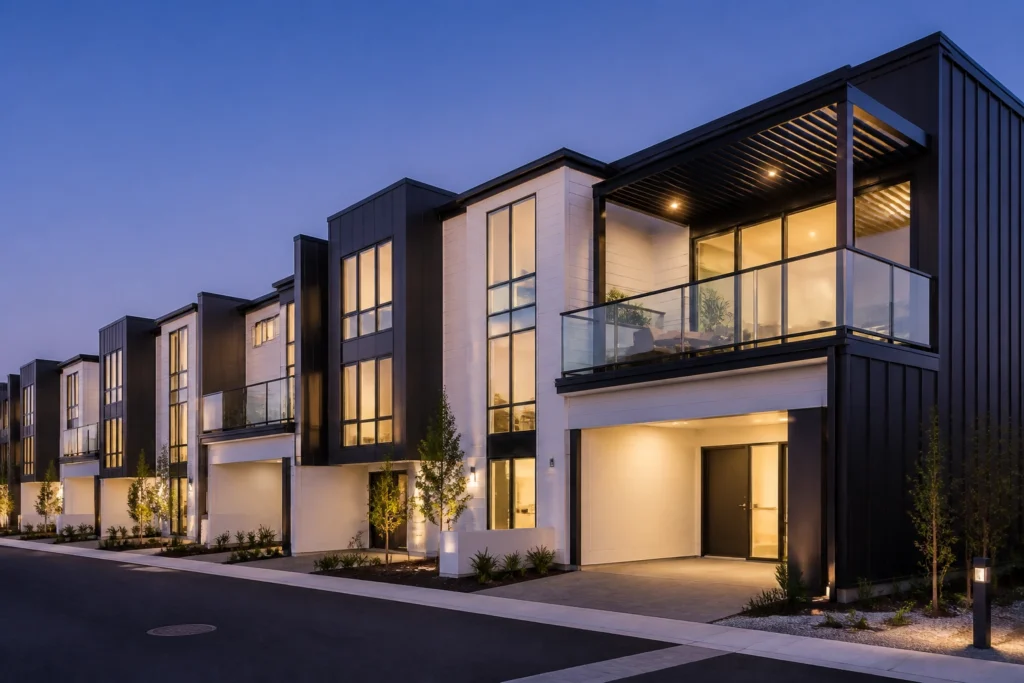
Modern townhouse development featuring a seamlessly integrated black aluminium louvre roof system on a balcony.

Key Technical Considerations for the Supply-Only Model

While the shift toward builder-led installation is clear, success depends on choosing the right system. Professionals looking to move into this model should focus on several critical technical factors:

  • Material Grade: Ensure the kitset uses 6063-T5 architectural grade aluminium. This provides the structural rigidity required for wide spans without the risk of sagging.
  • Powder Coating Standards: For Pacific environments, a high-quality powder coat is non-negotiable. Look for systems that meet international standards for salt-spray resistance.
  • Wind Load Certification: A supply-only system must come with clear engineering data. Builders need to know the maximum wind speeds the blades can handle in both the open and closed positions to ensure the structure meets local building codes.
  • Internal Drainage: Technical preference should be given to systems with integrated guttering. A supply-only kit should have a clear path for water to travel from the blades, through the internal gutters, and down the posts.
Modern home with louvre system timber finish

The Role of the Manufacturer in a Supply-Only World

The relationship between the builder and the manufacturer is changing. In the old model, the manufacturer was a distant entity. In the supply-only model, the manufacturer becomes a technical partner.

Effective manufacturers in this space now provide comprehensive support packages, including:

  • Detailed Architectural Blocks: 3D CAD and Revit files that builders can drop directly into their plans to ensure clearance and structural alignment.
  • Comprehensive Parts Lists: Every bolt, washer, and pivot point must be accounted for in the box to prevent site delays.
  • Technical Hotlines: Direct access to an engineer or master installer who can talk a site foreman through a specific mounting challenge.

Summary: The New Standard for Modern Construction

The transition to "Supply-Only" louvre systems represents a maturing of the construction industry. Builders are no longer content to be mere coordinators of expensive sub-contractors; they are reclaiming the technical and financial control of their projects.

By adopting modular, kitset-based louvre systems, builders can offer their clients high-end outdoor living solutions while simultaneously improving their own margins and protecting their schedules. As the pressure for efficiency in the housing market continues to mount, the ability to install these systems in-house will likely move from a "competitive advantage" to a standard industry requirement.

Key Takeaways for Builders:

  • Maximize Profit: Retain the 20-30% markup traditionally lost to specialist installers.
  • Control the Clock: Eliminate lead-time bottlenecks by integrating louvre assembly into the existing site workflow.
  • Focus on Quality: Choose modular systems with CNC-precision and robust wind-load certifications.
  • Standardize at Scale: Use kitsets to deliver consistent results across multi-unit or medium-density developments.

For those looking to explore the technical specifications of modern systems, the first step is to review the structural requirements, wind-load data, drainage details, and installation documentation needed to bring these capabilities in-house.

Return to insights

Charities We Support

cart
Lexonads | free ad network | automated website traffic.