
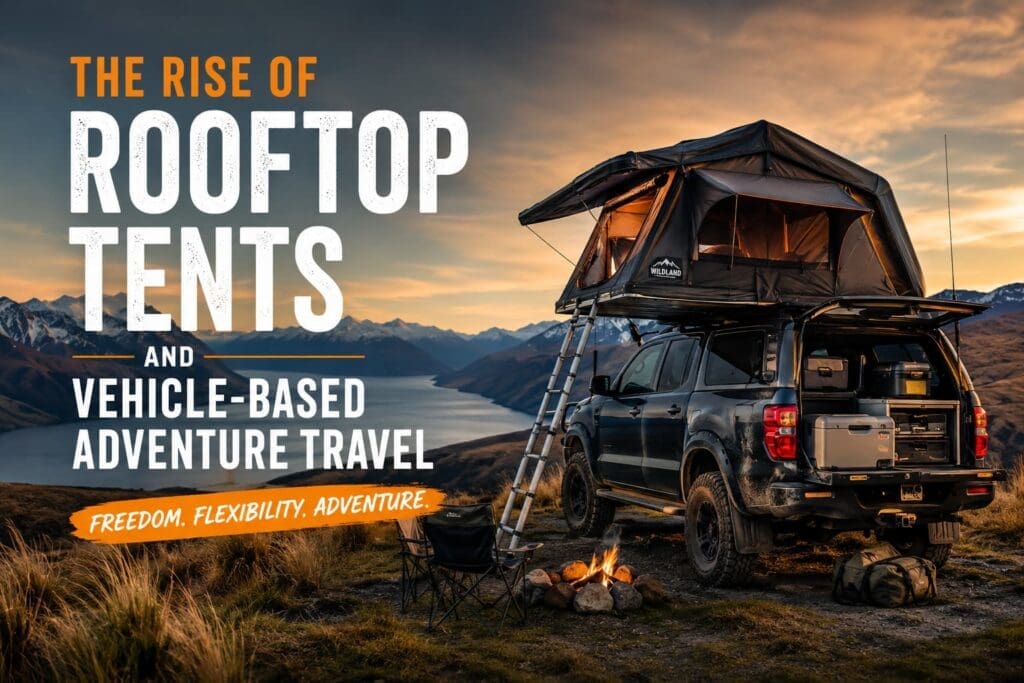
There has been a major shift in the way people approach travel and outdoor recreation. Traditional camping is no longer the only path for adventure seekers. Across New Zealand, Australia, North America, and Europe, rooftop tents and vehicle-based adventure setups are rapidly becoming part of a broader lifestyle movement focused on freedom, mobility, and self-contained exploration.
From alpine roads in the South Island to remote coastal routes in Australia and off-grid tracks across North America, rooftop tents are reshaping how people travel. What was once considered a niche overlanding trend has now evolved into a mainstream outdoor sector driven by flexibility, comfort, and the desire to escape increasingly crowded urban environments.
Vehicle-based camping offers something modern travellers increasingly value: independence.
Instead of relying on fixed accommodation or heavily booked campgrounds, rooftop tents allow travellers to stop almost anywhere suitable and quickly establish a comfortable basecamp. The ability to travel spontaneously has become one of the strongest selling points behind the growth of rooftop tent culture.
Unlike traditional ground tents, rooftop systems provide:
Many modern systems can now be deployed within minutes, making them particularly attractive for weekend escapes, road trips, surf travel, fishing expeditions, and long-distance touring.
The broader outdoor market is moving toward self-contained travel systems rather than isolated products.
Modern vehicle-based setups now commonly integrate:
This trend reflects a growing desire for flexibility and autonomy. Travellers increasingly want the ability to move between locations without sacrificing comfort or functionality.
The rise of remote work has also accelerated this movement. Many people are now combining work and travel, creating mobile outdoor setups capable of supporting extended trips without requiring traditional accommodation.
Social media and digital content have played a massive role in expanding rooftop tent popularity.
Platforms like YouTube, Instagram, and TikTok have exposed audiences to overlanding culture from around the world. Scenic vehicle setups in Iceland, New Zealand, Patagonia, Canada, and the American Southwest have inspired a new generation of travellers interested in exploration-focused lifestyles.
However, the movement has evolved beyond hardcore off-road enthusiasts.
Today’s rooftop tent buyers include:
The market has broadened significantly, with systems now available for both serious expedition use and casual recreational travel.
New Zealand is particularly well suited to rooftop tent travel.
The country offers an extraordinary mix of:
For many travellers, the journey itself becomes part of the experience rather than simply the route between destinations.
Vehicle-based adventure travel also aligns strongly with New Zealand’s outdoor culture. Activities such as hiking, mountain biking, fishing, skiing, surfing, and hunting naturally connect with mobile camping solutions.
The ability to travel across multiple climate zones and landscapes within relatively short distances makes rooftop tent systems especially practical for New Zealand conditions.
Earlier rooftop tents were often heavy, complicated, and limited in weather resistance. Modern systems are far more advanced.
Today’s premium rooftop tents commonly feature:
Many systems are now designed to withstand demanding weather conditions while maintaining comfort and usability.
This evolution has helped rooftop tents transition from a niche off-road accessory into a refined outdoor travel product suitable for a much wider audience.
Rooftop tents are also part of a much larger shift toward outdoor lifestyle spending.
Consumers are increasingly investing in products that support experiences rather than purely indoor living. Outdoor kitchens, portable cooking systems, off-grid power, adventure trailers, e-bikes, and vehicle camping systems are all growing segments connected to this broader trend.
For many people, vehicle-based travel represents:
This lifestyle-focused approach is reshaping large parts of the outdoor recreation industry.
The rooftop tent market is likely still in its early growth phase.
Future developments are expected to include:
As electric vehicles continue to evolve, vehicle-based camping may also shift toward energy-integrated travel systems where transportation, power storage, and outdoor living become increasingly interconnected.
At the same time, tourism trends continue moving toward experiential travel rather than traditional resort-based holidays.
For many travellers, the appeal is simple: mobility, flexibility, and the ability to explore on their own terms.
The rooftop tent movement is no longer just about camping. It represents a broader transformation in how people approach travel, adventure, and outdoor living itself.


