
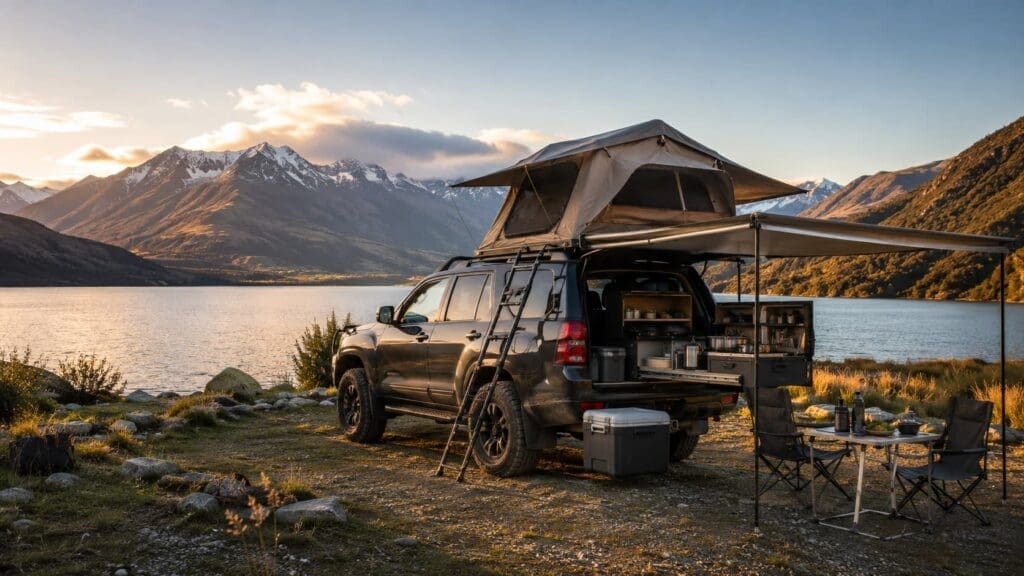
New Zealand is made for road-based adventure. In a single journey, travellers can move from subtropical beaches and native forests to alpine passes, glacial valleys, high-country lakes and remote coastal campsites.
A capable adventure vehicle makes these journeys easier, but the best setup is not necessarily the biggest or most expensive. A well-organised SUV, ute, van or 4WD fitted with the right sleeping, shelter, storage and power products can become a practical mobile basecamp for weekend escapes and longer road trips.
Inspired by our New Zealand road-trip guide, this article looks at several memorable routes and the outdoor products that can make each journey safer, more comfortable and easier to organise.
New Zealand road trips often combine sealed highways, narrow rural roads, gravel access tracks and changing weather. Your vehicle setup should be compact enough for everyday driving while providing shelter, sleeping space and reliable access to essential equipment.
Useful products for a New Zealand adventure vehicle include:
Outdoor Frontier and Apollo NZ can help travellers choose vehicle-based camping products suited to SUVs, utes, vans and touring 4WDs.
A Northland road trip combines beaches, forests, historic settlements and some of the country’s most recognisable coastal scenery.
A typical route can include:
Auckland → Mangawhai → Whangārei → Bay of Islands → Matauri Bay → Doubtless Bay → Cape Reinga → Hokianga
This trip can be completed in five to seven days, although a slower itinerary allows more time for beaches, walking tracks and coastal campsites.
A rooftop tent is particularly useful in Northland because it creates a raised sleeping area while leaving the rear of the vehicle available for food, clothing and beach equipment.
A vehicle awning provides shade during warm afternoons and shelter during sudden coastal showers. An awning room or side wall can add privacy and wind protection at exposed campsites.
Other useful products include:
Salt, sand and coastal moisture can affect vehicle fittings, so equipment should be cleaned and dried after the trip.
The central North Island offers geothermal landscapes, forests, lakes and volcanic scenery.
A suggested route is:
Auckland → Rotorua → Taupō → Tongariro National Park → Ohakune → Whanganui River region
This route works well as a four-to-six-day journey and can be extended through Taranaki or Hawke’s Bay.
Temperatures can change quickly around the Central Plateau, particularly outside summer. A hard-shell rooftop tent can offer fast setup and strong weather protection, while a quality mattress or insulated topper improves comfort during colder nights.
A portable power station can support lighting, device charging and a small fridge without requiring a permanent electrical conversion.
Recommended equipment includes:
Heaters and cooking appliances should never be used inside enclosed sleeping areas unless the product is specifically approved for that application.
The East Cape provides a quieter style of road trip, with long coastal sections, small communities and fewer major service centres.
A possible route is:
Gisborne → Tolaga Bay → Tokomaru Bay → Ruatoria → Te Araroa → East Cape → Ōpōtiki
Travellers should allow four to six days and avoid rushing the narrow, winding roads.
The distance between fuel, food and general supplies makes organised storage particularly important.
A modular drawer system can keep cooking equipment, food, tools and emergency supplies secure and accessible. Soft storage bags can be used for clothing and bedding, while sealed containers protect food from moisture and dust.
Useful additions include:
A compact awning or shelter is valuable because many East Cape campsites have limited built infrastructure.
The central and southern South Island provides some of New Zealand’s most dramatic vehicle-touring scenery.
A suggested route is:
Christchurch → Lake Tekapo → Aoraki/Mount Cook → Omarama → Wānaka → Queenstown → Glenorchy
This journey can be completed in five to seven days, but seven to ten days allows more time for walking, photography and campsite stops.
Cold nights, strong sun and alpine winds mean the vehicle setup must be adaptable.
A four-season rooftop tent or well-insulated van sleeping system can improve overnight comfort. A strong awning with correctly secured support legs can create a sheltered cooking and sitting area.
Recommended products include:
Equipment should always be packed low and evenly distributed. Heavy batteries, water containers and fridges should not be placed high on roof racks.
The West Coast is one of the country’s best vehicle-based adventure routes, combining rainforests, glaciers, wild beaches and mountain passes.
A longer route can include:
Queenstown → Haast Pass → Franz Josef → Hokitika → Punakaiki → Westport → Murchison → Nelson
Allow seven to ten days for this journey.
Rain management is one of the most important considerations on the West Coast.
A large vehicle awning creates a protected area for cooking, changing clothes and storing wet equipment. Side walls or an awning room can make the area more usable during persistent rain.
Products that suit this route include:
Rooftop tents, awnings and canvas equipment should be opened and dried fully after wet journeys to prevent mould and fabric damage.
The Southern Scenic Route combines alpine scenery, isolated beaches, waterfalls, forests and wildlife areas.
A suggested itinerary is:
Queenstown → Te Anau → Milford Sound → Invercargill → Curio Bay → the Catlins → Dunedin
Allow seven to ten days, particularly when including Milford Sound and Fiordland.
This route requires preparation for cold, rain, wind and long distances between some services.
A ute canopy system works well for travellers carrying larger amounts of equipment. Drawer units, a slide-out fridge and a compact kitchen can create a highly organised touring platform.
SUV and van travellers can achieve a similar result with removable storage modules.
Useful products include:
The best system depends on how the vehicle will be used.
A rooftop tent works well for SUVs, utes and 4WDs. It keeps the sleeping area separate from storage and can provide excellent views and ventilation.
Check the vehicle’s dynamic roof-load rating and the compatibility of the roof rack before installation.
A van provides better weather protection and allows travellers to sleep inside without opening an external tent. It can also provide a sheltered sitting area during poor weather.
Ventilation, condensation control and secure storage are essential.
A ute canopy provides excellent equipment organisation. Drawers, fridge slides, water tanks, power systems and kitchens can be installed while keeping the cab free for passengers.
The complete setup must remain within the vehicle’s legal payload.
A balanced adventure setup should cover six main areas.
Use a rooftop tent, vehicle mattress or folding sleeping platform suited to the number of travellers and expected weather.
Awnings, side walls and ground mats provide protection from rain, sun and wind.
A fridge, stove, preparation surface and organised food-storage system make campsite meals easier.
Portable power stations and solar panels can support lighting, fridges, phones, cameras and other small devices.
Carry enough drinking water for the route and use secure containers that cannot move while driving.
A first-aid kit, tyre equipment, basic tools, emergency lighting and communication equipment should be accessible without unloading the vehicle.
Many New Zealand destinations are environmentally sensitive or located near small communities.
Travellers should:
Responsible travel helps protect access to these places for future visitors.
New Zealand offers road trips for almost every type of traveller, from relaxed coastal weekends to longer alpine and wilderness journeys.
The key is matching the vehicle and equipment to the route. A practical sleeping system, reliable shelter, organised storage and suitable power and cooking products can transform an ordinary vehicle into a comfortable mobile basecamp.
Outdoor Frontier and Apollo NZ offer vehicle-based camping and outdoor products for travellers preparing SUVs, utes, vans and 4WDs for New Zealand adventures.
Explore rooftop tents, vehicle awnings, storage systems, camp kitchens, power solutions and outdoor accessories designed to help you travel farther and camp more comfortably.


