
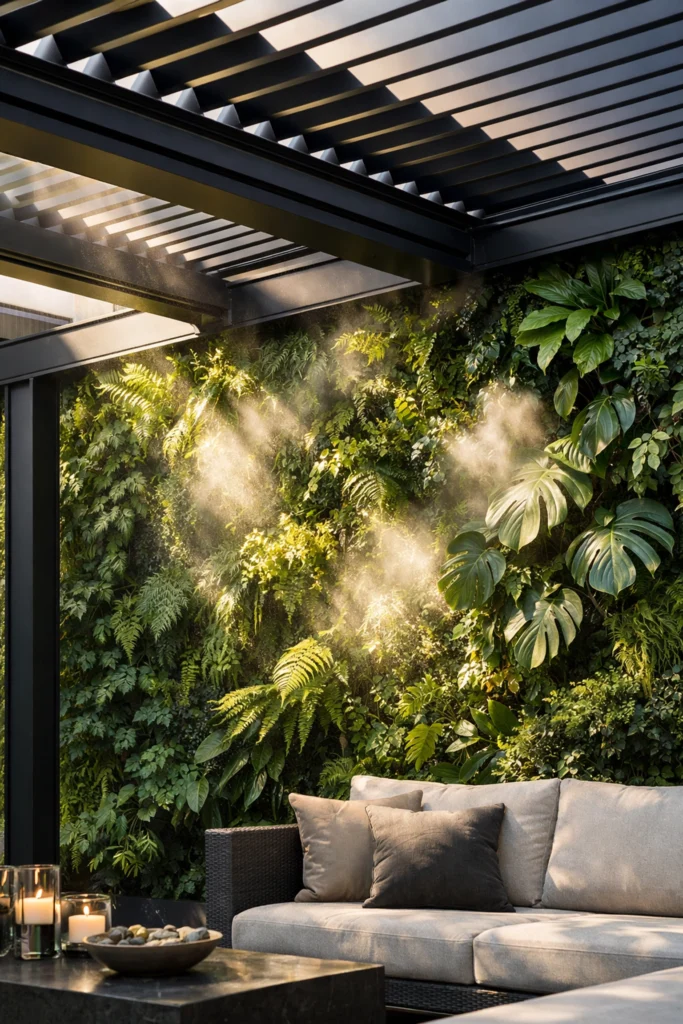
Biophilic design is no longer a niche architectural trend; it is a fundamental shift in how we approach the construction of living spaces. At its core, biophilia describes the innate human instinct to connect with nature and other living systems. In the context of modern outdoor design, this translates to creating environments that blur the lines between the built world and the organic world.
One of the most effective ways to achieve this synergy is through the integration of louvre systems and vertical gardens. While a louvre system provides the structural foundation and environmental control, a vertical garden (or "living wall") provides the biological soul of the space. Together, they create a high-performance outdoor sanctuary that offers significant aesthetic, environmental, and psychological benefits.
Before introducing vegetation, establish a robust architectural framework. Louvre systems can act as the structural skeleton for biophilic integration. They also provide the environmental control needed to support healthy plant growth in outdoor living spaces.
Louvre systems help regulate:
When used thoughtfully, a louvre canopy allows the overhead environment to respond to the needs of the planted vertical surfaces below.
Vertical gardens are self-sufficient horticultural units attached to a structure. Unlike traditional climbing vines that may damage masonry or timber, modern vertical gardens use a variety of specialized systems:
Integrating these elements with a louvre system allows for spatial efficiency. In dense urban environments where ground-level garden space is limited, moving the greenery to the vertical plane maximizes the usable "floor" area while still providing the cooling benefits of a lush garden.
The true power of blending louvres with vertical gardens lies in the creation of a microclimate. In a standard outdoor area, temperatures can fluctuate wildly based on direct sun exposure. However, when you combine the shading of a louvre system with the biological processes of plants, several things happen:
Plants naturally release water vapor through a process called transpiration. When vertical gardens are placed within the airflow generated by open louvres, this moisture is distributed throughout the space, lowering the ambient temperature by several degrees. This "natural air conditioning" makes the space comfortable even during the peak of summer.
Different plants have different light requirements. By using an adjustable louvre roof, you can create "zones" of light.
A key principle of biophilic design is the use of natural materials and textures. While many louvre systems are made from durable metal for long-term weather performance, their visual finish should still support an organic design language.
The integration of greenery into our living environments is not just about looks; it has been scientifically proven to improve human health.
To successfully blend these two systems, careful planning is required. You must consider the technical requirements of both the structure and the living organisms.
Vertical gardens, especially when wet, can be heavy. Ensure that the wall or the louvre support posts are rated for the additional weight. If you are attaching irrigation lines to the louvre frame, they should be integrated discreetly to maintain the clean lines of the architecture.
Most vertical gardens require an automated drip irrigation system.
Choose plants based on your local climate and the orientation of your louvre system.
Plants need pruning, feeding, and occasional replacement. Ensure your vertical garden design allows you to reach the highest points without needing specialized equipment. The beauty of a biophilic space is its vitality; a neglected green wall quickly becomes an eyesore.
The combination of louvre systems and vertical gardens demonstrates how biophilic design can make outdoor spaces more functional, comfortable, and restorative. Focus on the relationship between structure, climate control, planting strategy, and long-term maintenance.
A successful biophilic space is not just green; it is intentionally designed to support both people and plants over time.


