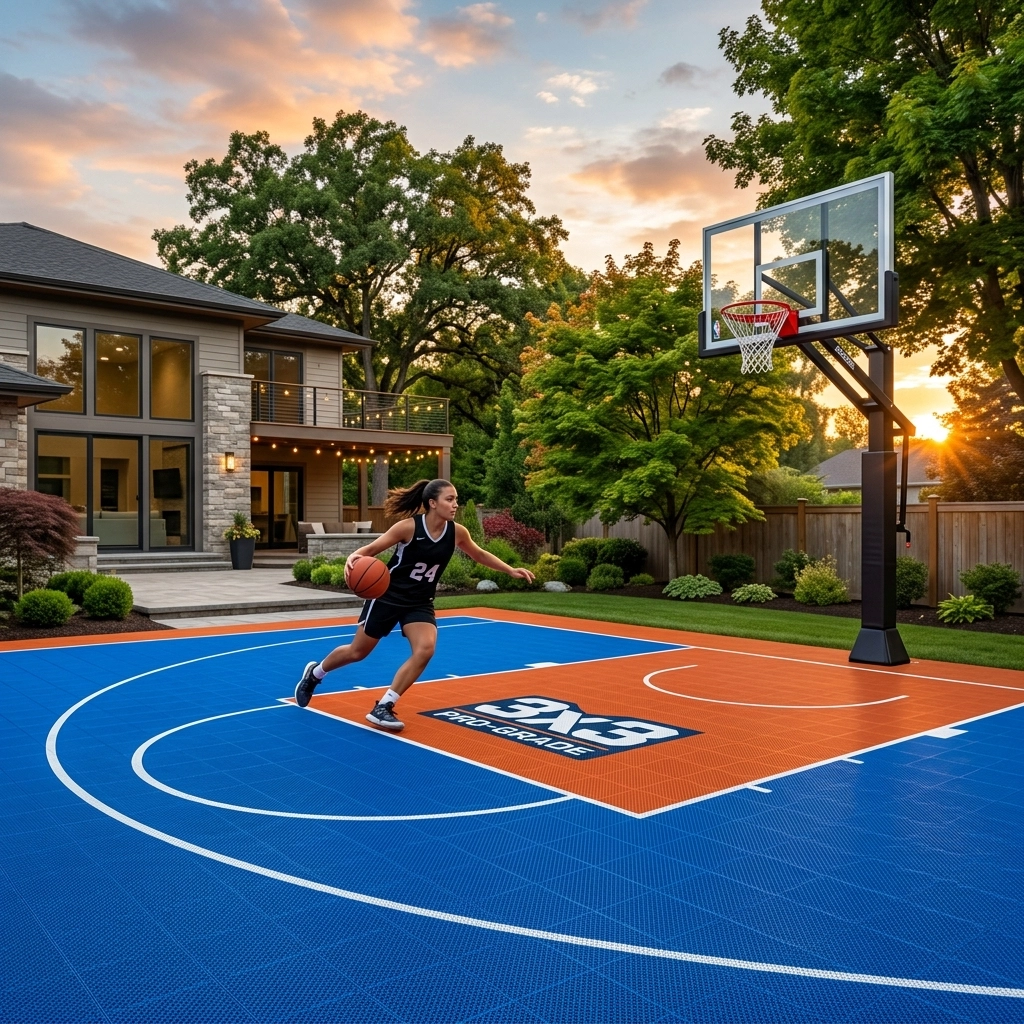
Let’s be honest: the local park is a gamble. You turn up with your ball, ready to channel your inner Steven Adams, only to find the hoop has no net, the court is covered in mysterious puddles, and there’s a group of teenagers using the three-point line as a picnic spot.
If you’re serious about your game, or you’ve got kids who are, the dream is a backyard court. But we’re not talking about a wobbly hoop over a cracked driveway. We’re talking about a pro-grade 3x3 basketball sanctuary.
In the last few years, 3x3 basketball has exploded in New Zealand. It’s fast, it’s tactical, and quite frankly, it’s much easier to find two mates for a game than nine. To do it right, you need more than just a hoop; you need the right surface. Enter PP (Polypropylene) Tiles.
If you’re wondering why these colourful interlocking squares are popping up in backyards from Auckland to Invercargill, you’ve come to the right place. Grab a Gatorade, and let’s break down how to build a court that would make a FIBA ref nod in approval.
Before you start digging up the lawn, you need to understand the blueprint. While a full NBA-sized court is a massive undertaking that requires a literal small stadium, 3x3 is designed for efficiency.
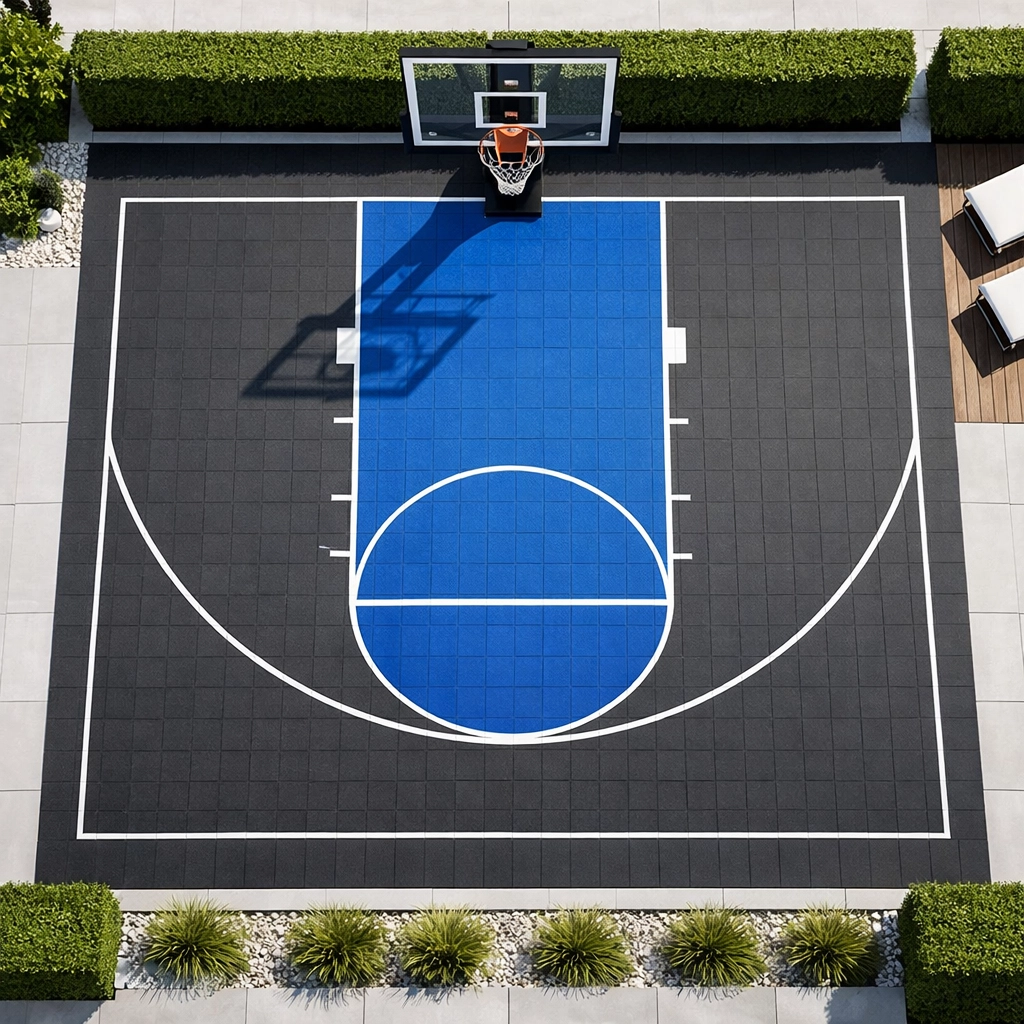
The official pro-grade 3x3 court dimensions are 8.845m x 8.845m.
Why that specific number? It provides the perfect half-court experience, including the arc, the key, and enough "out-of-bounds" space to ensure you aren't flying into the rose bushes every time you drive to the rim. In the 3x3 format, the game is played on a single basket, making this square footprint the gold standard for residential upgrades. It’s large enough for high-intensity training but compact enough to fit into most Kiwi backyards without needing to reclaim land from the neighbours.
You can have the most expensive tiles in the world, but if you lay them on a bad foundation, you’re playing on a bouncy castle, not a basketball court. The surface underneath your PP tiles is the most critical part of the build.
If you want the best, you pour concrete. A reinforced concrete pad (usually around 100mm thick) provides a perfectly level, rock-solid base. It ensures the most consistent ball bounce and prevents any "dead spots" in the court.
✅ Pros: Maximum durability, perfect bounce, zero maintenance.
❌ Cons: Higher initial effort and cost.
Asphalt is a great alternative, especially if you already have a large driveway area you’re looking to convert. It’s slightly more "forgiving" than concrete but still provides a professional-level response for the ball. Just ensure it’s smooth; old, crumbling asphalt will eventually cause the tiles to shift.
✅ Pros: Excellent grip, professional feel.
If you’re working on a budget or building on a rural property, a heavily compacted base of GAP20 (General All Purpose) or similar aggregate can work. It needs to be professionally levelled and vibrated until it’s as hard as roading. It’s not as "permanent" as concrete, but it gets the job done for a fraction of the price.
✅ Pros: Cost-effective, better drainage.
Do not, we repeat, do not, lay PP tiles directly onto:
You might be thinking, "Why can’t I just paint the concrete?" You could, but your knees will hate you in six months, and the first time it rains, you’ll be sliding around like an Olympic curler.
PP (Polypropylene) Tiles are engineered specifically for high-performance sport. Here is why they are the undisputed champion of outdoor courts.
Basketball involves a lot of jumping and sudden lateral movements. Concrete is unforgiving. PP tiles are designed with a slight vertical give and a "cushion" effect. This significantly reduces the impact on your ankles, knees, and lower back. Whether you’re a 15-year-old aspiring pro or a 45-year-old "weekend warrior," your joints will thank you.
The New Zealand sun is a spicy beast. Our UV levels are high enough to melt cheap plastics and fade paint in a single season. Pro-grade PP tiles are treated with high-level UV stabilisers. This means they won't become brittle, crack, or lose their vibrant "Golden State" blue or "Bulls" red after one summer in the Hawke's Bay heat.
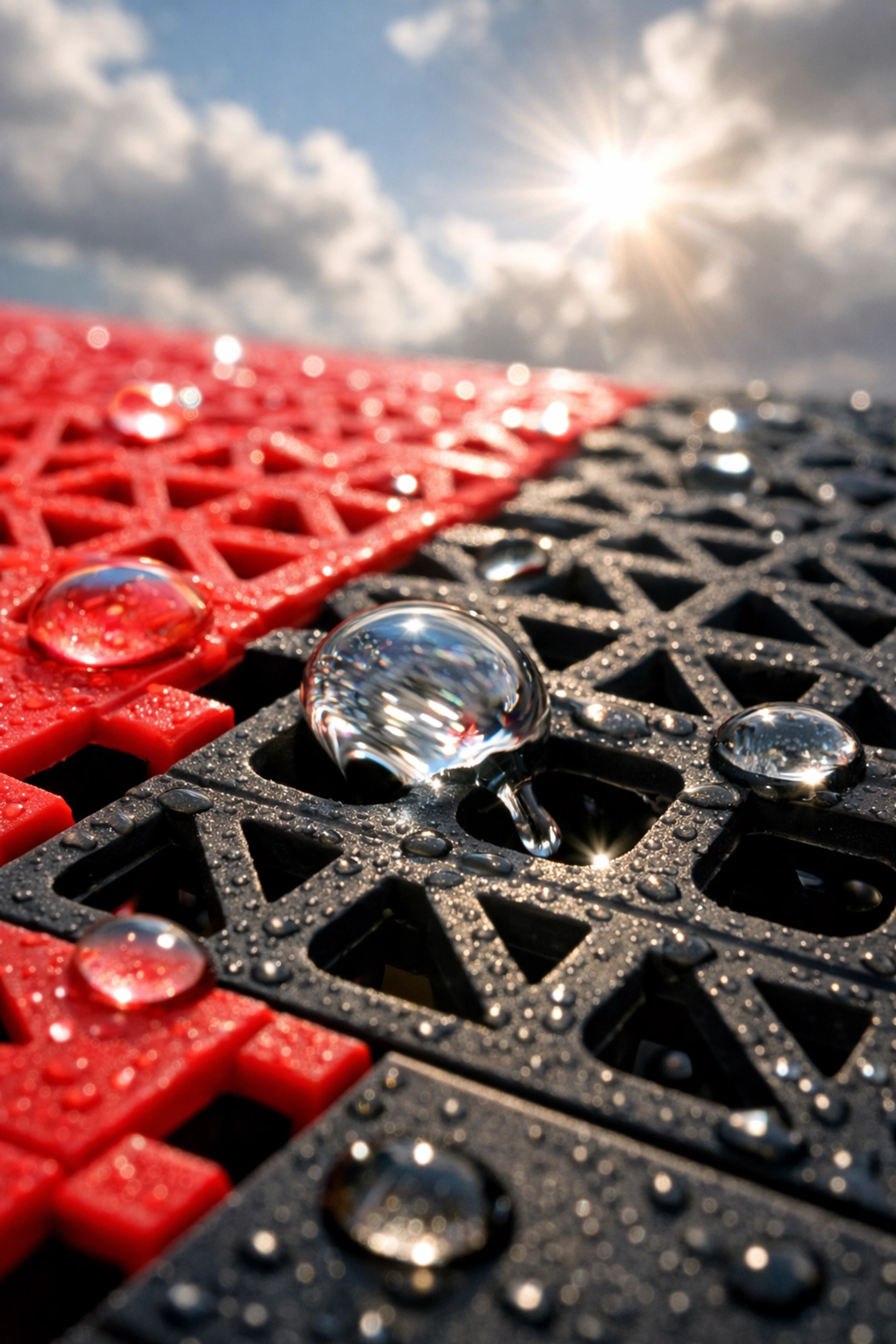
One of the most annoying things about outdoor courts is waiting for the ground to dry after a rain shower. PP tiles feature an open-grid design. Water drains straight through the surface and runs off the sub-base. This means the surface stays grippy even when damp, and you can be back on the court minutes after the rain stops. No squeegees required.
Unlike timber floors that need sanding or outdoor paint that chips and peels, PP tiles are incredibly low maintenance. A quick blast with a leaf blower to get rid of debris or a hose-down if they get muddy is usually all it takes. If a single tile somehow gets damaged (say, you drop a literal anvil on it), you don't have to replace the whole court: you just pop that one tile out and click a new one in.
It’s no coincidence that backyard courts are booming. 3x3 is now an Olympic sport, and New Zealand is punching well above its weight. With the success of the Tall Blacks and the growth of local leagues, the demand for high-quality training spaces has moved from schools and stadiums into the home.
A dedicated 3x3 space allows players to work on their "iso" moves, shooting range, and conditioning in a controlled environment. Plus, let's be honest, it’s the ultimate flex for the next neighborhood BBQ.
One of the biggest selling points of the 3x3 tile system is the installation. It’s essentially a giant LEGO set for adults. The tiles feature a click-lock mechanism that requires no adhesives or specialized tools.
For more information on the types of equipment that can elevate your training, check out our sports and gym equipment range.
If you are looking for a way to add value to your property while encouraging an active lifestyle, a PP tile court is a no-brainer. You aren't just buying plastic squares; you’re buying a high-performance surface that levels the playing field between your backyard and a professional stadium.
By choosing the right dimensions (8.845m x 8.845m) and a solid foundation, you’re setting yourself up for years of high-quality hoops.
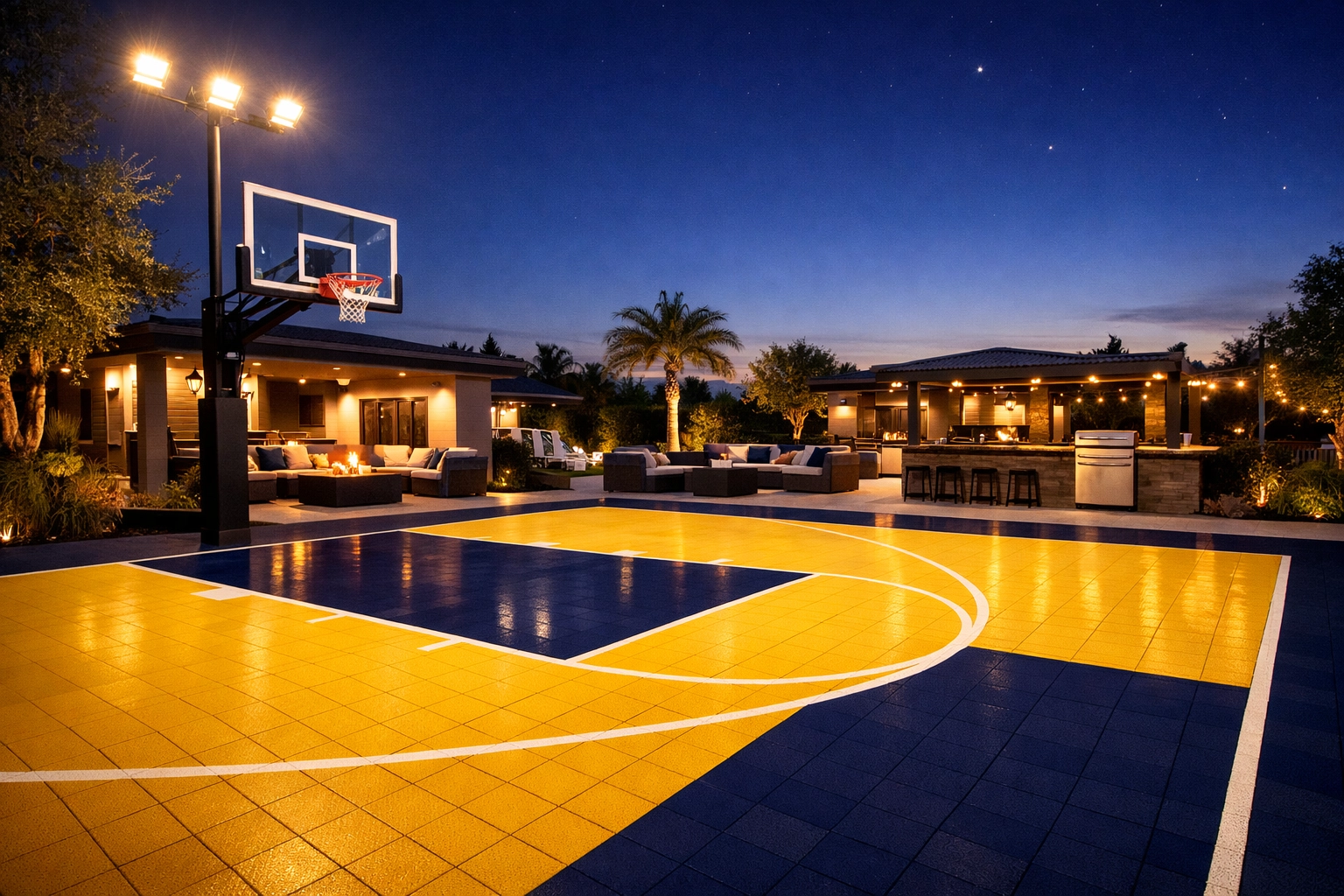
Building a court is an investment in your game. Don't settle for a cracked driveway: upgrade to a surface