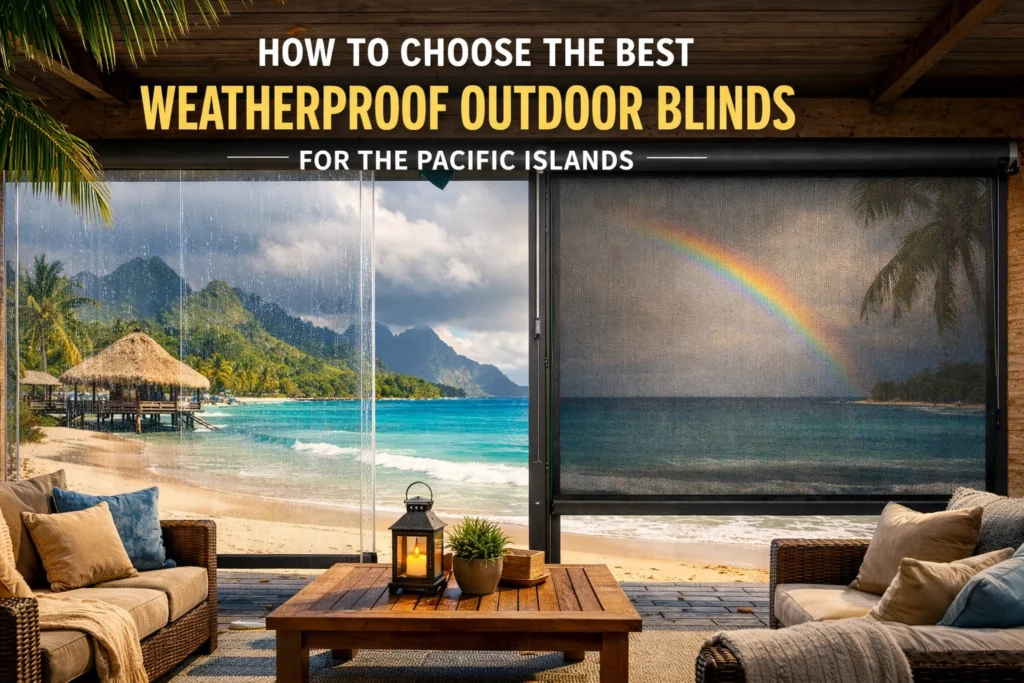
How to Choose the Best Weatherproof Outdoor Blinds for the Pacific Islands

March 25, 2026
Spread the love

Living in the Pacific Islands is a dream for many, but for homeowners and business owners, it presents a unique set of architectural challenges. Whether you are in Fiji, Samoa, Rarotonga, or Vanuatu, the environment is as beautiful as it is brutal. High UV levels, relentless salt spray, and sudden tropical downpours can turn standard outdoor solutions into scrap metal in just a few seasons.

If you are looking to reclaim your deck or patio from the elements, choosing the right weatherproof outdoor blinds is about more than just aesthetics; it is about engineering for survival. In this guide, we will break down exactly what you need to look for to ensure your outdoor shading solutions last for the long haul in a tropical coastal environment.

Understanding the Pacific Environment

Before looking at fabric samples or motorisation options, you need to understand what your blinds are up against. The Pacific Islands experience some of the harshest conditions on the planet for building materials.
  • Extreme UV Exposure: The tropical sun is intense. Standard fabrics will fade, become brittle, and eventually tear under constant UV radiation.
  • Corrosive Salt Air: If you are within five kilometres of the coast (which is most of the Pacific), salt spray is a constant factor. It eats through low-grade steel and causes "tea staining" on inferior metals.
  • High Humidity and Rainfall: Moisture leads to mould and mildew. If a fabric isn't designed to breathe or dry quickly, it will deteriorate rapidly.
  • Wind Loading: Tropical breezes are lovely, but sudden squalls and trade winds can put immense pressure on an outdoor blind. Without proper stability, your blinds can become sails that damage your structure.
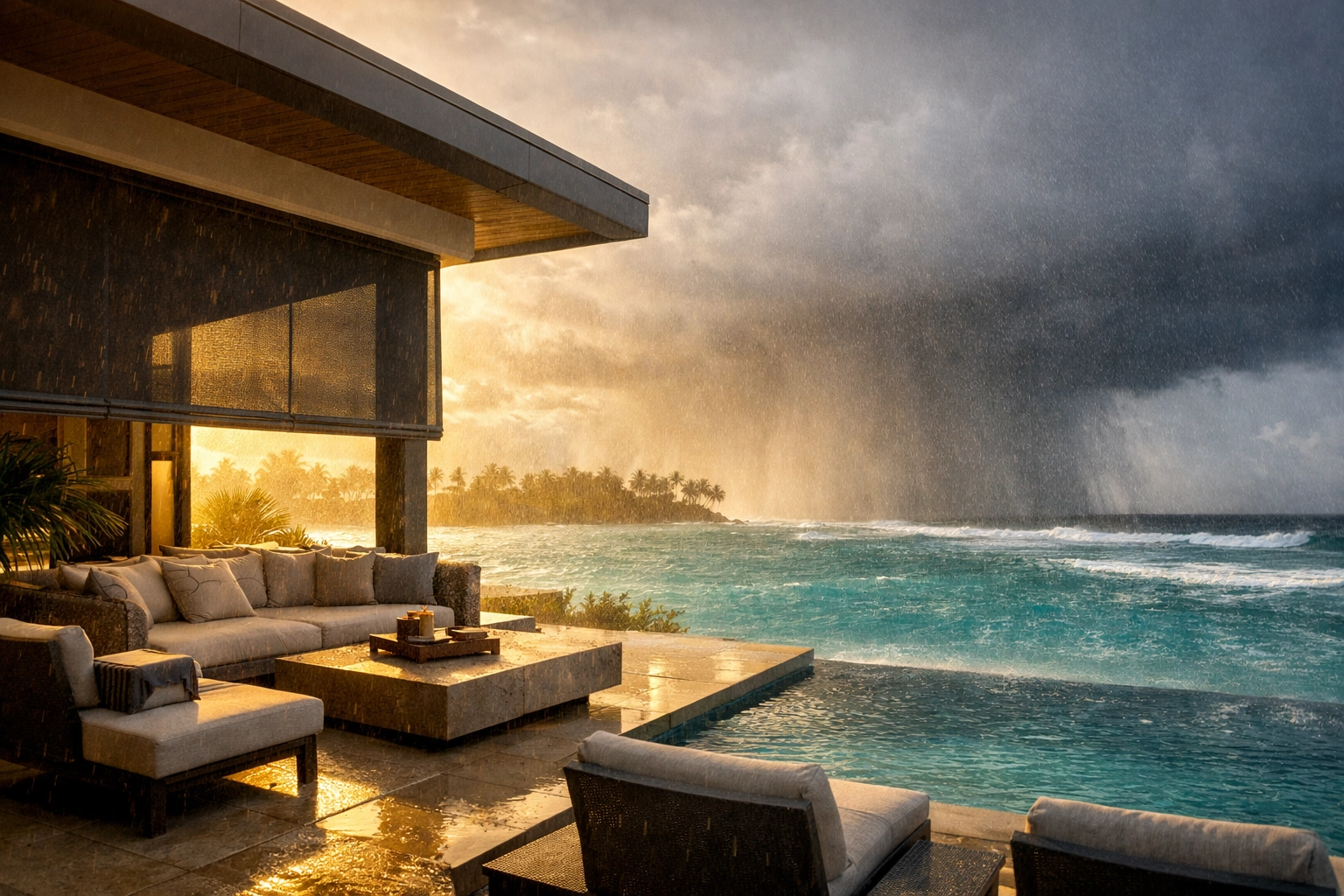
Charcoal weatherproof outdoor blinds protecting a luxury beachfront patio in the Cook Islands from tropical rain.

Critical Materials: Marine-Grade is the Standard

When selecting custom outdoor blinds, the materials used in the hardware are just as important as the fabric itself. In a coastal environment, you cannot compromise on the quality of the metals.

Powder-Coated Aluminium

The framework and housing of your blinds should be constructed from high-quality aluminium. However, not all aluminium is created equal. Ensure the components are powder-coated to provide an extra layer of protection against oxidation. This is a non-negotiable for any hardware exposed to salt air.

316 Marine-Grade Stainless Steel

For every screw, bolt, and cable, demand 316-grade stainless steel. 316-grade contains molybdenum, which significantly increases resistance to chloride (salt) corrosion.

Specific note on 304-grade stainless steel: 304 is perfectly fine and durable in the Pacific Islands for many applications—especially for sheltered hardware and fittings—provided you rinse salt residue regularly and avoid trapped moisture/crevice conditions. Specify 316 where components are fully exposed, constantly wet, or located in high-salt zones (e.g., beachfront installs) to maximise corrosion resistance.

UV-Stabilised Fabrics

Your choice of fabric determines how much heat enters your space. Look for fabrics that are:

  • PVC-Coated Polyester or Acrylic: These are standard for high-end outdoor shading solutions.
  • High UV Rating: Ensure the fabric blocks at least 90-95% of UV rays.
  • Micro-Perforated: This allows for airflow while blocking rain and sun. In the humid Pacific, you need that breeze to move through the space to prevent it from becoming a "hot box."

For those looking for integrated solutions that offer even more robust protection, exploring options like Bahama shutters can provide an additional layer of storm resistance while maintaining that classic island aesthetic.

Stability Systems: Keeping Blinds in Place

A blind that flaps in the wind is noisy, distracting, and prone to breaking. To ensure your weatherproof outdoor blinds stay functional during a breeze, you need a high-quality retention system.

Track-Guided Systems

A track-guided system (often called a "zip" system) locks the edges of the fabric into side channels. This creates a complete seal, which is excellent for:

  • ✅ Keeping out driving rain.
  • ✅ Preventing insects from entering the space.
  • ✅ Providing maximum wind resistance.
  • ✅ Maintaining a sleek, minimalist look.

Wire-Guided Systems

If you prefer a more "open" feel or have a structure that doesn't allow for side tracks, a wire-guide system is a great alternative. This uses discreet stainless steel cables to hold the bottom bar in place. It provides stability while allowing the blind to feel lighter and less restrictive.

Why Custom Outdoor Blinds Outperform "Off-the-Shelf"

It is tempting to pick up a standard-sized blind from a big-box retailer, but in the Pacific, this is usually a false economy. Custom outdoor blinds offer several advantages that are essential for tropical climates:

  1. Precision Fit: Gaps between the blind and the pillar allow rain and wind to whistle through. Custom manufacturing ensures a millimetre-perfect fit.
  2. Structural Integrity: Custom systems allow for larger spans without the "sagging" effect seen in cheaper products.
  3. Specific Component Selection: You can specify 316 stainless steel and high-performance fabrics that simply aren't available in mass-produced retail units.

If you are currently designing a new outdoor area or a commercial resort space, viewing a full shop range can help you understand the various configurations available for high-wind zones.

Solutions for Businesses and Resorts

For cafes, restaurants, and resorts in Fiji or Samoa, outdoor blinds are a revenue generator. They allow you to use your outdoor seating areas regardless of the weather. When selecting blinds for a commercial environment, consider:
  • Motorisation: Manual cranks are fine for homes, but for a large restaurant, you want the ability to lower 10 blinds simultaneously at the touch of a button when a rain squall hits.
  • Branding: Custom fabrics can often be printed with logos or chosen to match the resort's specific colour palette.
  • Integration: Modern blinds can be integrated into larger structures like a kitset louvre system, creating a fully enclosed outdoor room that can be opened up when the weather is perfect.
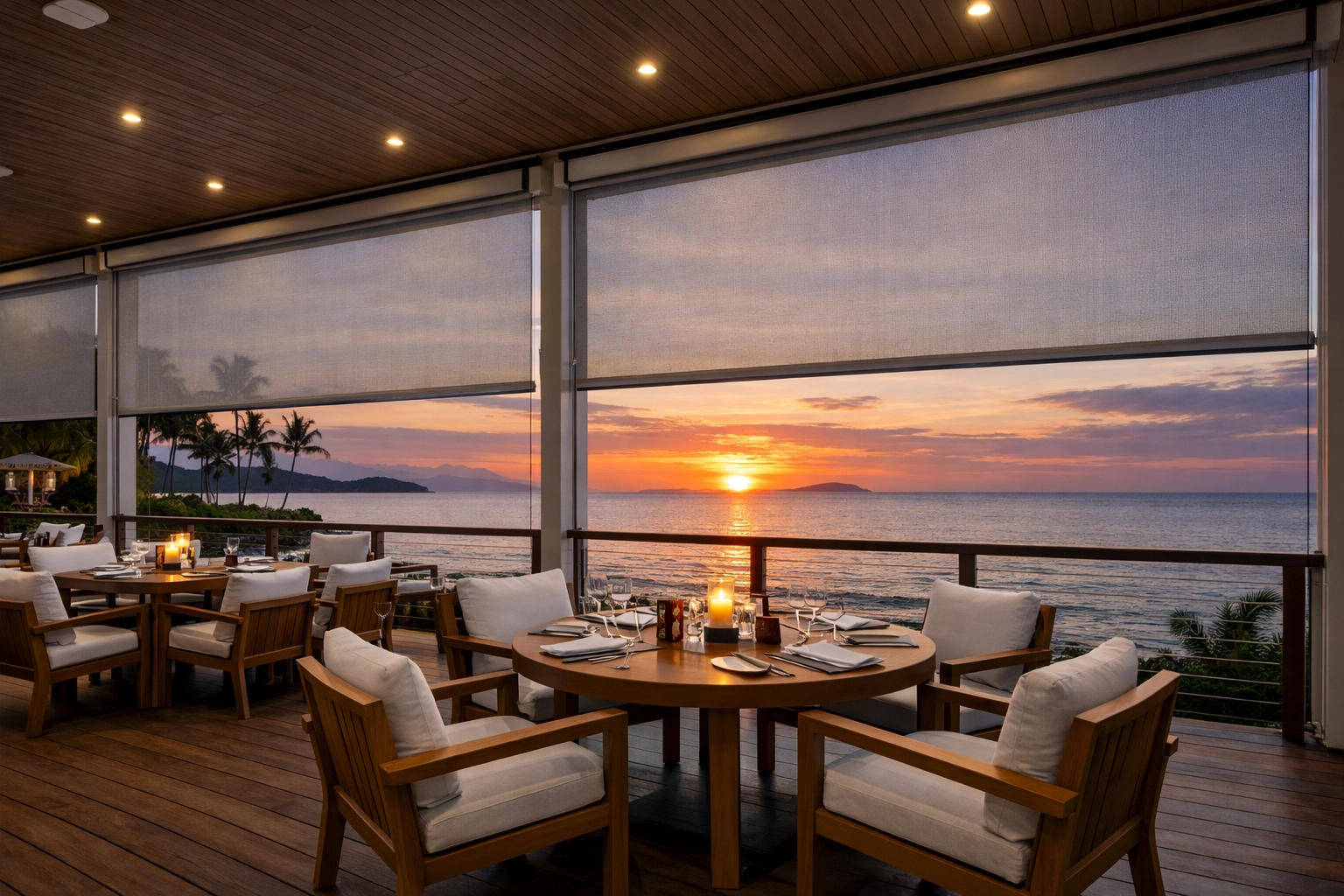
Motorised outdoor shading solutions at a Fiji resort providing a sheltered dining area with ocean views.

Maintenance Tips for Tropical Longevity

Even the best weatherproof outdoor blinds require some TLC to survive a decade in the Pacific. Follow these simple steps to protect your investment:

  • Rinse Regularly: Use fresh water to rinse salt residue off the hardware and fabric at least once a month.
  • Dry Before Retracting: If your blinds get soaked in a tropical storm, try to let them dry before rolling them up. Trapping moisture in a rolled-up blind is an invitation for mould.
  • Clear the Tracks: Ensure the side tracks are free of debris like sand or salt crusting. A quick wipe and a dry silicone spray will keep them gliding smoothly.
  • Retract in High Winds: While quality blinds are wind-resistant, they are not cyclone-rated. If a major storm or cyclone warning is issued, always retract your blinds fully into their housing to prevent structural damage.

Aesthetic Considerations: Minimalist and Functional

Modern outdoor shading solutions have moved away from bulky, industrial looks. Today’s designs are minimalist and blend seamlessly with tropical architecture.
  • Darker Meshes: Surprisingly, darker mesh fabrics often provide better "view-through" than lighter colours, as they reduce glare more effectively.
  • Hidden Housing: Look for systems where the top roller is encased in a sleek aluminium cassette. This protects the fabric when not in use and keeps the lines of your building clean.
  • Neutral Palettes: Greys, charcoals, and stone tones tend to age better and show less dirt than pure whites or bright colours.
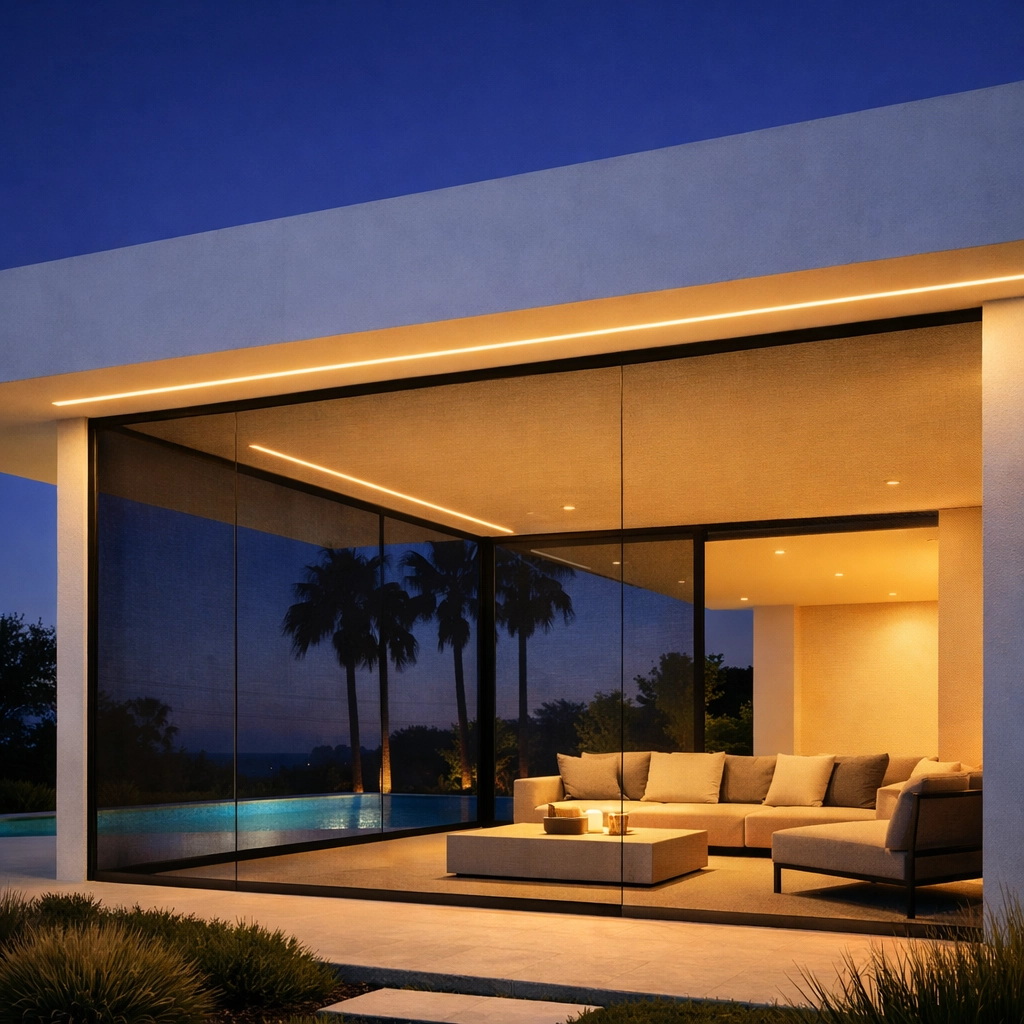
Modern minimalist patio featuring dark mesh outdoor blinds for seamless indoor-outdoor living at twilight.

Summary of Key Takeaways

Selecting the right blinds for a Pacific climate requires a checklist approach. Don't be swayed by low prices; focus on the technical specifications that guarantee longevity.

  • Material Choice: Insist on 316 marine-grade stainless steel and powder-coated aluminium.
  • Fabric Performance: Use UV-stabilised, breathable fabrics designed for 90%+ UV block.
  • Stability: Choose track-guided systems for maximum rain and wind protection.
  • Customisation: Prioritise custom-measured solutions over generic sizes to ensure structural integrity and a proper seal.
  • Maintenance: A simple freshwater rinse is the best way to combat salt air corrosion.

Investing in high-quality weatherproof outdoor blinds is the most effective way to transform your outdoor area into a functional, year-round living space, regardless of what the Pacific weather throws at you. By focusing on marine-grade materials and precision engineering, you ensure that your investment adds value to your property for years to come.

Return to insights

Charities We Support

cart
surfcoast container solutions. fresh offer plaza. Heavy equipment transport st.