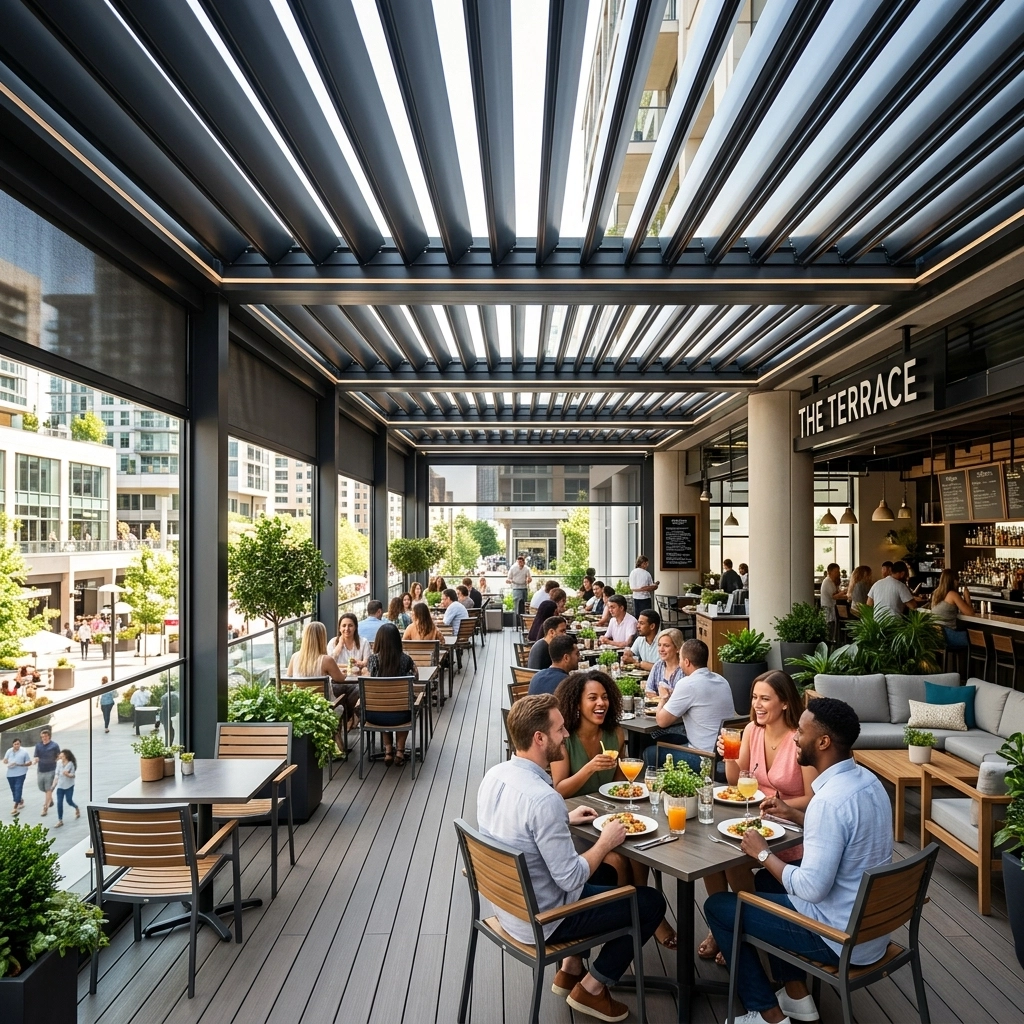
For hospitality business owners and commercial project managers, every square meter of floor space represents a specific revenue potential. In the competitive landscape of bars, restaurants, and cafes, the inability to utilize outdoor areas due to wind, rain, or excessive heat is more than an inconvenience: it is a direct hit to the bottom line.
Integrating a professional-grade louvre system is no longer just a design choice; it is a strategic business decision to maximize year-round capacity. By transforming underutilized patios and decks into high-functioning dining zones, businesses can stabilize their income regardless of the season.
Most hospitality venues suffer from "capacity volatility." On a clear day, the outdoor deck is packed, driving peak revenue. When the weather turns, that seating capacity disappears instantly, leading to long wait times, lost bookings, and a drop in beverage-to-food ratios.
Research into commercial outdoor spaces indicates that converting a patio into an all-weather environment can generate significant additional gross revenue annually. By providing a reliable environment, you create a "wait-time buffer." Even when indoor tables are at capacity, a protected outdoor area functions as a comfortable lounge or cocktail zone, keeping patrons on-site longer.
✅ Maximize Peak Hours: Ensure every seat is available for booking, regardless of the forecast.
✅ Expand Event Potential: Confidently book private functions and corporate events without needing a "Plan B" for rain.
✅ Increase Patron Stay-Time: Comfortable customers stay for another round of drinks when they aren't fighting the elements.
In a commercial setting, durability is non-negotiable. While residential-grade structures might suffice for a backyard, hospitality environments demand materials that can withstand constant use and harsh environmental exposure.
Prioritize T5 grade aluminum in commercial louvre system specifications. This specific grade of aluminum is heat-treated to enhance its structural integrity and tensile strength. In high-traffic commercial zones, this translates to:
For architects and developers, specifying T5 grade materials helps ensure the project meets rigorous performance expectations for professional exterior design work.
Efficiency is the heartbeat of any successful bar or restaurant. When a sudden afternoon downpour hits, staff should be focused on serving customers, not wrestling with manual crank handles or moving heavy umbrellas.
Motorized louvre systems allow for instantaneous environmental control at the touch of a button. Modern commercial systems offer:
This level of automation ensures that the transition from "open-air" to "fully enclosed" is seamless, maintaining the atmosphere and preventing the frantic scramble to move customers indoors.
A hospitality venue's physical appearance is a primary driver of brand perception. High-end louvre systems offer a sleek, architectural finish that far surpasses the look of temporary gazebos or traditional awnings.
A well-designed louvre system serves as a visual anchor for the property. Whether you are aiming for a minimalist industrial look or a lush, tropical garden bar aesthetic, the clean lines of aluminum louvres complement modern New Zealand architecture.
By creating a premium outdoor environment, you justify higher price points and attract a clientele that values comfort and atmosphere.
When evaluating the cost of a louvre system, it is vital to frame it as a capital investment rather than an expense. The Return on Investment (ROI) is calculated by looking at the "lost revenue" of your current outdoor space.
Consider this calculation:
If your outdoor area seats 40 people and is unusable for 100 days a year due to weather, you are losing 4,000 potential "seat-days." At an average spend of $40 per head, that is $160,000 in potential revenue left on the table every year.
In most commercial hospitality applications, a high-quality louvre system pays for itself within 12 to 24 months. Beyond the direct revenue from food and drink, a permanent louvre system significantly increases the overall valuation of the commercial lease and the property itself.
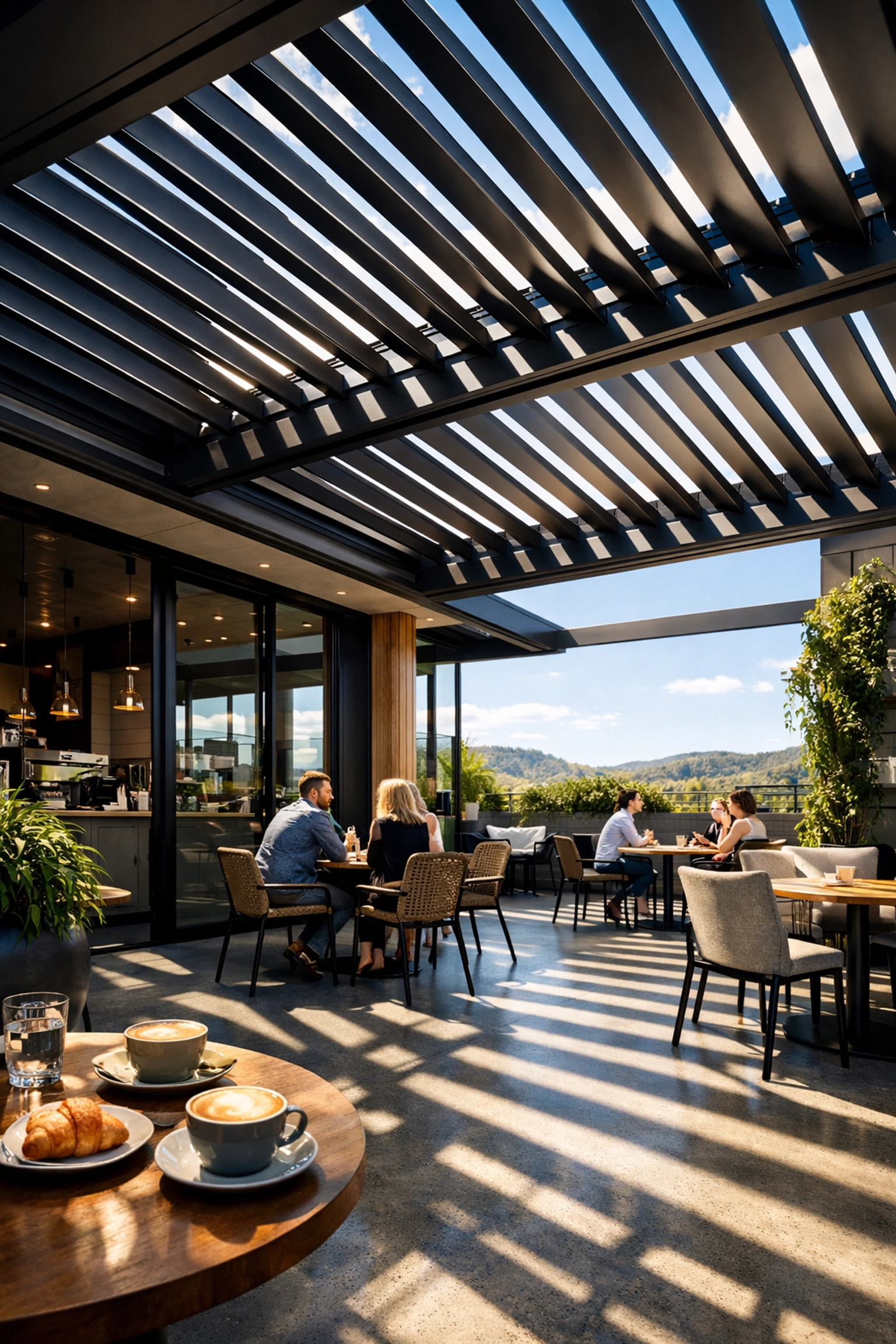
For business owners and project managers, budget management is critical. One of the primary barriers to installing high-end architectural systems has historically been the "middleman markup."
Reduce cost creep by selecting a procurement route that matches your project scope and risk profile. Common options include:
Specify exactly what is included (structure, motorisation, controls, drainage, electrical allowances, coatings, and fixings) so competing quotes remain comparable and the ROI model stays accurate.
To ensure a successful commercial installation, follow these critical steps:
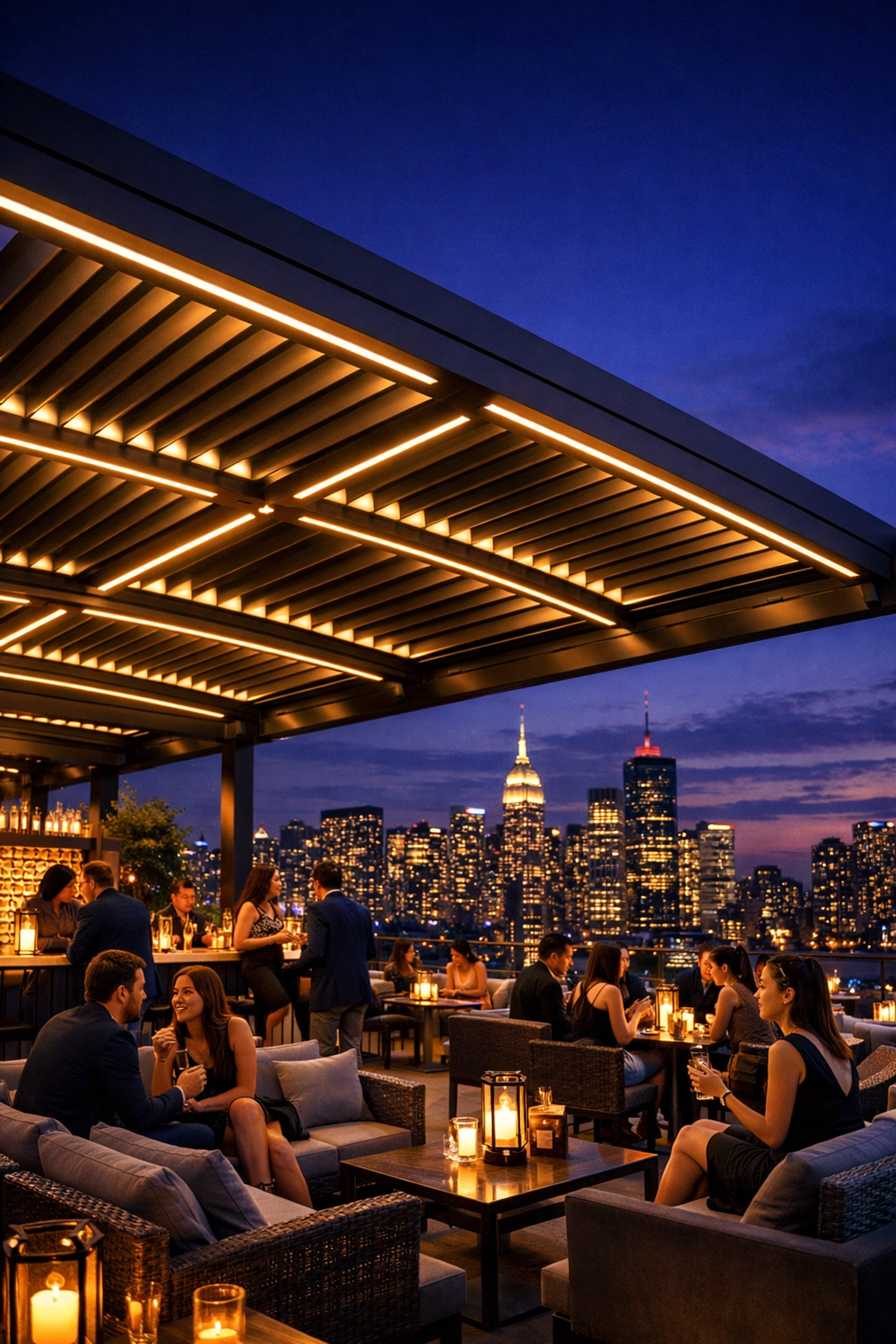
By treating your outdoor area as a vital revenue-generating asset, you ensure your business remains resilient, profitable, and ahead of the competition. Provide your customers with the comfort they expect, and they will reward you with their loyalty and their spend.