
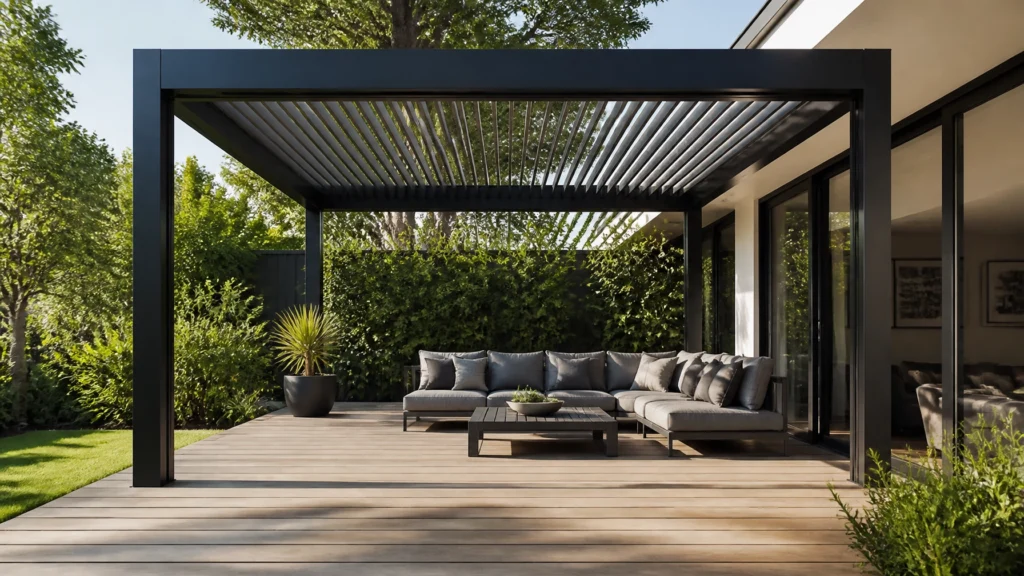
Retractable louvre systems sit at the intersection of structural engineering, environmental control, and architectural design. In climates where conditions can shift rapidly across a single day, these systems provide a practical method for managing sun, airflow, and rain without compromising the usability of an outdoor space.
Unlike fixed overhead structures, retractable roofing introduces a dynamic layer of control. It allows designers, builders, and homeowners to respond to changing weather in real time while maintaining a clean, integrated visual profile. The result is not simply shade: it is a more adaptable outdoor environment.
Variable climates demand more than static protection. A fixed louvre system can provide reliable shelter, but it also locks the space into a single operating mode. That can limit winter solar gain, reduce flexibility during calm summer conditions, and restrict how adjacent interior spaces receive daylight.
A retractable louvre roof solves this by allowing the overhead plane to change according to the environment. When open, it increases sky exposure, encourages natural light penetration, and improves the sense of openness. When closed, it provides overhead cover and improved weather protection.
This mechanical flexibility supports several practical design outcomes:
In architectural terms, retractability turns an outdoor area into a responsive space rather than a fixed one.

Material selection is central to the long-term performance of any retractable louvre system. One of the most widely specified options for premium architectural applications is 6063-T6 extruded aluminium.
This alloy is valued because it balances strength, formability, corrosion resistance, and surface finish quality. Those traits are particularly important in exterior structures exposed to UV, wind loading, moisture, and coastal air.
The technical advantages of 6063-T6 aluminium include:
The T6 temper is also significant. It indicates that the aluminium has been solution heat-treated and artificially aged, a process that improves mechanical performance and increases suitability for demanding structural applications.
For retractable roofing, this matters because the frame must do more than hold shape. It must also support:
A well-engineered aluminium profile reduces friction, improves fitment accuracy, and supports cleaner detailing across the full assembly.
Modern outdoor structures are increasingly expected to function as part of a wider connected environment. That is where Tuya smart technology becomes relevant.
Tuya-based control systems allow motorized louvre roofs to be operated through a smartphone app, remote interface, or integrated smart-home workflow. From an engineering and usability perspective, this is more than convenience. It improves how the structure responds to occupancy patterns and weather changes.
Key functional advantages include:
This type of control is especially useful for spaces that need to transition quickly between open-air and sheltered conditions. It also supports more disciplined environmental management, particularly where overheating, glare, or sudden rainfall are common concerns.
Integrated lighting strengthens this further. When LED perimeter lighting is incorporated into the structure itself, it preserves the clean architectural lines of the roof while extending the usable hours of the space.

Retractable louvre systems are often evaluated visually, but their performance depends heavily on the quality of the underlying engineering. Standardized system design can improve reliability by reducing variability across fabrication, transport, and installation.
When structural elements are manufactured around established dimensions and repeatable tolerances, several benefits follow:
For builders and specifiers, this matters because moving roof systems rely on precise alignment. Even minor inconsistencies in beams, tracks, or connection points can affect operation quality over time.
A retractable louvre roof should not read as an afterthought. The most successful systems integrate mechanical performance with restrained architectural detailing.
Important design characteristics typically include:
These features help the structure sit comfortably across a range of applications, from contemporary residential courtyards to hospitality terraces and outdoor kitchen zones.

When assessing or specifying a retractable louvre system, focus on the technical fundamentals:
Even a well-designed retractable roof depends on correct planning and installation. Provide careful attention to the following:
Because these systems combine structural, mechanical, and electrical elements, coordination between designer, builder, and installer is essential.


