
Creating a functional outdoor living space is a priority for many homeowners looking to maximize their property’s footprint. Whether you are dealing with the harsh afternoon sun or the unpredictable winds common in coastal regions, outdoor blinds serve as a vital barrier. However, when you start researching options, you will quickly encounter two primary categories: wire-guided blinds and track-guided blinds.
Choosing between these two systems isn't just about price; it’s about how you intend to use your space, the local climate conditions, and the specific aesthetic you want to achieve. This guide breaks down the technical and practical differences to help you make an informed decision for your next outdoor project.
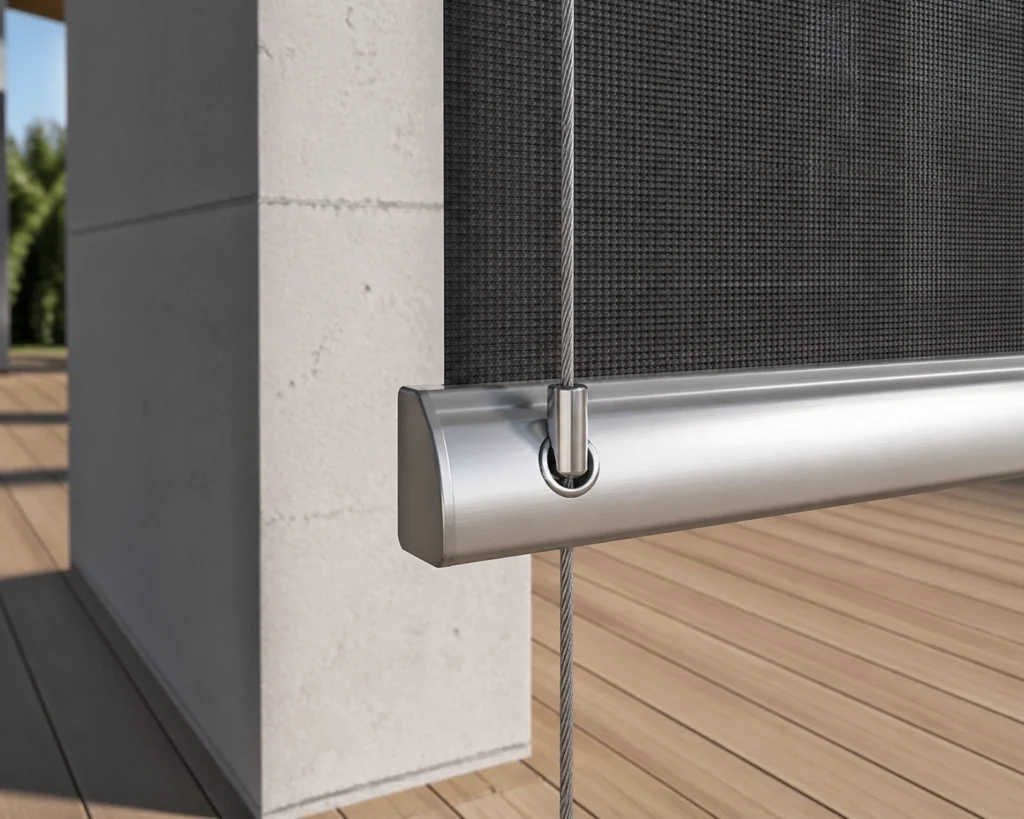
Wire-guided blinds are often celebrated for their minimalist design. They utilize high-grade stainless steel cables (wires) that run vertically on either side of the blind. These cables are tensioned and fixed to the ground or a deck, acting as a guide for the bottom rail as the blind moves up and down.
The fabric is attached to a top roller and a heavy-duty bottom bar. This bottom bar has "eyes" or loops that slide along the wire cables. This setup ensures that the blind stays in its designated path even when there is a light breeze, preventing it from flapping uncontrollably.
Track-guided blinds (often referred to as "zipper" blinds) take a different approach to stability. Instead of a wire, the sides of the fabric are locked into a vertical aluminum track. In many premium versions, a "zipper" or Keder bead is welded to the edge of the fabric, which then slides inside a specialized channel in the side track.
This "locked-in" design means the fabric is held tight across the entire height of the blind. There are no gaps between the fabric and the side posts. This creates a complete seal, effectively turning a patio or deck into a fully enclosed "outdoor room."
When it comes to durability in the face of nature, the differences between these two systems are stark.
Wire-guided blinds are generally rated for moderate conditions. In technical terms, many cable-guided shades are rated to withstand winds up to approximately 35 mph (56 km/h). Beyond this point, the tension in the cables may not be enough to prevent the fabric from bowing or the bottom rail from rattling. They are best suited for sheltered areas or balconies that don't face the brunt of coastal gusts.
Track-guided blinds, specifically those utilizing zipper technology, are engineered for high-performance environments. These systems can often handle winds up to 50 mph (80 km/h) or more. Because the fabric is gripped by the tracks, the wind load is distributed evenly across the entire structure rather than pulling on specific points. If your outdoor area is exposed to the elements, a track system provides much greater peace of mind.

Aesthetics are subjective, but the visual impact of each system is distinct.
Wire-guided blinds offer a "floating" appearance. When the blind is up, only the slim cables remain, which often blend into the background. This makes them a favorite for high-end residential projects where the architecture is the star of the show.
Track-guided blinds require a permanent side channel, usually made of powder-coated aluminum. While these can be color-matched to your home’s joinery, they are visible. However, this gives the outdoor space a more "finished" and structural feel. It looks less like an addition and more like a permanent part of the building.
Both systems can be operated manually or via motorization. However, the experience differs:

Budget is always a factor in any home improvement project.
To determine which system is right for you, consider the following scenarios:

The decision between wire-guided and track-guided outdoor blinds ultimately comes down to your environment and your goals for the space. If you prioritize an uninterrupted view and a sleek, low-profile design for a sheltered area, wire-guided blinds offer an elegant solution at a lower price point.
However, if you want to truly extend your living space and ensure that your outdoor area remains usable regardless of wind or rain, track-guided blinds are the superior investment. Their ability to seal the edges and withstand heavy gusts makes them the professional choice for high-performance outdoor design.


