
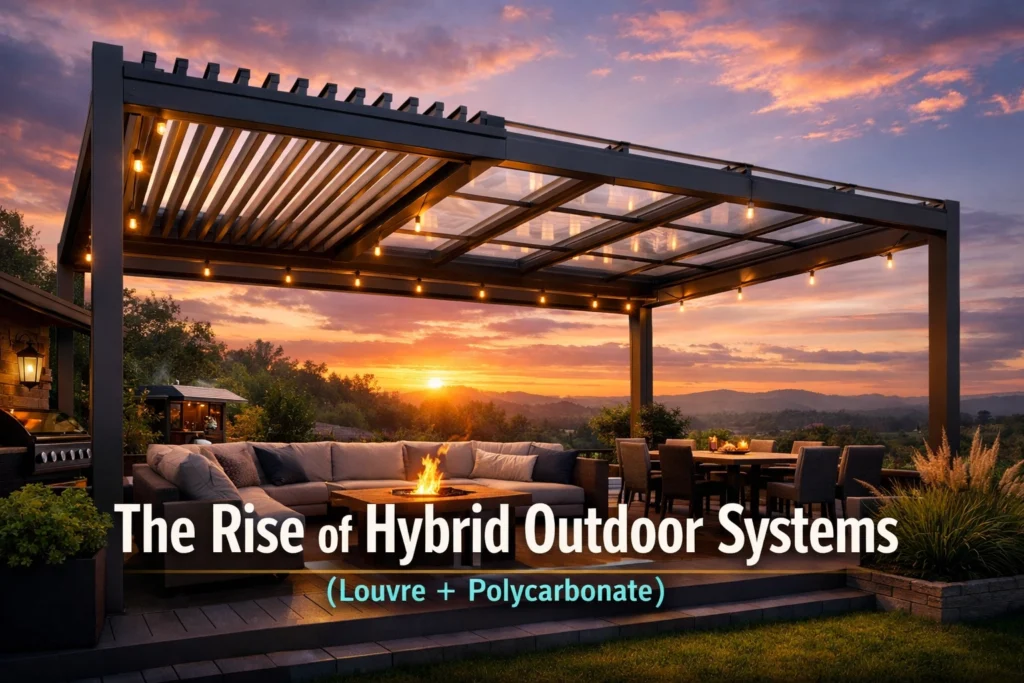
Let’s be honest: New Zealand weather has commitment issues. One minute you’re basking in a glorious Tasman sun, and the next, you’re sprinting inside because a rogue southerly decided to crash the party. For years, the solution was simple: you either installed a solid roof and lived in a permanent cave, or you went for full louvre systems and accepted that when the louvres were closed, your indoor lounge felt like a film noir set.
But things have changed. Enter the hybrid louvre system. This is the "best of both worlds" solution that’s currently taking the outdoor design world by storm. By combining adjustable aluminum louvres with translucent polycarbonate panels, these systems are solving the ultimate Kiwi dilemma: how to get protection from the rain without losing that precious natural light.
In the past, you had to pick a side. On one hand, you had outdoor shading solutions that used solid slats. These are great for blocking the sun, but when they’re closed to keep out the rain, they block 100% of the light. On the other hand, you had fixed polycarbonate roofs: bright and airy, but you’d essentially be sitting in a greenhouse during mid-January.
A hybrid system is a strategic mix. It features a high-quality aluminum frame where sections of the roof are dedicated to adjustable louvres, while other sections incorporate high-grade, translucent polycarbonate panels.
This layout allows you to:
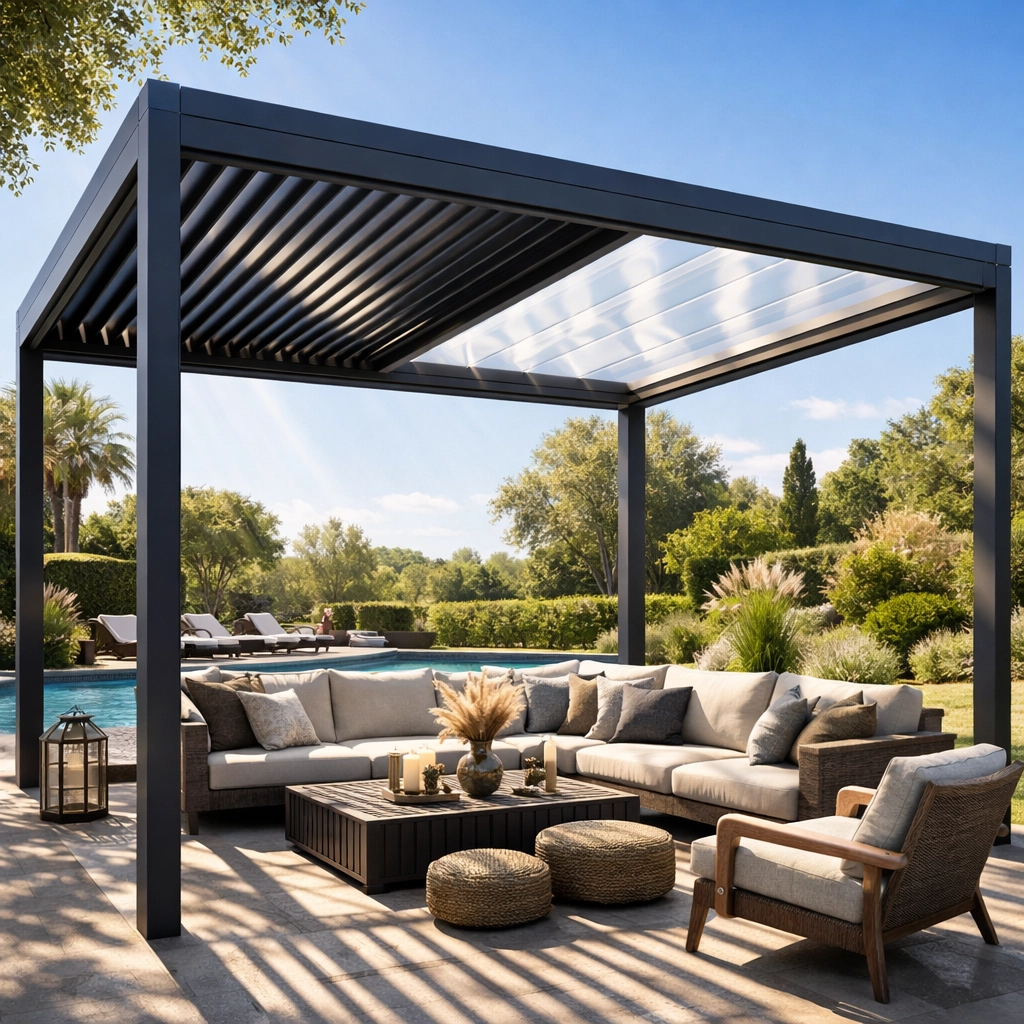
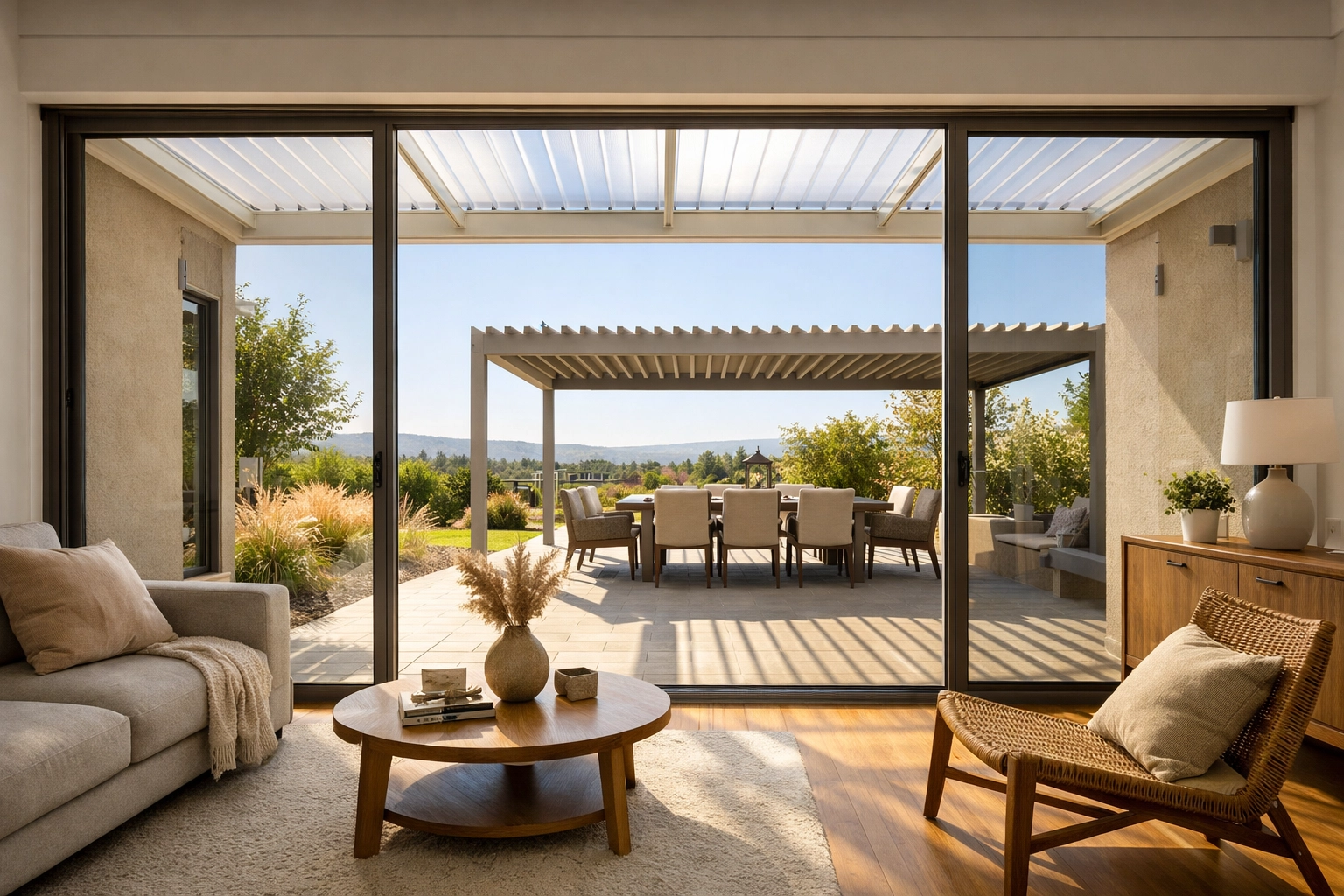
One of the biggest complaints homeowners have after installing a traditional dark-slatted pergola is the "Cave Effect." Because many pergolas are attached directly to the house, a solid roof covers the very windows that usually bring light into your kitchen or living area.
By using a hybrid approach, you can place the polycarbonate panels closest to the house. This ensures that even when the louvres are shut tight against the wind, natural light still pours into your interior spaces.
If you’re going to invest in aluminum louvres, you want to know they won't fold like a cheap card table the first time the wind picks up in Cook Strait. This is where the technical specs matter.
Most high-end hybrid systems are constructed from 6063 aluminum. This is the gold standard for architectural extrusions because it offers a smooth finish and excellent corrosion resistance. But you might also hear people debating "T5 vs. T6" tempers.
Here’s the straight talk: Both T5 and T6 tempers are excellent and perfectly acceptable for these systems.
In the world of residential and commercial louvres, both provide the structural integrity needed to handle New Zealand’s wind zones. The real secret isn't just the temper; it’s the quality of the engineering and the thickness of the extrusions. When you choose a shading solution, you're looking for that 6063 grade to ensure your investment lasts decades, not just seasons.
We’ve all been there: hosting a BBQ when the clouds roll in. With a standard pergola, you close the louvres and suddenly everyone is squinting at their sausages in the dark.
The hybrid system changes the game. The polycarbonate panels used in these systems are light-years ahead of the wavy, yellowing plastic sheets from your grandad’s carport. Modern polycarbonate is:
When the rain starts, the integrated gutter systems in the aluminum frame channel water away, keeping your patio dry. Because you have those clear or tinted "skylight" sections, the atmosphere remains upbeat and bright, regardless of what the clouds are doing.
For homeowners, a hybrid system means the "outdoor season" doesn't have to end in April. It creates a genuine extra room. If you’re a business owner: particularly in the hospitality sector: this is a massive revenue driver.
Imagine a cafe deck that stays bright and inviting during a rainy Tuesday morning. Customers will flock to the light. By installing hybrid louvre systems, you effectively increase your floor plan and your earning potential without the cost of a full building extension.
If you’re considering a hybrid upgrade, the layout is everything. You don't just want a random checkerboard of panels. You need to think about the path of the sun.
One of the reasons for the "rise" of these systems is the low-maintenance lifestyle they offer. Aluminum doesn't rust, and polycarbonate doesn't shatter.
Maintenance Checklist:
The move toward hybrid outdoor systems isn't just a trend; it's a logical evolution of how we use our outdoor spaces. We are no longer satisfied with "seasonal" decks. We want year-round, high-performance areas that don't compromise our indoor comfort.
By marrying the strength and adjustability of 6063 aluminum louvres with the light-transmitting brilliance of polycarbonate, you get a structure that is:
Whether you are looking to create a backyard sanctuary or expand a commercial dining area, the hybrid approach offers a level of control that traditional systems simply can't match. It’s time to stop choosing between light and cover: have both.
Key Takeaways:


