
For years, the outdoor louvre market has been a game of extremes. On one side, you had the budget-friendly "flat-pack" kits: lightweight, often flimsy, and essentially disposable after a few seasons of harsh UV or high winds. On the other side, you had fully bespoke, architectural systems: gorgeous, engineered to the hilt, but carrying a price tag that could rival a small home extension and lead times that tested even the most patient homeowner.
But a shift is happening. A third category has emerged that is quietly becoming the industry standard for savvy property owners and developers alike.
Mid-range louvre systems are effectively the "Goldilocks" zone of outdoor design. They aren't basic, and they aren't overbuilt. They are exactly what the modern market has been asking for: high-performance systems that deliver structural integrity without the "bespoke" tax.
The traditional binary choice between "cheap" and "premium" left a massive segment of the market underserved. Homeowners were often forced into a compromise they didn't want to make.
The rise of the mid-range system solves this by delivering structural integrity without the overengineering. It’s about focusing on what matters: longevity, aesthetics, and performance: while stripping away the unnecessary complexities of fully custom builds.
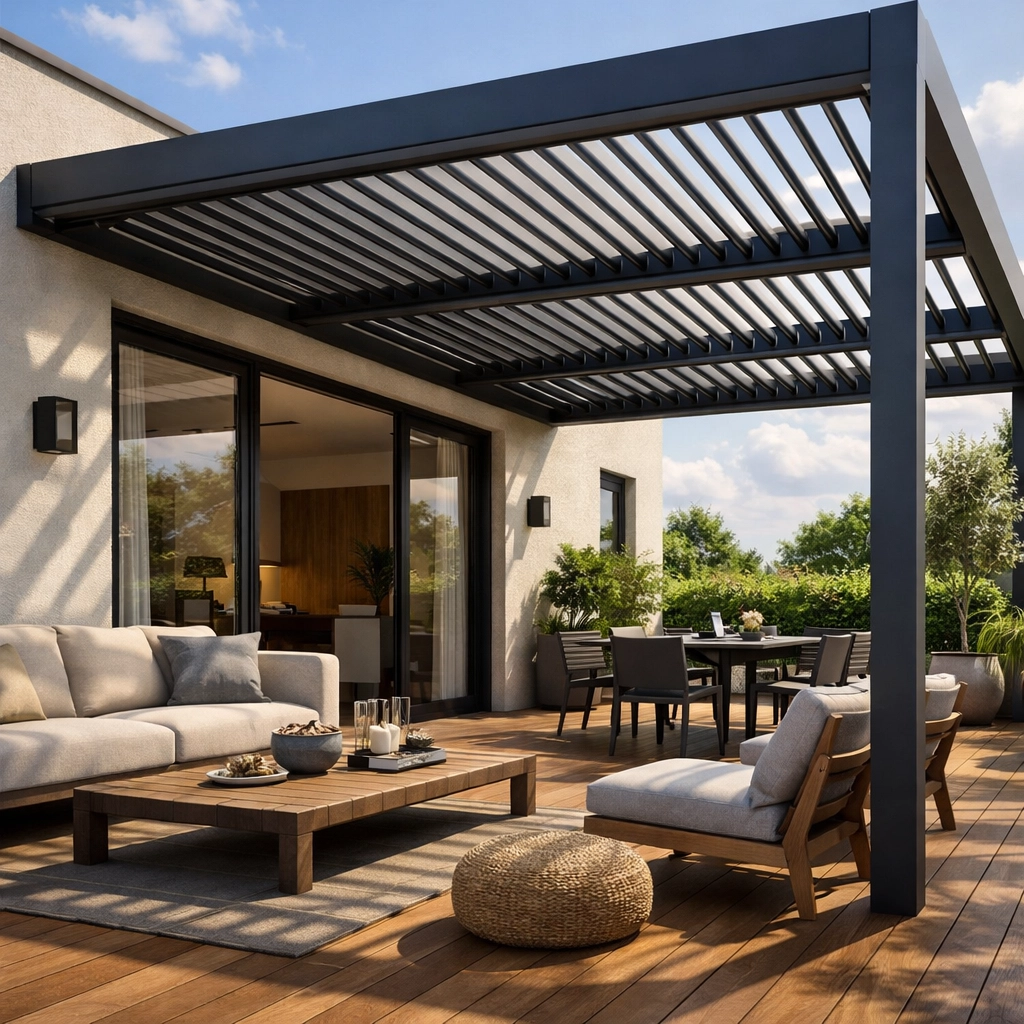
It’s a common misconception that "mid-range" simply means "medium price." In the context of louvre systems, it’s actually a technical classification. A true mid-range system is defined by its materials, its engineering philosophy, and its ability to scale.
Unlike budget kits that use thin-walled aluminium, mid-range systems utilise architectural-grade alloys. Typically, you will see 6063-T5 or 6063-T6 aluminium profiles.
Why does this matter?
These systems are paired with stainless steel fixings (rather than mixed-grade hardware) to ensure that the joints remain corrosion-free, especially in coastal environments where salt spray is a constant factor.
The "middle market" relies on modularity rather than total customization. Instead of designing a unique profile for every single job, mid-range systems offer pre-engineered sizes and configurations that can be combined or adjusted within set structural limits.
This modularity is what keeps the price point accessible. It reduces the need for expensive site-specific engineering while still offering the flexibility of multi-bay options for wider spans. You get a system that feels custom, but is built on a proven, repeatable framework.
Perhaps the most significant advantage of mid-range systems is the Upgrade Path. Historically, if you wanted a motorised louvre with LED lighting and integrated blinds, you had to buy it all at once. If your budget didn't cover it, you were stuck with a basic manual system that couldn't be altered.
Mid-range systems have flipped this model. They are designed to be "future-proof." You can install the structural framework today and add functionality as your budget or needs evolve.
Typical upgrade options include:
This ability to stage an investment is a game-changer for people looking to balance their immediate cash flow with their long-term vision for their property.
The surge in popularity for these systems isn't accidental. It's driven by a fundamental change in how we view our homes and how we calculate value.
The "deck and a BBQ" era is over. Today, outdoor areas are treated as essential extensions of the primary living space. Whether it’s for remote work, daily dining, or a professional-grade backyard basketball court, these spaces are used year-round.
Because the usage frequency has increased, the "cheap" option is no longer viable. People need systems that perform consistently through winter gales and summer heatwaves. Mid-range systems offer the reliability required for daily use without the price tag of a commercial-grade installation.
Smart buyers are asking better questions. Instead of "What is the cheapest price?", they are asking "What is the cost per use over ten years?"
A mid-range system might cost 30% more than a budget kit, but it will last three to four times longer and provide a much higher level of comfort. When you factor in the reduced maintenance and the increase in property value, the "middle ground" usually offers the highest Return on Investment (ROI).
In the current construction climate, labour costs are a major variable. High-end custom systems often require specialised teams and complex structural modifications to the existing building.
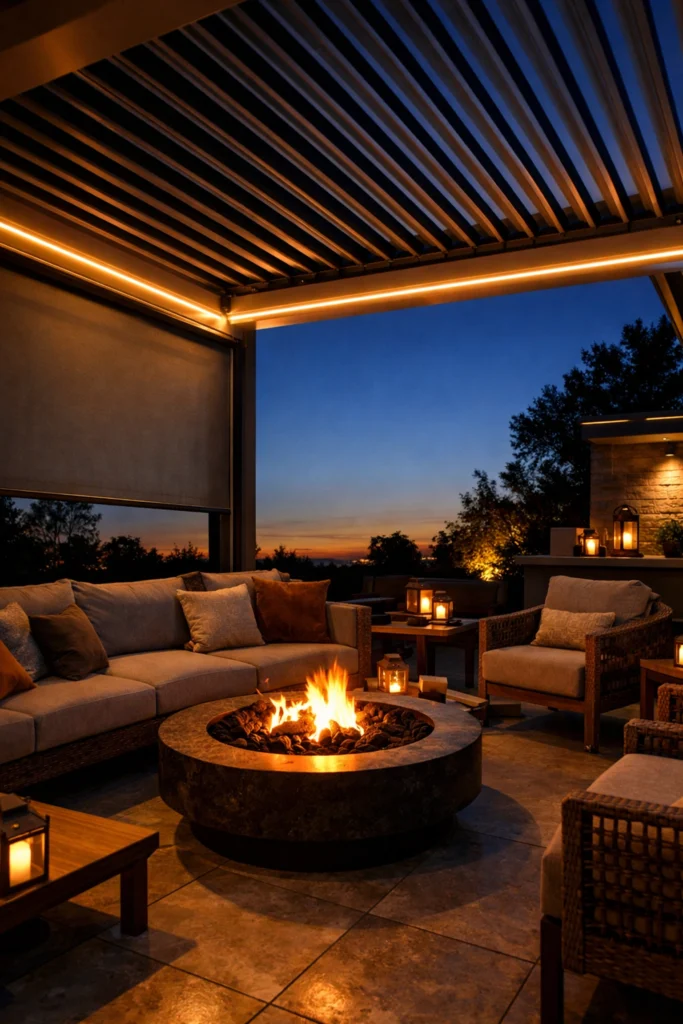
Mid-range systems are designed with the installer in mind. They are builder-friendly, meaning they can often be installed faster and with fewer "surprises" on site. This efficiency directly translates to lower labour costs for the homeowner or developer. For those working on remote projects, such as resilient housing in the Pacific Islands, the simplicity of installation is often the deciding factor.
In the world of outdoor design, "performance" isn't just a buzzword: it’s a set of measurable metrics. Mid-range systems prioritise the technical aspects that actually impact the user experience:
By focusing on these core performance areas rather than purely aesthetic "fluff," mid-range systems deliver a product that feels "premium" in every way that matters.
We are seeing the end of the "disposable" outdoor product. As consumers become more educated about materials and engineering, the demand for mid-range systems will only continue to grow.
This category represents a more mature approach to home improvement. It’s about building a system that evolves with you.
Whether you are a homeowner looking to reclaim your backyard or a developer looking for a reliable commercial solution, the middle market is where the most sensible decisions are being made.
The rise of mid-range louvre systems is driven by a demand for balance. By moving away from the extremes of the market, these systems offer a smarter path to high-quality outdoor living.
The innovation in the outdoor industry isn't just about the most expensive technology; it's about making high-performance engineering accessible and adaptable for the modern property owner.


