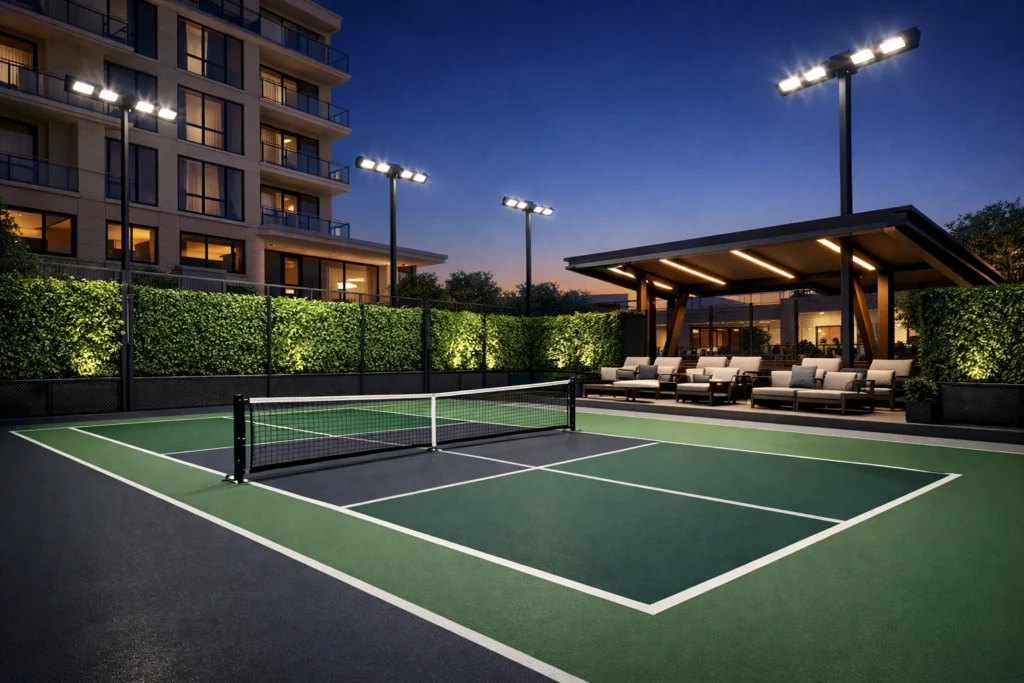
![[HERO] The Rise of Pickleball in Hospitality: Why Courts are the New Must-Have Amenity](https://cdn.marblism.com/0G473kquQPR.webp)
The landscape of leisure and hospitality is undergoing a significant transformation. What was once a niche activity favored by retirees has exploded into a global phenomenon. Pickleball is currently the fastest-growing sport in the world, and its impact on the hospitality industry: ranging from luxury resorts to local sports clubs: is profound.
For developers, hotel managers, and facility operators, adding pickleball courts is no longer just a trend to monitor; it has become a strategic necessity. This shift is driven by a unique combination of low barriers to entry, high social engagement, and a powerful secondary revenue stream that far exceeds simple court rental fees.
The most successful operators in the current market have realized that they are not just providing a place to play a game; they are managing a hospitality experience. Statistics show that participation in the United States alone surged over 311% in a three-year period, reaching nearly 20 million players by 2024.
However, the "rise" of pickleball in hospitality isn't just about the number of players. It is about how those players interact with the venue. Unlike tennis, which can be solitary and highly competitive, pickleball is inherently social. The smaller court size (roughly one-third the size of a tennis court) allows for closer proximity between players, fostering conversation and community.
The demographic profile of the average pickleball player has shifted dramatically. While the sport has deep roots in older communities, the average age of a player is now approximately 34.8 years old. This age bracket represents a high-spending segment of the hospitality market: Millennials and Gen X professionals who value wellness, social interaction, and "eat-ertainment" concepts.
These guests expect more than just a concrete slab with lines painted on it. They are looking for mobile-first experiences, including easy digital booking systems and seamless access to amenities. When a resort or sports club integrates high-quality sports and gym equipment, it signals a commitment to quality that resonates with this modern demographic.
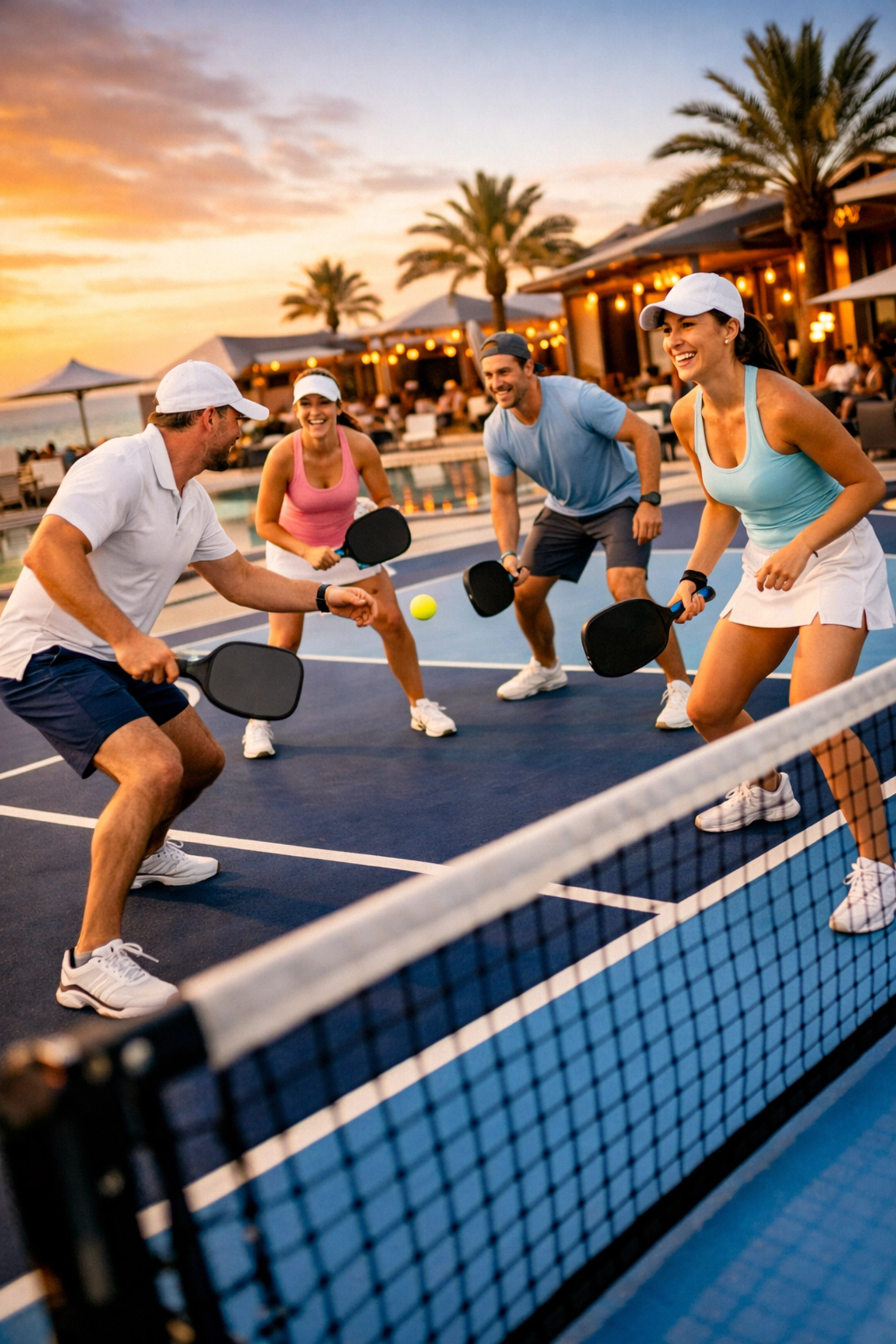
The financial viability of pickleball in hospitality is anchored in the "stay and play" philosophy. Industry data suggests that top-performing venues generate 70% or more of their total revenue from food and beverage (F&B) rather than court fees.
The social nature of the game encourages players to linger before and after matches. This creates a "sticky" environment where guests move from the court to a lounge area or onsite restaurant. Facilities that integrate mobile ordering directly to the courts or nearby seating areas report check averages that are 35-50% higher than traditional dining setups.
To transition from a "place with a court" to a "pickleball destination," hospitality venues must focus on technical precision and material quality. A subpar setup can lead to injuries, noise complaints, and a poor guest experience.
The foundation of a great court is its surface. Acrylic multi-layer systems provide the necessary grip and consistent ball bounce required for competitive play. For hospitality venues looking for versatility, modular tile systems can be an alternative, though high-end resorts typically opt for permanent cushioned acrylic surfaces to reduce joint impact for guests.
One of the primary challenges with pickleball is the sound. The "pop" of the paddle hitting the ball can be disruptive if courts are placed too close to guest rooms or quiet zones.
To maximize court utilization, lighting is essential. LED systems designed for sports provide uniform coverage without glare. For venues in warmer climates, integrating outdoor living solutions like shaded seating areas, misting systems, or even permanent roofing structures for "all-weather" play can significantly extend the usable hours of the facility.
Before breaking ground, hospitality managers must conduct a thorough site analysis. Integrating sports facilities into an existing layout requires careful planning to ensure traffic flow and guest privacy are maintained.
Describe the technical requirements:
For those in the planning stages, seeking a request for quote on materials and hardware early in the process ensures that the project stays within budget and meets international sporting standards.
The facilities winning long-term are those pairing quality hardware with quality service. This means having staff who understand the basics of the game, maintaining the cleanliness of the courts as strictly as the lobby, and providing high-quality rental gear.
Instructional Steps for Implementation:
The rise of pickleball in the hospitality sector is a response to a fundamental shift in how people want to spend their leisure time. It is no longer just about the sport; it is about the social connection and the experience surrounding it.
By investing in high-quality court infrastructure and prioritizing the hospitality experience, venues can turn a simple sports amenity into a powerful engine for growth and guest loyalty.