
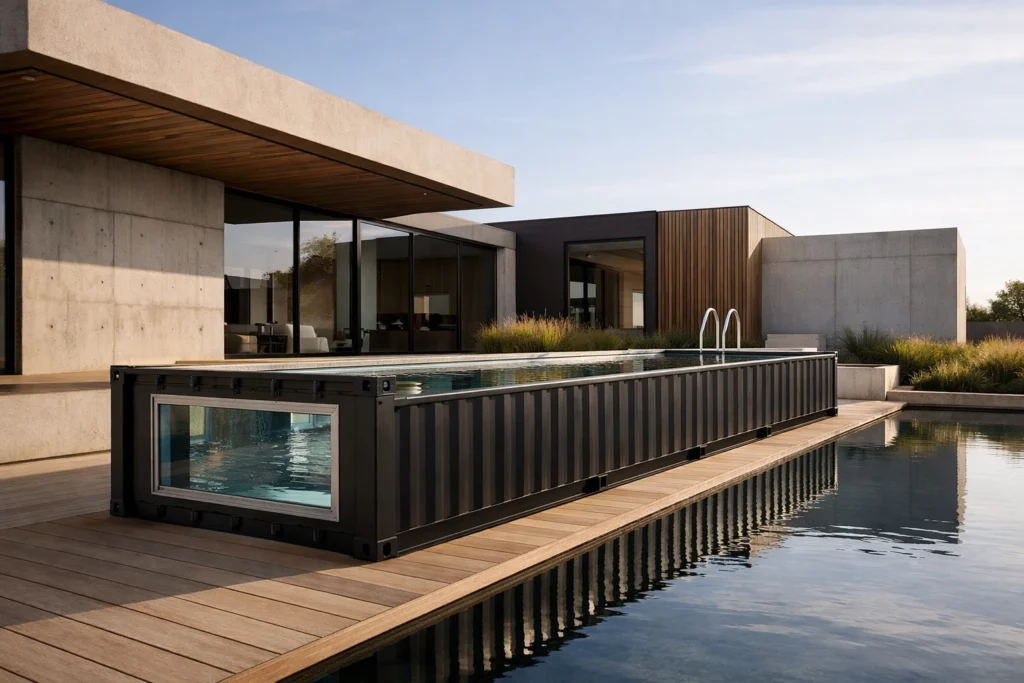
he landscape of residential aquatic design is shifting. While the traditional sprawling lap pool was once the undisputed symbol of luxury and fitness, modern architecture and urban densification are prioritizing efficiency without compromising performance. Enter the countercurrent trainer: a high-performance propulsion system that transforms a compact container pool into a sophisticated "swim treadmill."
For homeowners and design professionals alike, the decision to opt for a jet system over a traditional long-form lap pool is driven by more than just square footage. It is about precision, versatility, and the integration of high-end technology into the modern living environment.
The concept of swimming against a current is not new, but the technology has advanced significantly. In the context of a container pool: a structure already lauded for its modularity and structural integrity: the addition of a countercurrent trainer creates a professional-grade training facility in a fraction of the space.
Unlike standard pool jets designed for massage or light resistance, a dedicated countercurrent system utilizes a powerful pump or turbine to move a high volume of water at a controlled velocity. This creates a laminar flow: a smooth, deep, and wide current that mimics the feel of open-water swimming.
In many contemporary residential plots, dedicating 15 to 25 meters of linear space to a lap pool is often unfeasible or aesthetically disruptive. A container pool equipped with a jet system solves this structural dilemma.
For serious swimmers and triathletes, the ability to control the environment is a significant advantage. Traditional lap swimming involves constant turns, which can disrupt a swimmer's rhythm and reduce the actual "work" time per session.
A container pool is fundamentally an industrial object refined for luxury use. When installing a countercurrent system, the technical components: pumps, filtration, and plumbing: are typically housed within the container’s original "engine room" or a discrete external housing.

While the primary driver for a countercurrent trainer is often athletic, the lifestyle benefits extend to all users. A jet-powered container pool is a versatile asset that serves multiple purposes:
In the high-end real estate market, buyers are increasingly looking for "smart" homes that prioritize health and efficiency. A container pool is already a unique selling point; adding a countercurrent trainer elevates it into the realm of bespoke wellness technology.
This type of upgrade signals to potential buyers that the property is designed for high-performance living. It categorizes the pool as a piece of sophisticated equipment rather than just a recreational water feature.
When specifying a countercurrent trainer for a container pool project, pay close attention to the following technical benchmarks:
A countercurrent pool is often the centerpiece of a larger outdoor gym strategy. To create a truly professional environment, consider the flow of the space. Position the pool in a way that allows for a seamless transition between strength training, cardio, and recovery.
The use of industrial materials, such as Corten steel accents, can complement the raw, structural aesthetic of the container while maintaining a high-end, editorial look. This architectural cohesion is what separates a standard backyard installation from a world-class residential wellness zone.
Investing in a countercurrent trainer for a container pool is a strategic decision that balances spatial constraints with elite performance. It replaces the need for a massive, high-maintenance lap pool with a compact, tech-forward alternative that offers a superior training experience.
By ditching traditional laps for a jet system, you are not losing space; you are gaining a smarter, more efficient way to train and live. For the modern homeowner, it is the ultimate upgrade for any container pool project.


