
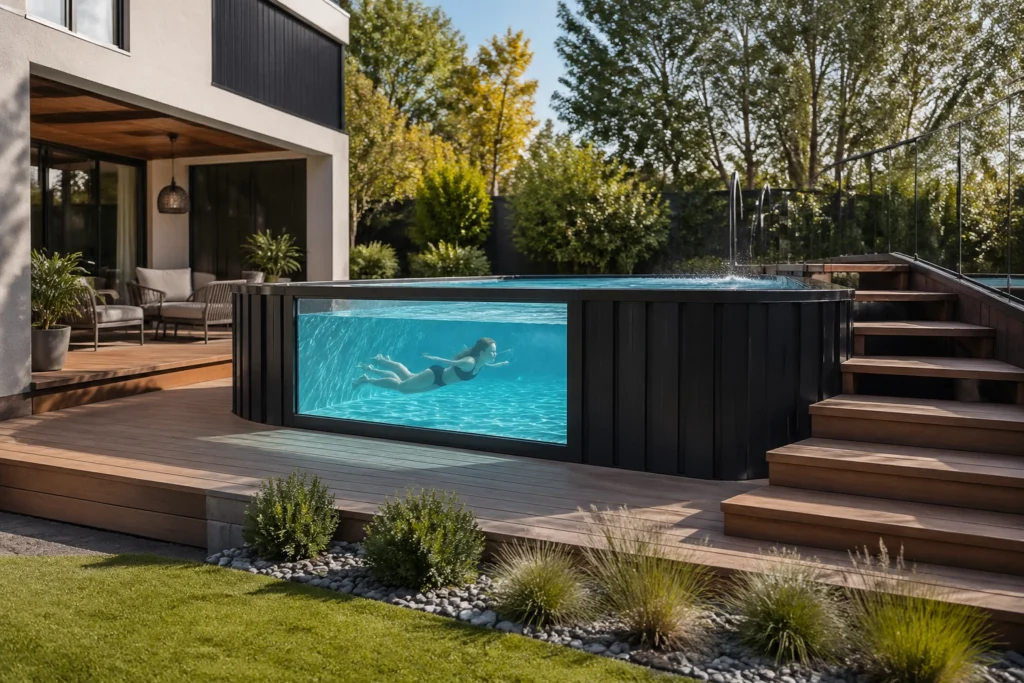
Let’s be honest: a shipping container pool is already a statement piece. You’re taking a massive, industrial steel box meant for the high seas and turning it into a backyard oasis. That’s cool. But if you want to move from "cool" to "Bond-villain-luxury" territory, there is one feature that changes everything: the viewing window.
Adding a window to a container pool isn't just about being able to see if your kids are actually holding their breath; it’s about breaking the visual weight of the steel and creating a seamless connection between the water and the landscape. It turns a pool into a living piece of art: an aquarium where the humans are the main attraction.
In this guide, we’re diving into the technical and aesthetic world of underwater windows, comparing materials, and explaining why this is the single best upgrade for any container pool project.
The primary challenge with above-ground container pools is their "solidness." A 6-meter or 12-meter steel wall can feel imposing in a smaller garden. By installing a viewing window, you effectively "delete" a portion of that heavy steel and replace it with the light, shimmering blue of the water.
At night, a container pool with a window becomes a massive light fixture for your yard. With integrated LED lighting, the window glows, casting a soft, ambient light across your deck or patio. It creates a sense of depth that a standard solid-walled pool simply cannot match.
From a practical standpoint, it’s a game-changer for parents and entertainers. You can keep an eye on swimmers from the comfort of your lounge chair without needing to stand directly over the edge. Plus, it makes for some pretty spectacular social media content: underwater photography becomes infinitely easier when you don't actually have to get wet.
When it comes to underwater windows, you have two main contenders: Acrylic and Laminated Glass. While they might look similar to the untrained eye, their structural properties and visual performance are worlds apart.
Acrylic is the go-to choice for large-scale underwater viewing, used in everything from high-end residential pools to world-class aquariums.
Glass is often chosen for its scratch resistance and familiarity, but it comes with some technical trade-offs.

You can’t just take a reciprocating saw to the side of a shipping container and slap a piece of plastic over the hole. Shipping containers are engineered to hold weight at their corners; the side walls provide structural rigidity. When you cut a large section out for a window, you are compromising that integrity.
To install a window, a heavy-duty steel sub-frame must be engineered and welded into the container’s structure. This frame acts as a "picture frame" that restores the lost strength of the corrugated steel.
This is where DIY projects usually go sideways. The seal between the window material and the steel frame must account for:
Before starting your build, ensure you have structural precision with detailed CAD drawings. Without a clear engineering plan, the "wow" factor will quickly turn into a "why is my lawn a swamp" factor.
The placement of your window depends on how you plan to use your outdoor space. Here are the three most popular configurations:
A long, horizontal window placed at eye level for people sitting on the deck. This is the classic look. It elongates the pool and provides a panoramic view of the water's interior.
If your container pool is partially "buried" or built into a slope, having one entire end made of acrylic creates a stunning infinity-edge effect. It looks as though the water is being held back by magic.
For a more industrial or nautical vibe, multiple circular windows (portholes) can be installed. This is often easier from a structural standpoint as smaller holes require less massive reinforcement, but it still delivers that unique "underwater view" charm.
Let’s be blunt: adding a window is an investment. You are looking at costs for the material (acrylic isn't cheap), the engineering, the custom steel framing, and the specialized sealing process.
However, when you look at the resale value of a property and the sheer "lifestyle lift" it provides, the ROI is high. A standard container pool is a functional amenity. A container pool with a viewing window is a destination. It is one of the top features that can transform an outdoor space, alongside high-end decking and integrated heating systems.

If you decide to take the plunge, you’ll need to adjust your maintenance routine slightly to keep that window crystal clear.
Adding a viewing window is the ultimate way to elevate a container pool from a practical DIY solution to a high-end architectural feature. To ensure your project is a success, remember these key points:
A viewing window turns your pool into more than just a place to swim: it turns it into the centerpiece of your home's exterior design. By blending industrial strength with the transparency of modern polymers, you create a space that is as much fun to look at as it is to swim in.


