
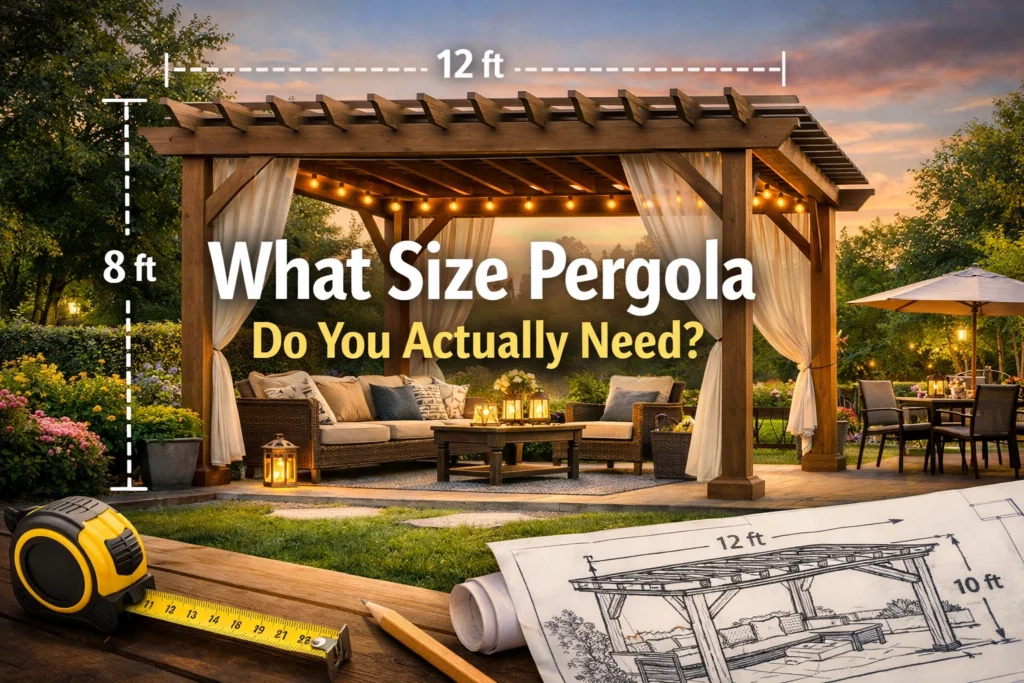
Let’s be honest: size matters. At least, it does when you’re standing in your backyard with a tape measure, trying to figure out if that new outdoor sanctuary is going to fit your Weber, your L-shaped sofa, and your uncle’s questionable dance moves at the Christmas BBQ.
I’ve seen it a thousand times. Homeowners either go too small and end up feeling like they’re huddling under a bus shelter, or they go so big they accidentally build a secondary dwelling that the Council wants to have a very expensive "chat" about.
Choosing the right size for your outdoor shading solutions isn’t just about what fits on your deck; it’s about how you intend to live in that space. Whether you are looking at high-end louvre systems or a more hands-on DIY louvre kitset, getting the dimensions right the first time is the difference between an outdoor "meh" and an outdoor "masterpiece."
So, let’s break down the logic of sizing, New Zealand style.
Before you look at a single brochure, you need to pass the "Social Test." How do you actually spend your weekends?
If your primary goal is to host long, sun-drenched lunches, you need to plan for more than just the table. I call this the Clearance Rule. A standard 6-seater dining table might look small on paper, but once you add chairs: and the space for people to actually pull those chairs out without falling into the garden: you need a minimum of 1.2 meters of "buffer" on all sides.
Lounging is more forgiving but takes up more "floor" space. Deep-seated outdoor sofas and fire pits have a massive footprint. If you want that resort feel, you shouldn’t be bumping knees with your guests.
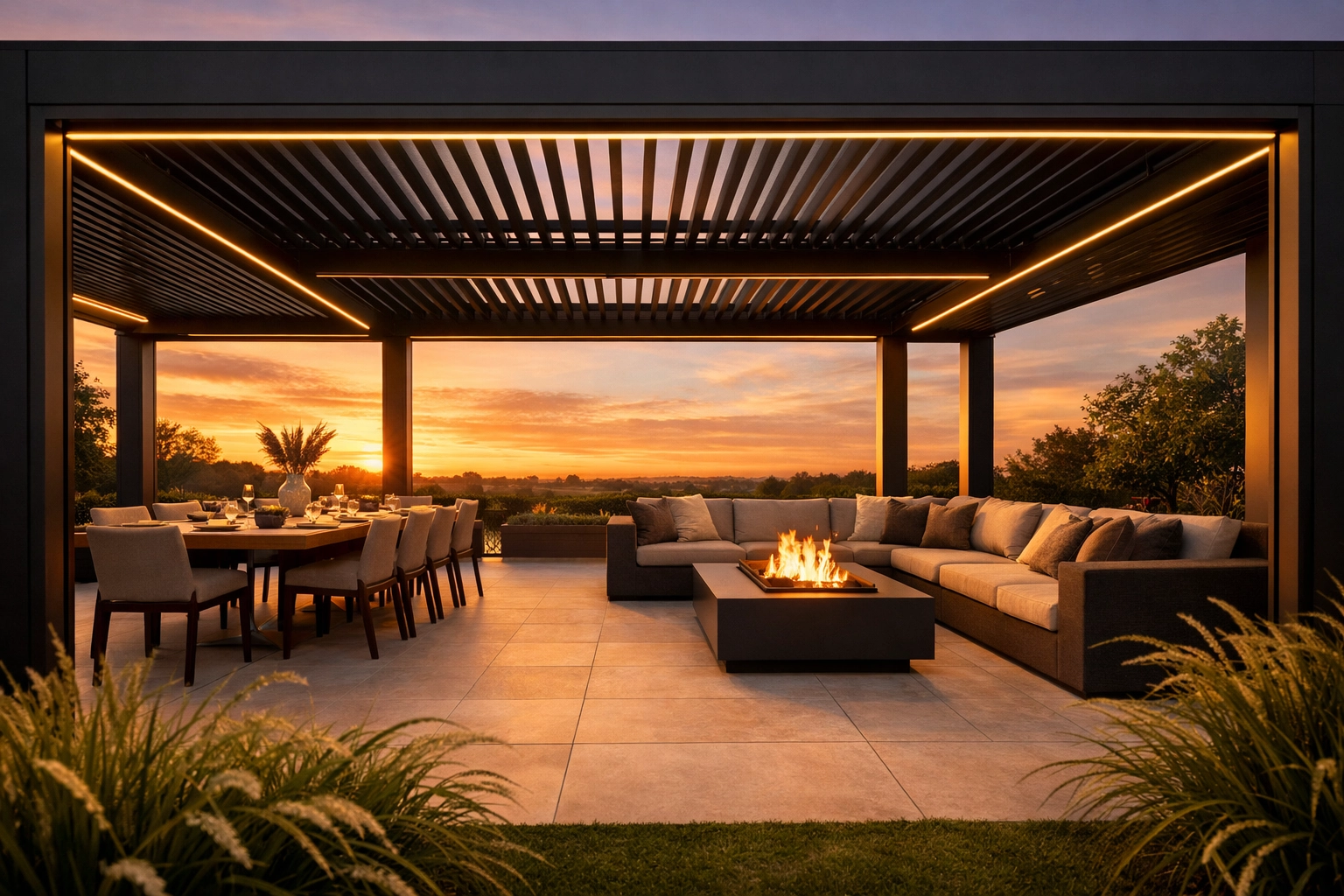
Where you put the pergola dictates how big it feels.
Mounting a pergola directly to your house (attached) makes it feel like a seamless extension of your living room. It’s the ultimate "indoor-outdoor flow." However, because it's fixed to the structure, you are limited by the height of your roofline and the width of your house.
A freestanding pergola kitset can be placed anywhere. Want a "destination" at the end of the garden by the pool? This is your go-to. Because it isn't competing with the house's architecture, you can often go slightly larger without it feeling "heavy" or overwhelming the main building.
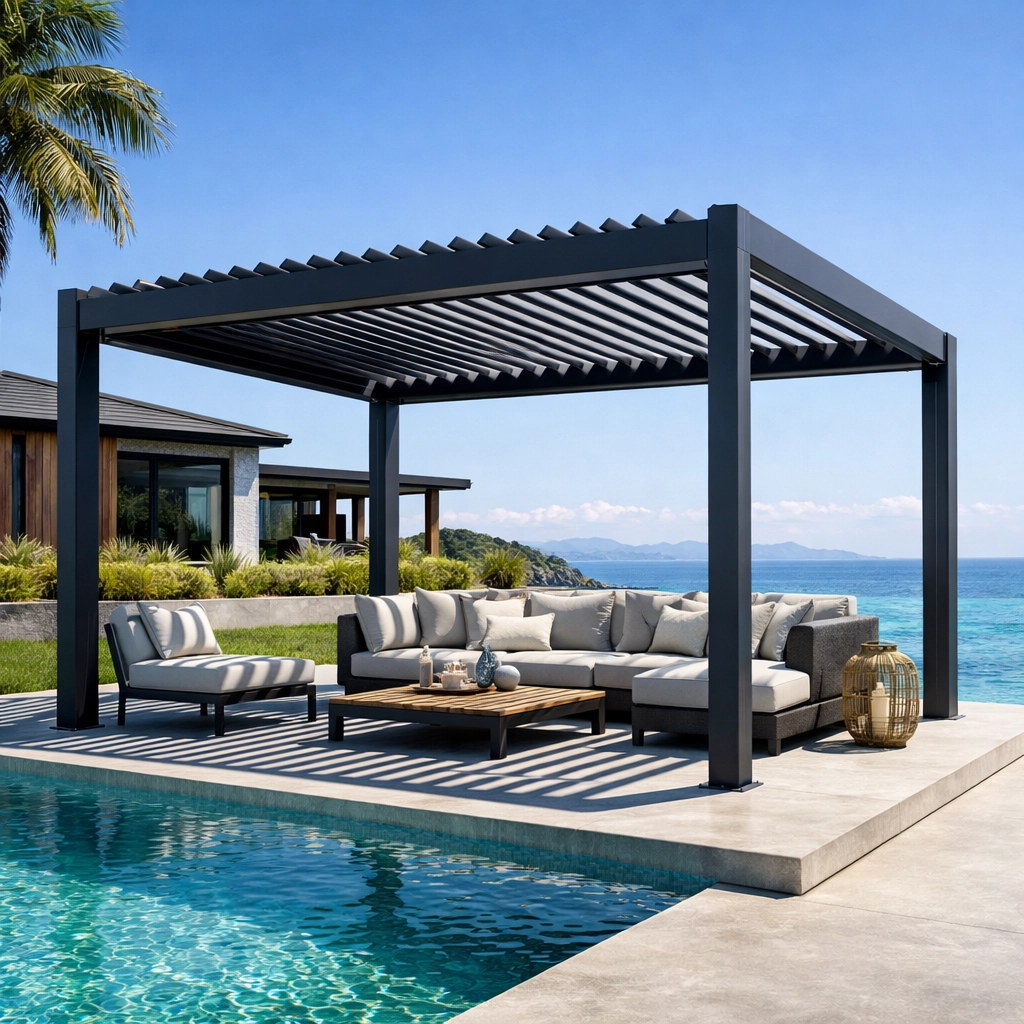
When you're looking at size, you're also looking at the strength of the spans. A larger pergola needs stronger beams. You’ll see a lot of talk about aluminum grades. Specify high-grade 6063 aluminium if you want something that handles New Zealand conditions without turning into a long-term regret.
Whether your system is 6063-T5 or 6063-T6, both are excellent for New Zealand conditions.
For 99% of residential applications, both are going to stand up to the Kiwi sun and wind just fine. The real key is the thickness of the extrusion and the quality of the engineering (that’s where our PS1 certification comes in).
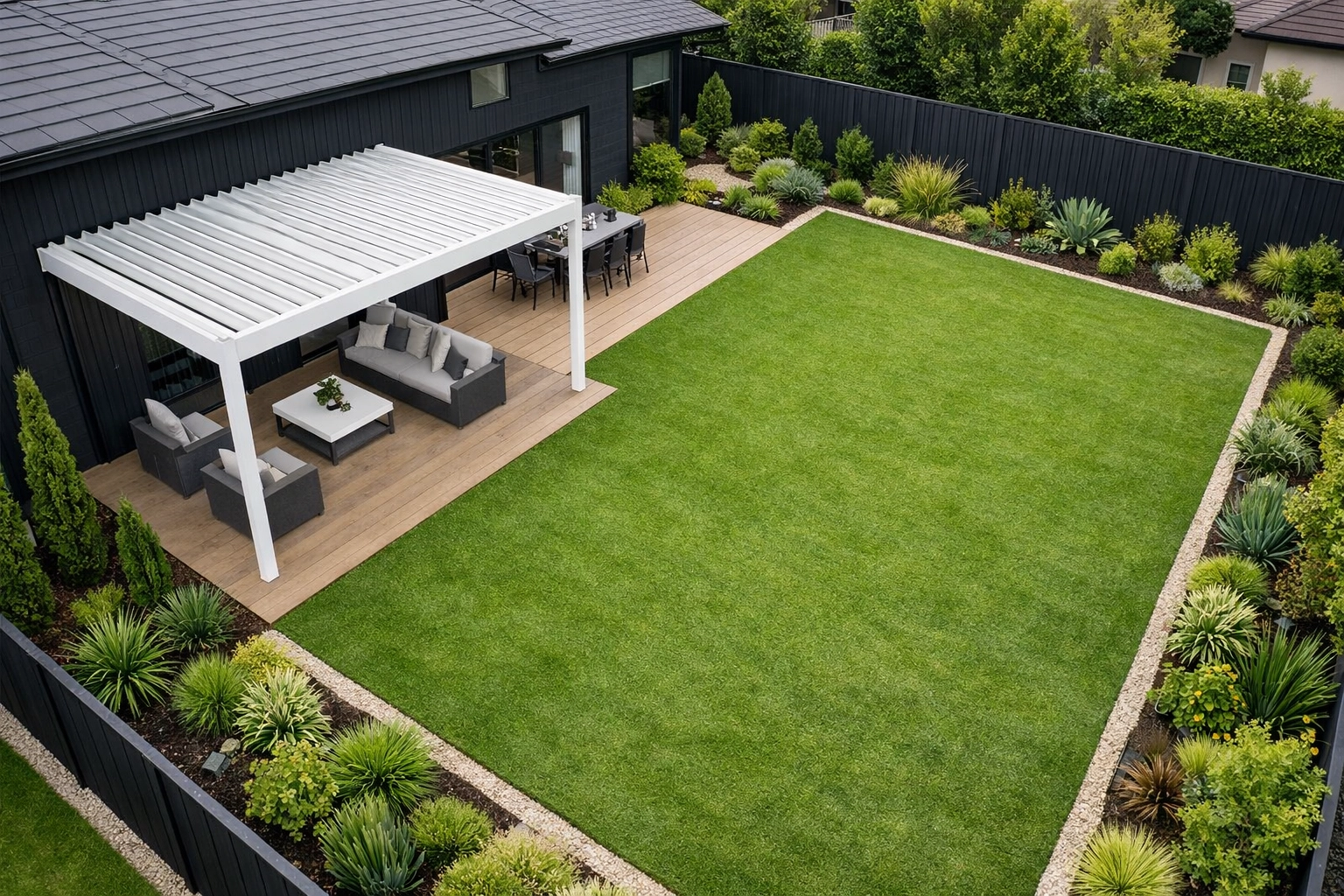
Just because you can fit a 6m x 4m pergola in your yard doesn't mean you should. You still need "negative space." If your pergola takes up 90% of your grass, your backyard is going to feel like a cage.
A good rule of thumb is to ensure the pergola occupies no more than 1/3 of your total available outdoor area. This leaves room for landscaping, a bit of lawn for the dog, and keeps the area feeling airy and open. If you’re working with a tight space, consider a compact louvre system designed to offer maximum protection without a bulky footprint.
Most people focus on length and width, but height is what creates the "vibe."
Keep in mind that if you go too high, the rain will blow in from the sides more easily. If you go too low, you’ll feel like the ceiling is pressing down on you. Finding that middle ground is key.
Choosing the right size is a mix of lifestyle needs, legal limits, and visual balance. Here’s how to nail it:
Whether you want a tiny sanctuary for your morning coffee or a massive entertainment hub for the whole neighborhood, getting the size right is the first step toward your dream backyard. If you’re still unsure, grab a tape measure and give us a shout: we’ve seen enough backyards to help you avoid the common traps!


