
![[HERO] Louvre Systems for Commercial Spaces: Why Hospitality is Leading the Trend](https://cdn.marblism.com/mZkHtHzZem_.webp)
In the competitive landscape of the hospitality industry, the physical environment of a venue is as critical as the service or product provided. Restaurants, cafes, and boutique hotels are no longer viewing outdoor spaces as secondary additions; they are treating them as primary revenue-generating assets. This shift has driven a surge in the adoption of louvre systems, particularly high-grade aluminum louvres, which offer a unique blend of architectural sophistication and functional versatility.
For commercial business owners, the goal is simple: maximize the utility of every square meter while maintaining a premium guest experience. Below, we examine why the hospitality sector is leading the trend in louvre adoption and how these systems serve as a strategic investment for commercial growth.
The most significant challenge for any hospitality business with an outdoor area is weather dependency. A sudden downpour or an uncomfortably hot afternoon can instantly render a terrace or patio unusable, leading to lost bookings and decreased turnover.
Louvre systems solve this by providing a dynamic roof solution. Unlike fixed pergolas or temporary umbrellas, adjustable louvres allow operators to:
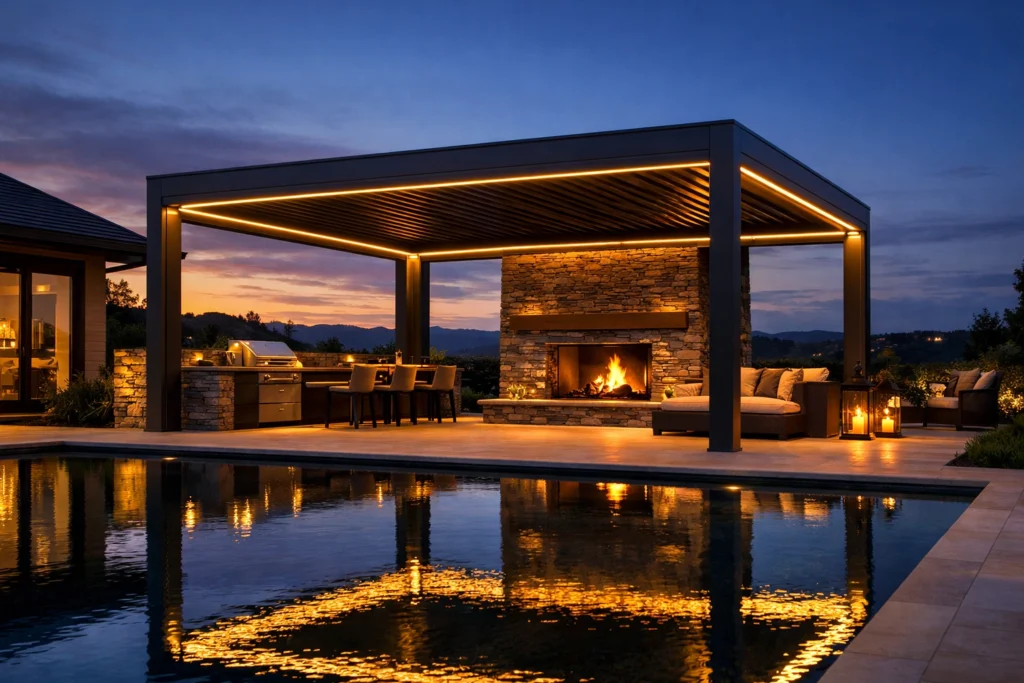
By transforming a seasonal patio into a year-round dining room, businesses can significantly increase their seating capacity and, consequently, their annual revenue. For those planning a major renovation, reviewing products for interior designers and architects can provide insights into how these structures integrate into broader commercial designs.
In the modern hospitality market, aesthetics drive foot traffic. A well-designed outdoor space serves as a powerful marketing tool. Aluminum louvres offer a sleek, contemporary aesthetic that complements both minimalist modern architecture and more traditional builds.
Lighting plays a vital role in the "vibe" of a restaurant or hotel lounge. Louvre systems allow for precise control over natural light, creating dappled shade patterns that enhance the visual texture of a space.
This level of environmental control ensures that the space is always "camera-ready," encouraging guests to share their experiences on social media, which provides free, high-quality exposure for the business.
Commercial environments demand higher performance standards than residential settings. A system in a high-traffic restaurant must withstand constant use and environmental stressors without requiring frequent downtime for repairs.
Aluminum louvres are the preferred choice for commercial applications for several technical reasons:
Beyond the immediate comfort of the guests, louvre systems contribute to the overall energy efficiency of a commercial building. When installed over windows or large glass entryways, they act as an external thermal barrier.
For business owners, this translates to lower utility bills and a smaller carbon footprint: an increasingly important factor for eco-conscious consumers.
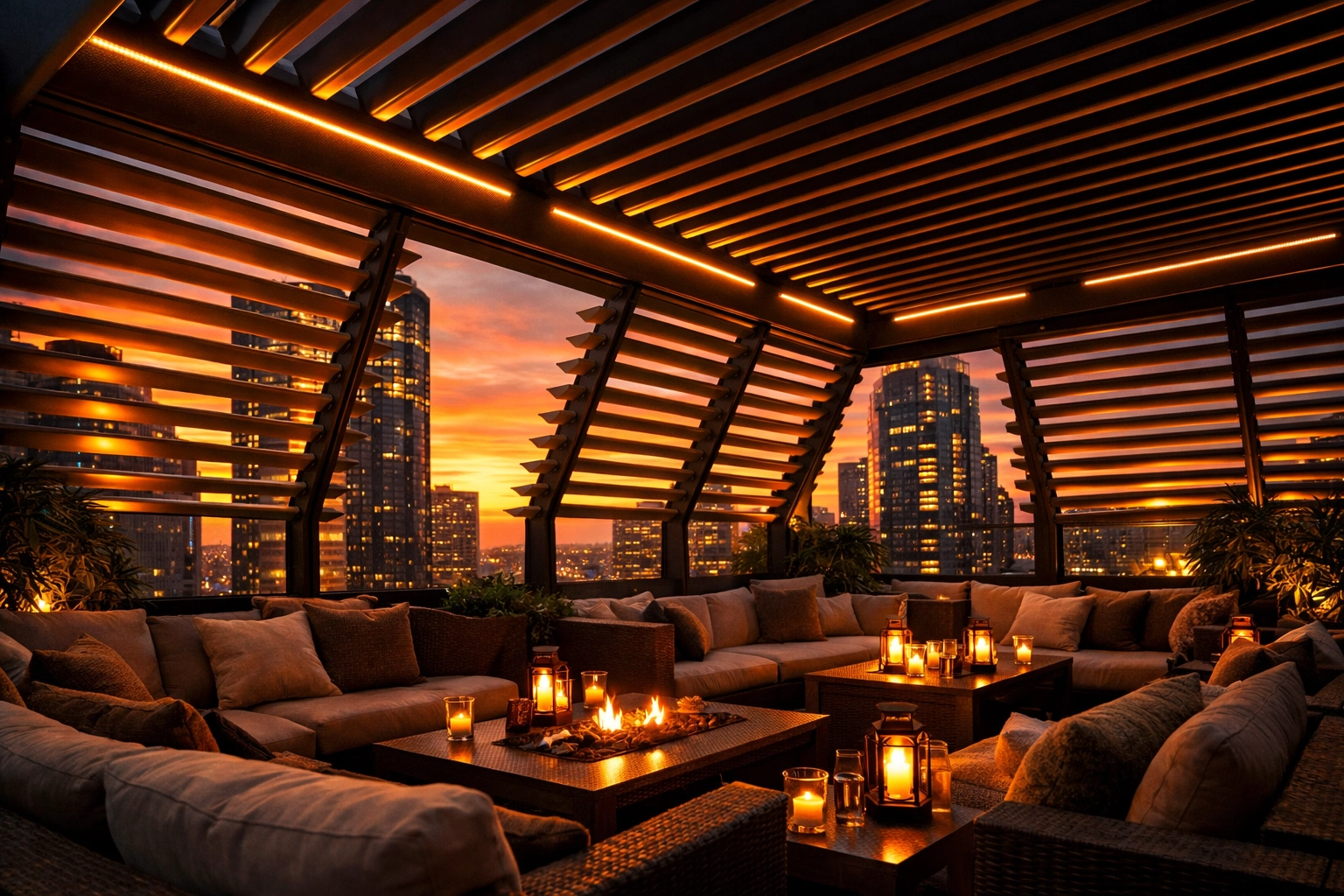
Many hospitality venues are located in dense urban environments where privacy and noise can be issues. Louvre systems provide a strategic solution for screening. By adjusting the angle of the louvres, a venue can block the view from overlooking buildings while still allowing light and air to circulate.
Furthermore, the structural presence of a louvre system can help dampen street noise, creating a more intimate and secluded feel for guests. This is especially valuable for hotel pool decks or high-end restaurant terraces located on busy thoroughfares.
When specifying a system for a commercial space, several technical factors must be addressed to ensure compliance and safety:
For businesses ready to move forward with a project, it is highly recommended to work with approved installers who understand the nuances of commercial building codes and site-specific challenges.
The trend isn't limited to a single type of business. We are seeing diverse applications across the sector:
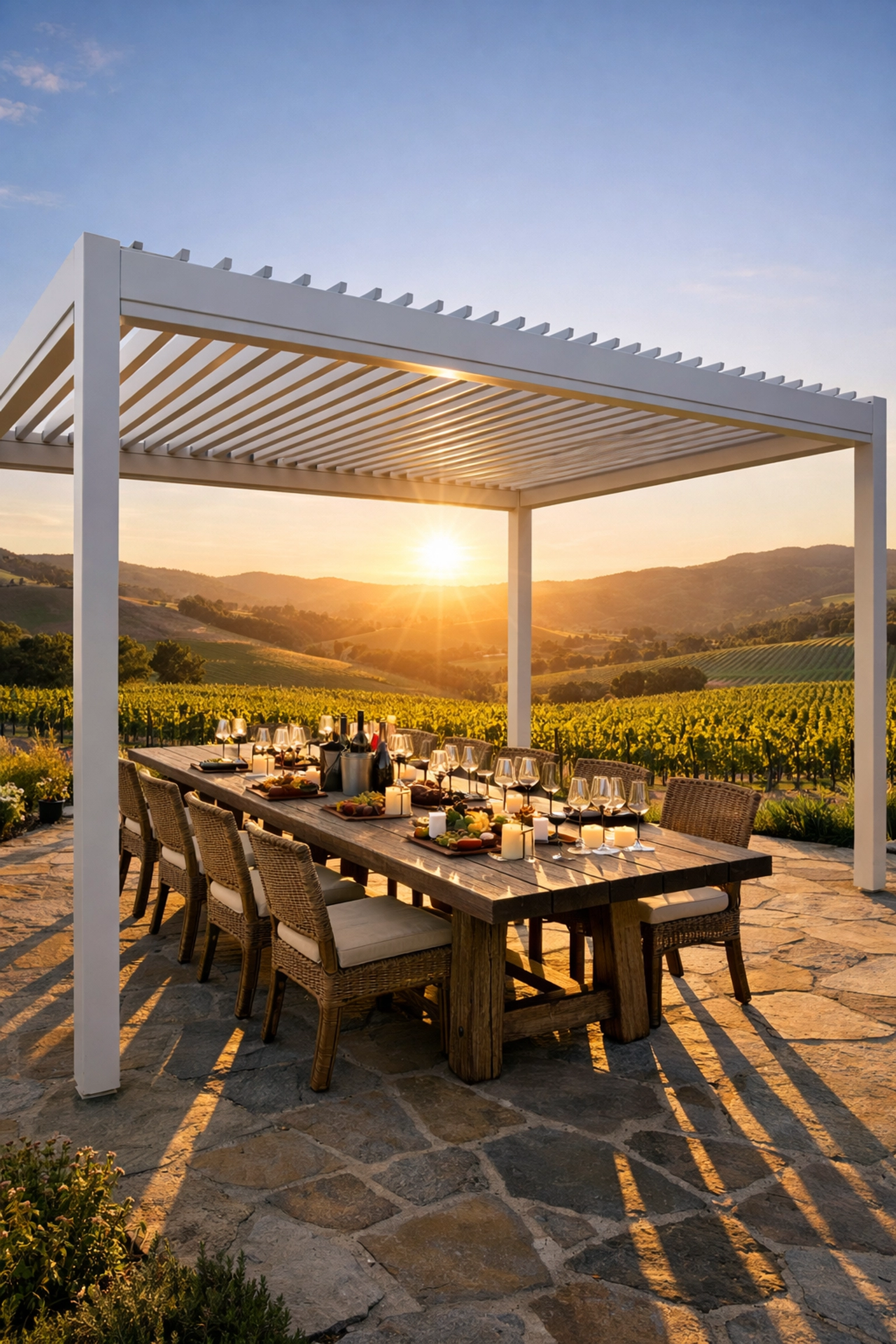
The adoption of louvre systems in the hospitality industry is a response to the need for flexible, durable, and high-revenue spaces. By investing in these systems, business owners achieve:
For any commercial entity looking to future-proof their outdoor space, the shift toward aluminum louvres represents a balance of smart building science and strategic business growt


