
![[HERO] 6063-T5 vs. 6063-T6 Aluminum: A Guide to the "T" Word in Construction](https://cdn.marblism.com/-3GvpBSJQZd.webp)
When you are looking at specifications for architectural products: whether it’s a new window suite, a pergola, or a structural frame: you will almost certainly see the numbers 6063-T5 or 6063-T6. To the average person, it looks like a cryptic serial number. To an engineer or a seasoned DIYer, those last two characters tell you exactly how that piece of metal is going to behave under pressure.
While both start as the same 6063 alloy, the "T" (which stands for Temper) represents a fork in the road during the manufacturing process. Choosing the wrong one can lead to structural failure in heavy-duty builds or an unnecessarily difficult installation in decorative ones.
This guide breaks down the technical differences, the manufacturing "magic," and exactly which one you should be looking for in your next project.
Before we dive into the "T," we need to understand what 6063 actually is. In the world of aluminum, the 6000 series is the "architectural" family. It is an alloy primarily composed of aluminum, magnesium, and silicon.
Magnesium increases the strength and the ability of the metal to be heat-treated, while silicon lowers the melting point and enhances the extrusion characteristics. Together, they make 6063 the go-to choice for complex shapes because it pushes through an extrusion die like playdough, but hardens into a durable, corrosion-resistant finished product.
In the metallurgical world, the "T" stands for Thermal Treatment. It indicates that the aluminum has been "tempered" to achieve specific mechanical properties.
Aluminum doesn't reach its full strength the moment it is cast or extruded. It requires a specific cooling and heating cycle to align its molecular structure. The number following the "T" tells us exactly what that cycle looked like.

6063-T5 is arguably the most common temper used for standard architectural extrusions. The process is relatively straightforward but requires precision timing.
When the aluminum is pushed through the extrusion die at high temperatures, it is immediately cooled. For T5, this cooling is typically done using high-velocity air (air-quenching). Once the metal has reached room temperature, it is left to sit. This is called Natural Aging.
Because the cooling process is gradual (compared to water), the metal doesn't undergo a massive thermal shock. This results in several specific benefits for design:
If T5 is the "pretty face" of the aluminum world, 6063-T6 is the muscle. It undergoes a much more aggressive treatment process to maximize its yield and tensile strength.
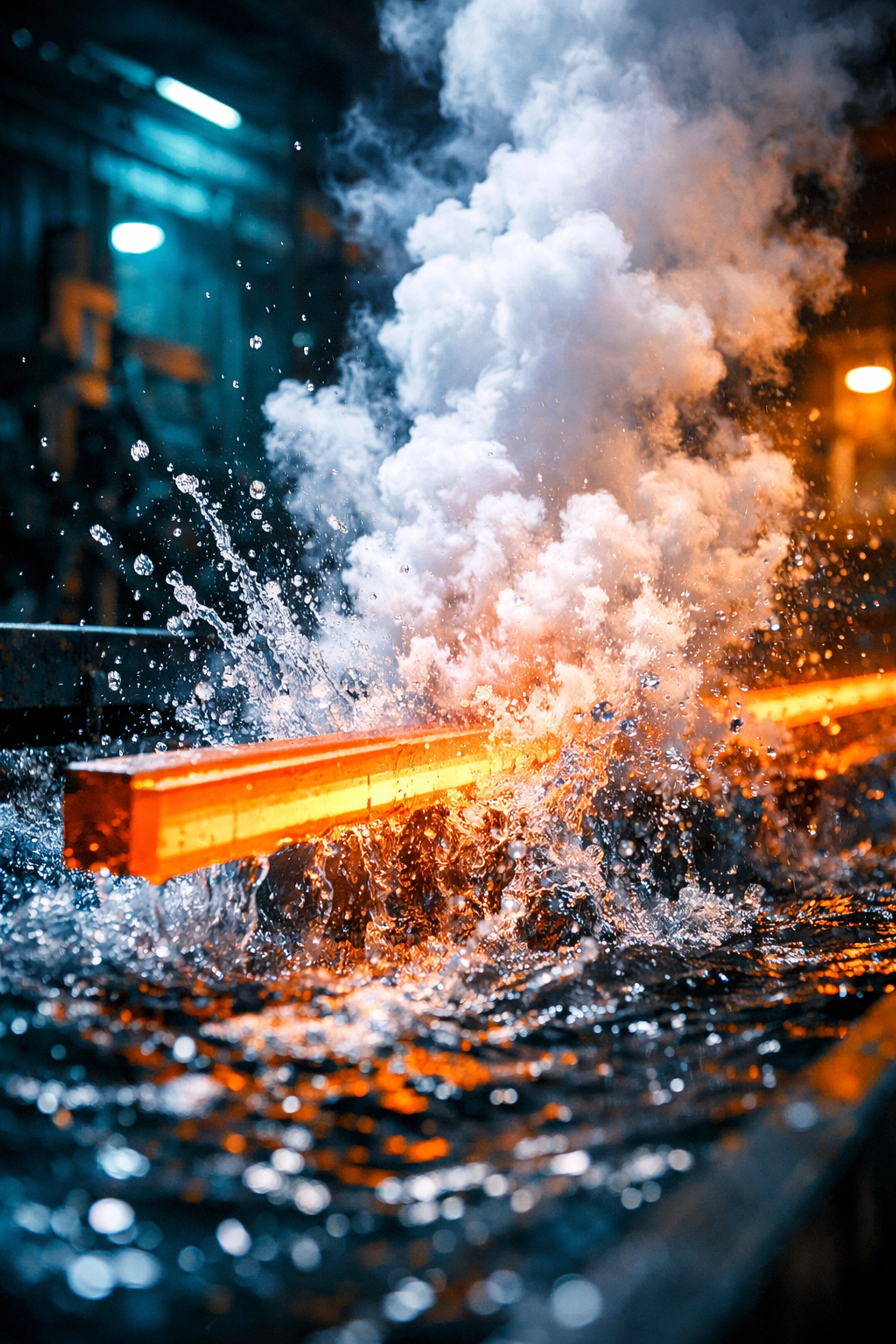
The manufacturing of T6 starts the same way as T5, but the cooling is vastly different. Instead of air-cooling, the metal is Water Quenched. It is blasted with water or submerged immediately after leaving the die. This "freezes" the alloying elements (magnesium and silicon) in place.
However, this makes the metal unstable and "soft" in a way that isn't useful yet. To fix this, the aluminum is placed into a large oven for Artificial Aging. It is baked at a specific temperature (usually around 175°C to 190°C) for several hours. This controlled heat allows the magnesium-silicide to precipitate evenly throughout the metal, "locking" the structure together and dramatically increasing hardness.
To make an informed decision, you need to look at the numbers. While these can vary slightly based on the specific mill, here is the standard comparison for 6063 aluminum.
From a DIY or fabrication standpoint, the "T" makes a big difference in the workshop.
Generally, 6063-T6 is more expensive to produce. The additional steps of water quenching and hours of oven-baking add to the labor and energy costs of the mill.
However, there is a "hidden" saving with T6. Because it is stronger, you can often use a thinner wall thickness to achieve the same structural rating as a thicker T5 section. If you are ordering in bulk for a large commercial project, engineering a T6 solution might actually save you money by reducing the total weight of aluminum required.

Understanding the temper of your aluminum is the difference between a project that looks good and a project that stands the test of time.
Before starting your next build, always verify the temper. If you are building for strength, demand T6. If you are building for aesthetics and intricate design, T5 is likely your perfect match.


