
For decades, the standard for a community sports court was simple: a flat slab of concrete or asphalt, some painted lines, and perhaps a fence. These spaces were functional, but they were rarely optimized for the diverse needs of a modern population. As our understanding of sports science, urban planning, and inclusive design has evolved, the "grey slab" approach is rapidly becoming obsolete.
Today, councils, developers, and educational boards are shifting their focus toward quality, safety, and inclusivity. The goal is no longer just to provide a space to play, but to create a high-performance environment that protects players of all ages and remains resilient against the elements. Central to this transformation is the rise of modular sports tiles: a smarter, safer alternative to traditional hard surfaces.
The historical priority for community courts was "quantity over quality." The logic was that more courts meant more participation. However, this ignored the barriers to entry created by poor-quality surfaces. Hard, unforgiving concrete increases the risk of injury, while poor drainage leads to extended downtime after rain.
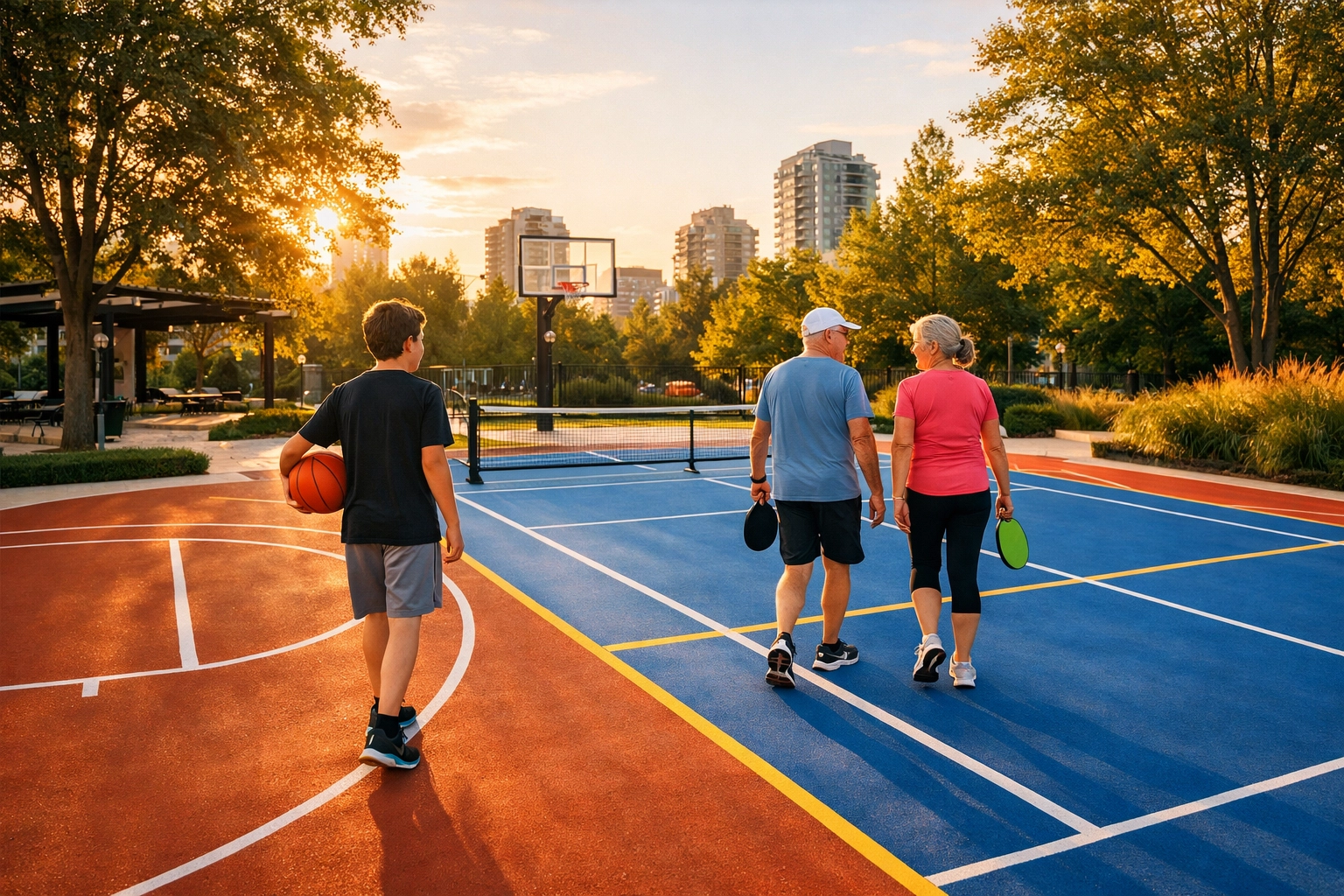
Modern design prioritizes inclusive design. This means creating spaces that cater not just to elite youth athletes, but also to children developing their motor skills and seniors engaging in active ageing. A truly successful community court is one that is occupied from 8:00 AM to 8:00 PM, hosting everything from school physical education to competitive basketball and social pickleball.
To achieve this, the surface must be "smart": it must be adaptable, easy to maintain, and, most importantly, engineered for human health.
To understand why the shift to modular surfaces is happening, we must compare the technical characteristics of traditional materials against modern Polypropylene (PP) interlocking tiles.
The most compelling argument for sports tiles is player safety. In community settings, the demographic using the court is often at high risk for impact-related injuries.
The rise of pickleball has revolutionized community recreation. As a sport that appeals heavily to older demographics, the surface it is played on becomes a health consideration. For the active ageing population, playing on concrete is a recipe for joint pain, shin splints, and stress fractures.
Modular surfaces act as a mechanical buffer. The "cushion" effect of the tiles reduces the load on knees, hips, and ankles. This allows seniors to play longer and more frequently, promoting cardiovascular health without the skeletal toll of traditional surfaces. Designing a pickleball court surface with modular tiles is an investment in the long-term wellness of the community.
For children and student-athletes, the repetitive impact of sports on hard surfaces can lead to overuse injuries. A safer court provides a more forgiving environment for falls and high-intensity movement. By installing surfaces with superior grip and shock absorption, schools and councils can significantly reduce their liability and improve the user experience.
Designing for the South Pacific requires materials that can withstand extreme UV exposure, high humidity, and heavy rainfall. Standard asphalt often softens in the heat or cracks during rapid temperature changes.
UV Stability: High-quality PP tiles are treated with UV inhibitors. This prevents the material from becoming brittle or "chalking" under the intense sun, ensuring the structural integrity of the court remains intact for decades.
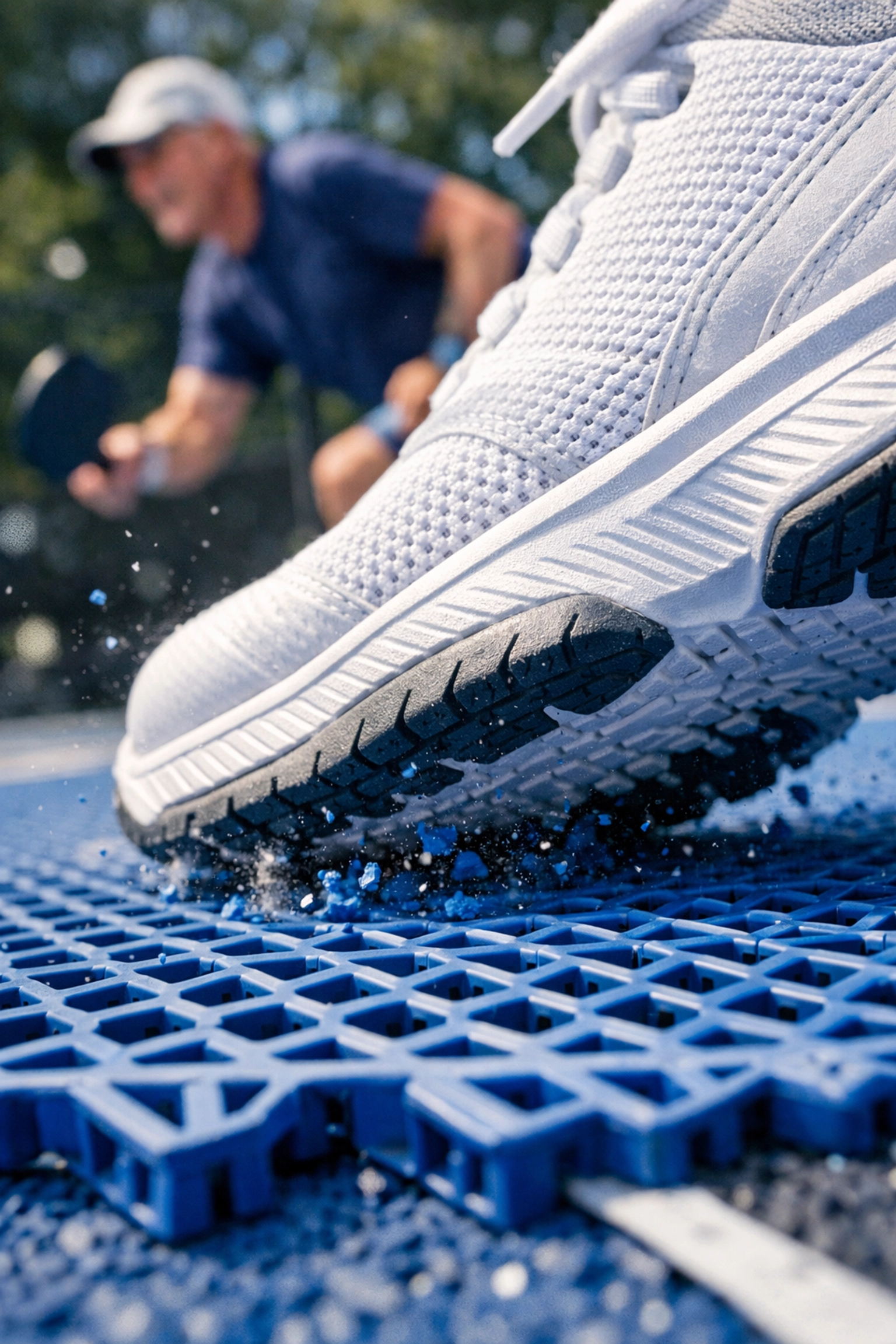
Open-Grid Drainage: In regions prone to tropical downpours, a court that stays wet for hours is a wasted asset. The open-grid design of modern sports tiles ensures that water moves vertically through the surface to the sub-base, where it can drain away. This "fast-dry" capability maximizes the court's "up-time."
Anti-Slip Texture: Safety isn't just about impact; it's about traction. Modular tiles are designed with specific surface textures that provide consistent grip even when slightly damp, preventing the dangerous "slickness" associated with painted concrete.
One of the biggest hurdles for community projects is the cost of demolition. Modern modular systems solve this through smart retrofitting.
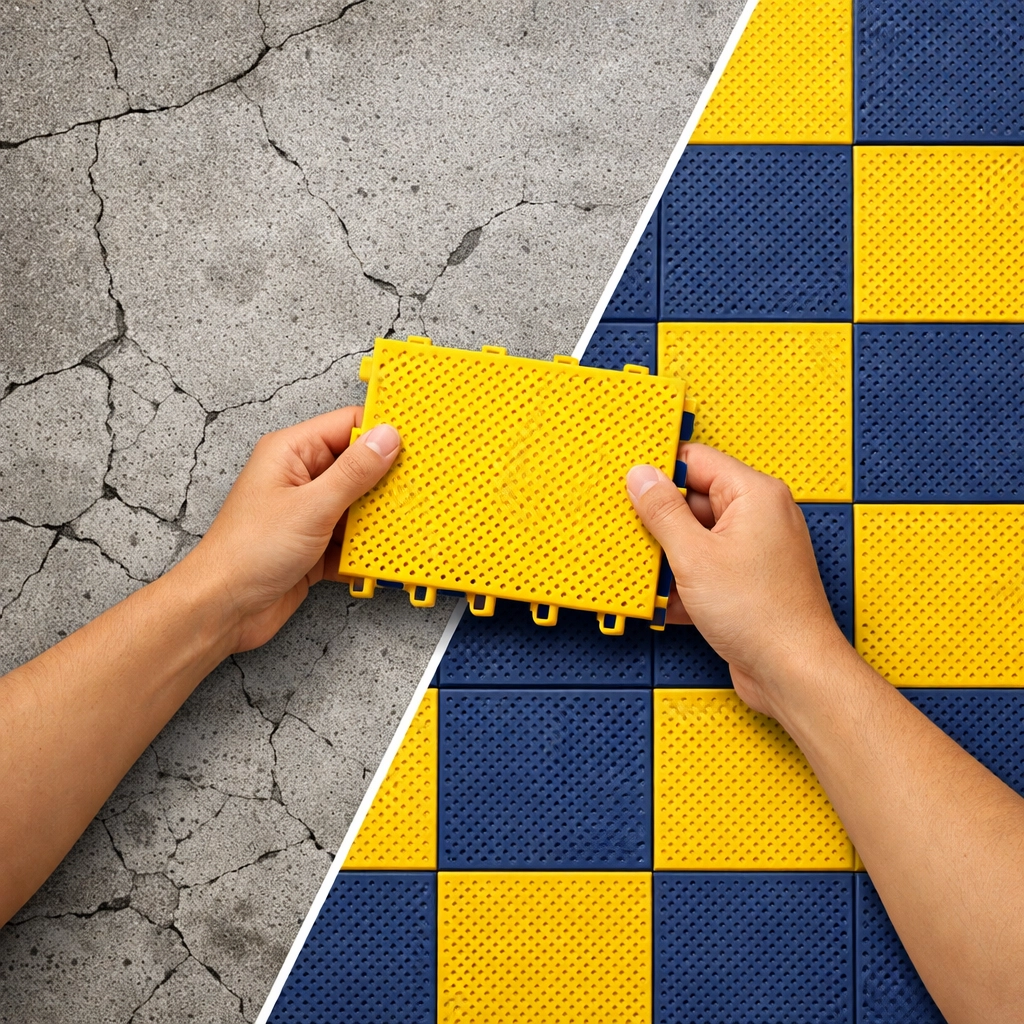
If a community has an old, cracked basketball court, they don't necessarily need to dig it up. As long as the base is relatively level, PP interlocking tiles can be installed directly over the top. This turns a multi-week construction project into a multi-day installation. For remote locations in the Pacific Islands, this ease of transport and installation is a game-changer.
Community needs change. Today’s basketball court might need to be tomorrow’s futsal pitch or pickleball hub. Modular tiles allow for multi-sport line markings to be integrated into the design. Because the tiles are modular, the layout can even be expanded or reconfigured if the facility grows.
For Council planners, school boards, and retirement village operators, the transition to modular surfaces should be handled systematically.

Designing a community court is no longer just about civil engineering; it is about human-centric design. By choosing modular sports surfaces, stakeholders can ensure their facilities are not only smarter and more durable but also fundamentally safer for every member of the community.


