
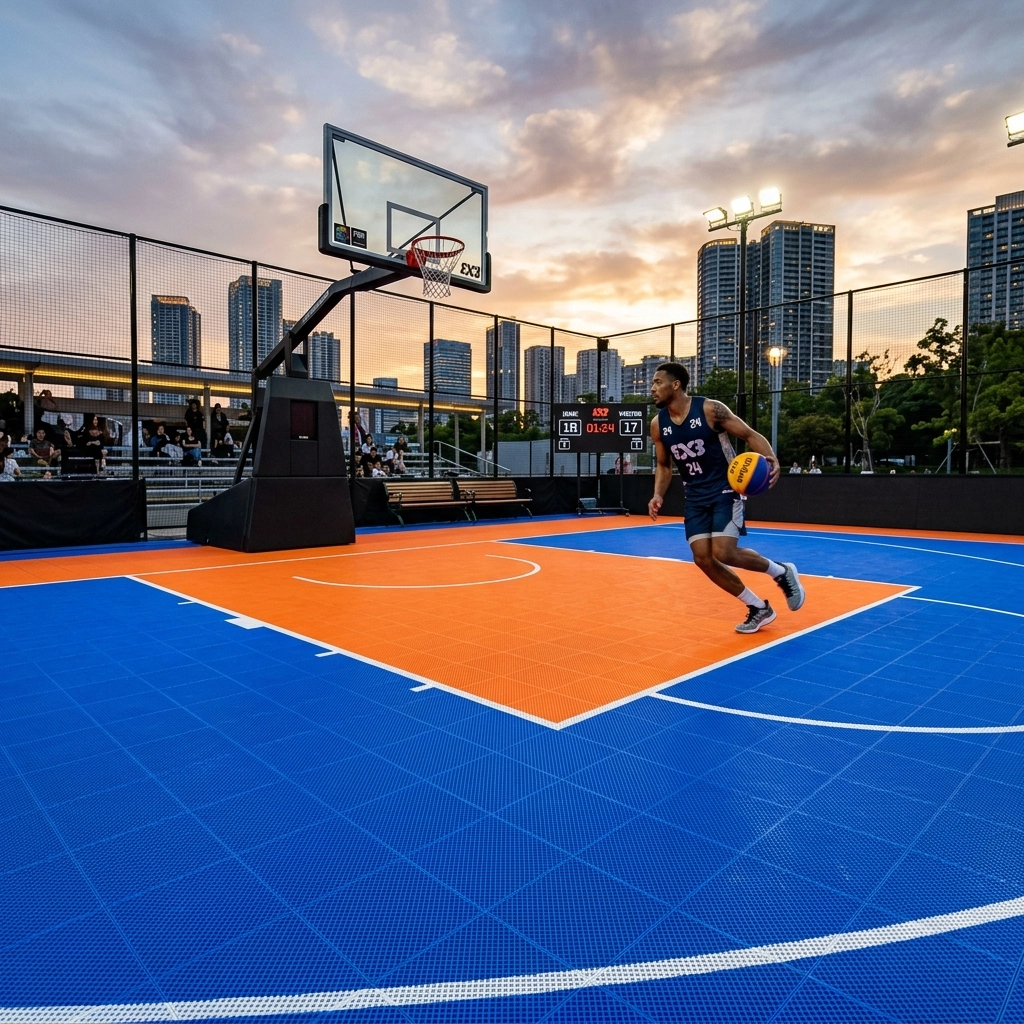
3x3 basketball has evolved from a popular urban pastime into a sanctioned Olympic sport with a dedicated global following. Its fast-paced nature and smaller footprint make it an ideal choice for residential backyards, schools, and community centers. However, constructing a court that facilitates high-performance play requires more than just a hoop and some asphalt. It demands a deep understanding of official FIBA specifications, structural foundations, and the technical properties of modern surfacing materials.
To build a court that offers professional-grade grip, shock absorption, and durability, every element must be precision-planned. This guide explores the technical requirements for designing a high-performance 3x3 basketball court.
The International Basketball Federation (FIBA) has established specific dimensions for 3x3 play that differ significantly from standard full-court basketball. Adhering to these measurements ensures the court is functional for competitive play and training.
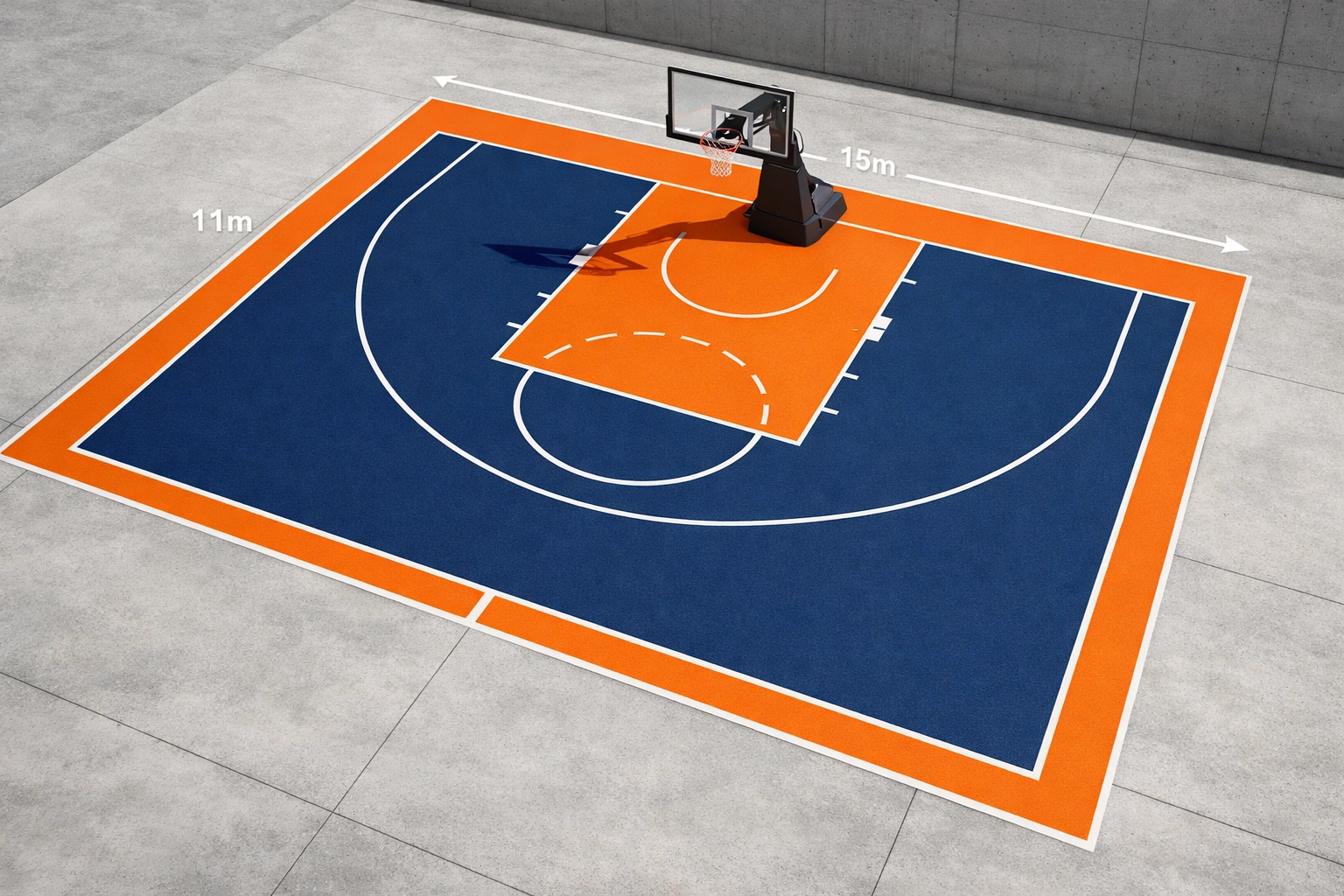
The standard 3x3 playing surface measures 15 meters in width by 11 meters in length. While the playing area itself is 165 square meters, you must account for "run-off" zones. For safety and official competition standards, a total footprint of 18 meters by 14 meters is recommended. This extra space prevents players from colliding with fences, walls, or equipment during high-speed transitions or contested rebounds.
A high-performance court must be accurately marked. Unlike traditional basketball, 3x3 does not feature a center circle. The essential markings include:
The longevity of your court depends entirely on what lies beneath the surface. A court is only as flat and stable as its foundation. There are two primary options for high-performance bases: Concrete and Asphalt.
For courts utilizing modular sports tiles, a reinforced concrete pad is the gold standard. Concrete provides a stable, non-shifting surface that maintains its level over decades.
Asphalt is a more cost-effective option for larger community projects and is the preferred base for acrylic liquid-applied coatings.
The choice of surface material directly impacts player safety, ball response, and the court’s lifespan. In modern design, three main categories dominate the market.
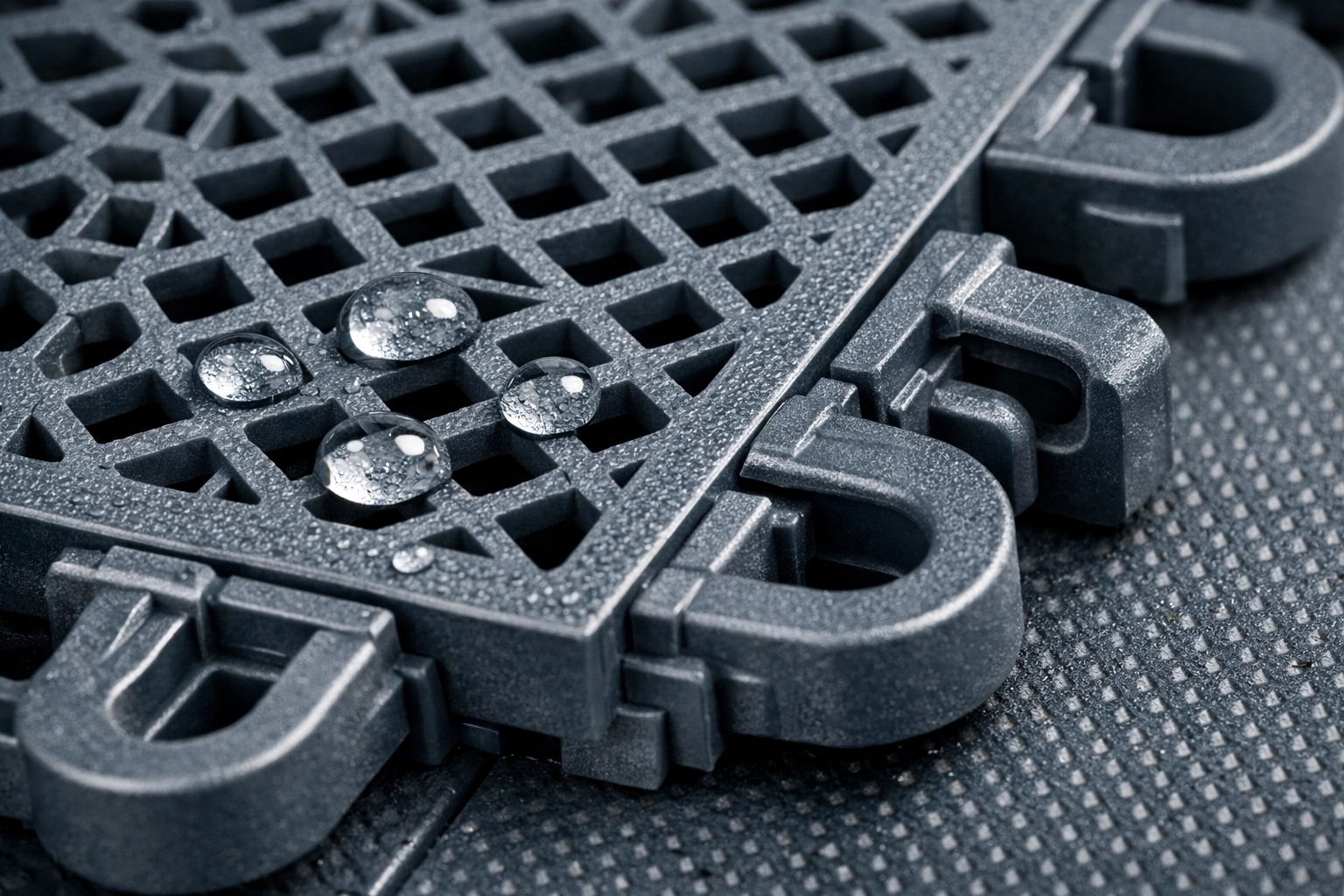
Modular flooring has become the industry standard for 3x3 basketball. These tiles are engineered from high-impact polypropylene (PP), a thermoplastic polymer known for its incredible durability and resilience.
Technical Advantages:
For those planning a high-end residential setup, choosing a 3x3 basketball court using PP tiles offers the best balance of professional performance and DIY feasibility.
Acrylic surfaces are composed of multiple layers of pigmented resin mixed with fine silica sand. This is the surface often seen on professional tennis courts.
Technical Advantages:
While unsuitable for outdoor 3x3, indoor community centers should prioritize sprung maple flooring. This provides the highest level of shock absorption (up to 60%) but requires climate-controlled environments to prevent warping.
When evaluating surface materials and design specs, focus on these three technical metrics to ensure a "high-performance" result.
A professional court should have a ball rebound rating of at least 90%. This means if a ball is dropped from 2 meters, it should bounce back to at least 1.8 meters. Surfaces that are too soft or uneven will "deaden" the ball, ruining the flow of the game.
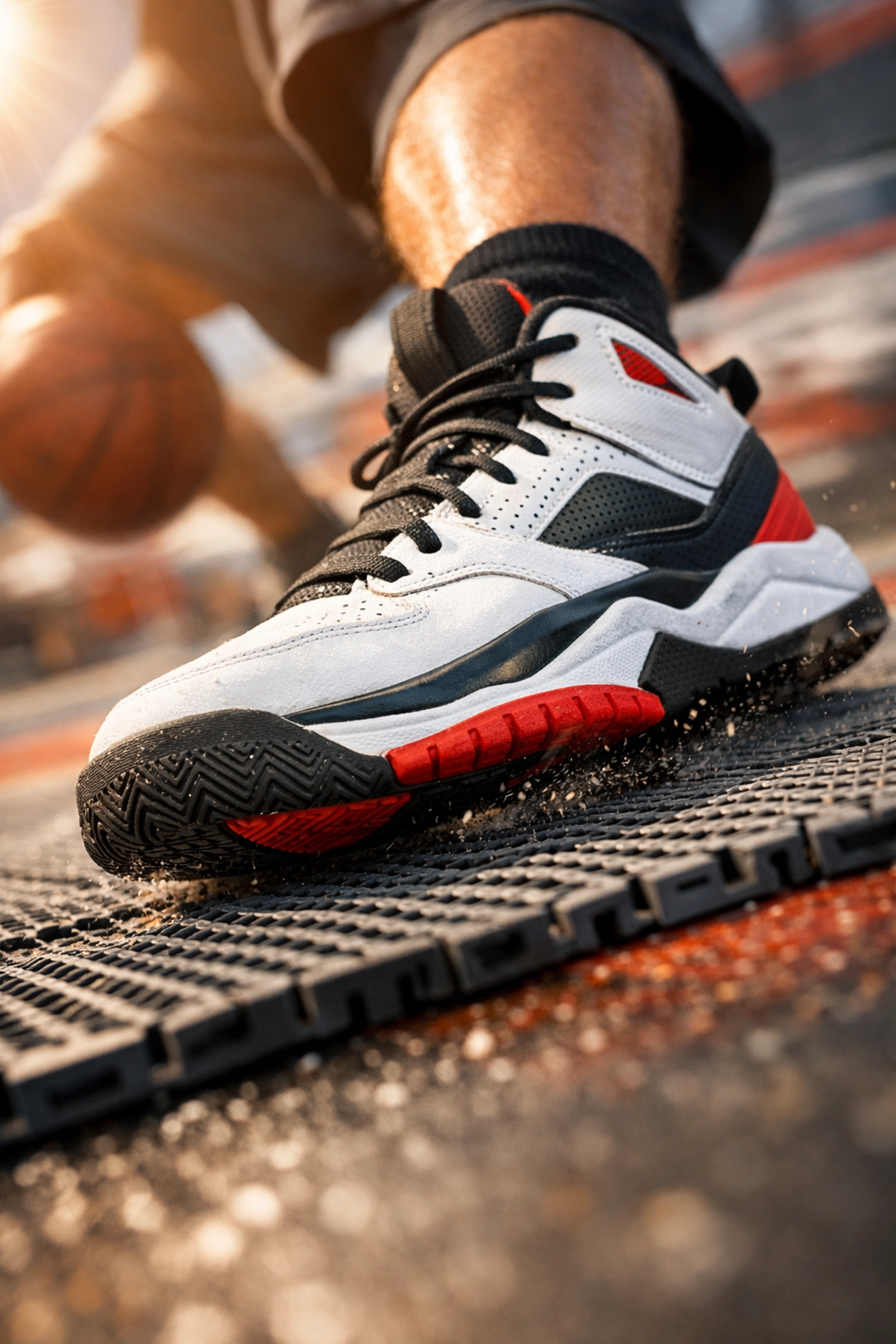
In 3x3, players perform aggressive "stop-and-go" movements. The surface must provide enough friction to prevent sliding (even when slightly damp) but not so much that it causes "turf toe" or ankle rolls. Look for surfaces tested to FIBA’s slip-resistance standards.
Hard surfaces like bare concrete offer 0% shock absorption. High-performance modular tiles can offer between 25% and 35% force reduction. This is a critical spec for schools and community developers aiming to reduce long-term injury risks for youth athletes.
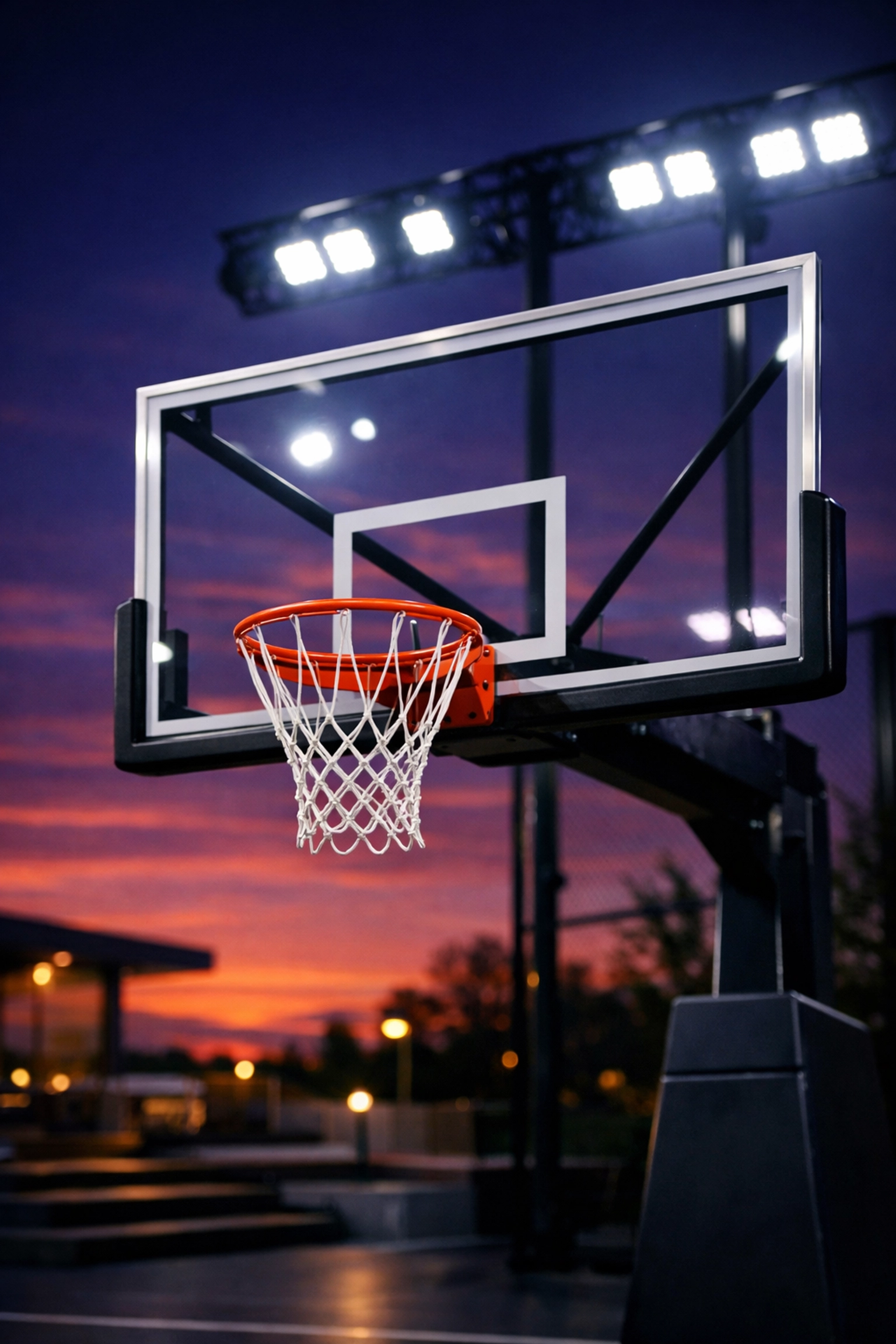
To maximize the utility of a 3x3 court, the hardware and lighting must match the quality of the surface.
Even the best materials require upkeep. Follow these steps to protect your investment:
For comprehensive project planning, developers and architects often consult specialized products for interior designers and architects to ensure the court integrates seamlessly with the surrounding landscape and amenities.
Building a high-performance 3x3 court is a precision task that balances official sports science with durable material engineering.
By focusing on these technical specifications, you can create an elite sports environment that withstands the elements and provides a safe, high-speed playing experience for years to come.


