
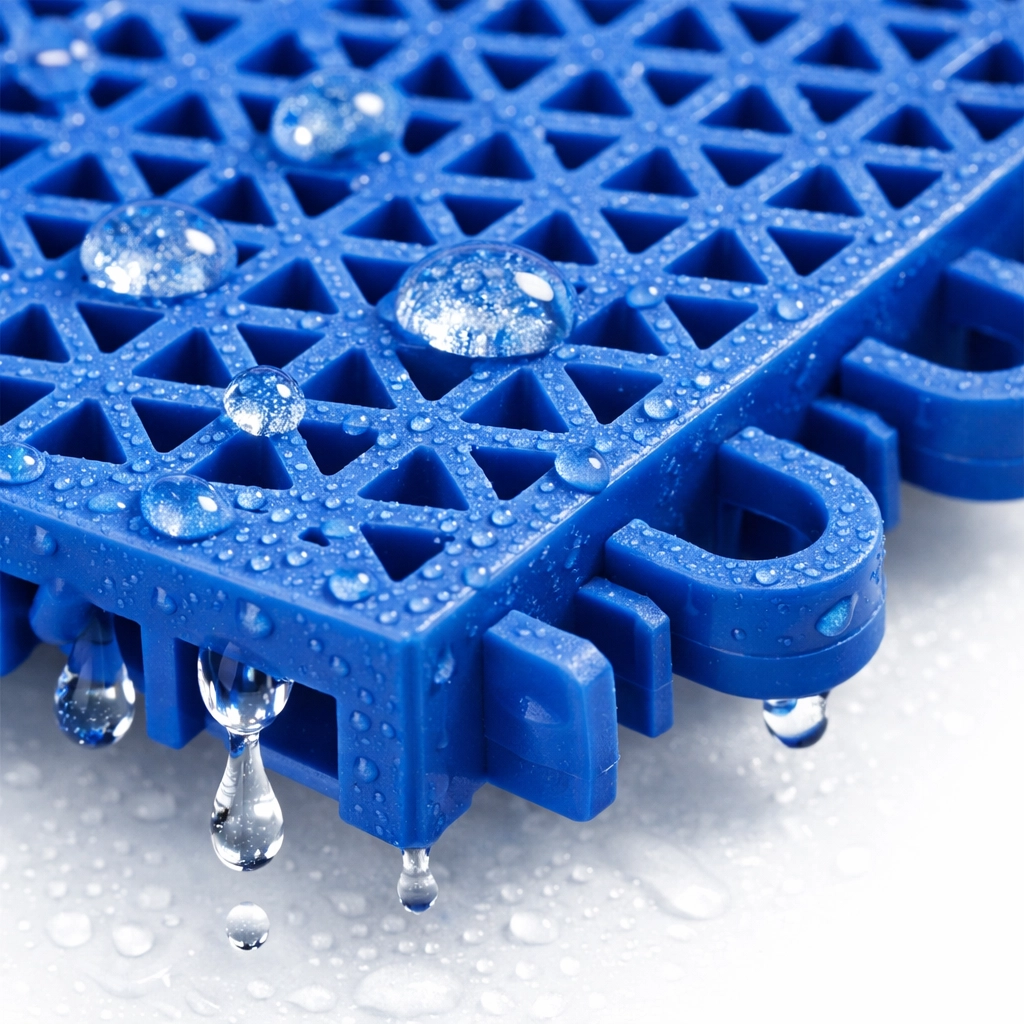
If you want a hard-wearing home court surface that works for both Pickleball and 3 x 3 basketball, Polypropylene (PP) interlocking tiles are one of the most practical installation options available. They are durable, DIY-friendly, and well suited to multi-sport layouts on existing concrete or prepared outdoor pads.
Compared with a full poured acrylic court, PP tiles are faster to install, easier to maintain, and more flexible for homeowners who want a surface that supports different game formats. Whether you are marking out a dedicated Pickleball court, a compact 3 x 3 basketball setup, or a shared-use playing area, the same core installation process applies.
This guide explains how to plan, prepare, and install PP tiles so the finished court performs properly for both sports.
Before you start measuring, define why PP tiles are such a strong fit for a dual-purpose court. Polypropylene is a durable thermoplastic commonly used where impact resistance, weather performance, and long service life matter. In sports flooring, that translates into practical benefits for both Pickleball and 3 x 3 basketball.
Start by deciding whether the court will be Pickleball-first, 3 x 3 basketball-first, or a true shared-use layout. The tile installation method is the same in each case, but the footprint, line marking plan, and equipment placement must be resolved before the first tile goes down.
A regulation Pickleball court measures 20 feet wide by 44 feet long, but the total playing area should be larger to allow safe movement beyond the lines. A common target is 30 feet by 60 feet for a comfortable home setup.
For 3 x 3 basketball, the exact footprint depends on your available area, hoop position, and how much run-off space you can provide. If the surface is doing double duty, make sure the basket location, key markings, and any pole footing do not interfere with the pickleball net line or player movement zones.
Use this planning stage to:
Pro Tip: Orient the court North-South where possible to reduce direct sun in players’ eyes.
Your tiles are only as good as the ground they sit on. While PP tiles are incredibly durable, they are not magic; they will follow the contours of the ground.
You don't need a massive toolbox for this project, but having these items on hand will save you three trips to the hardware store:
There are two main schools of thought when it comes to laying down the law (or the tiles):
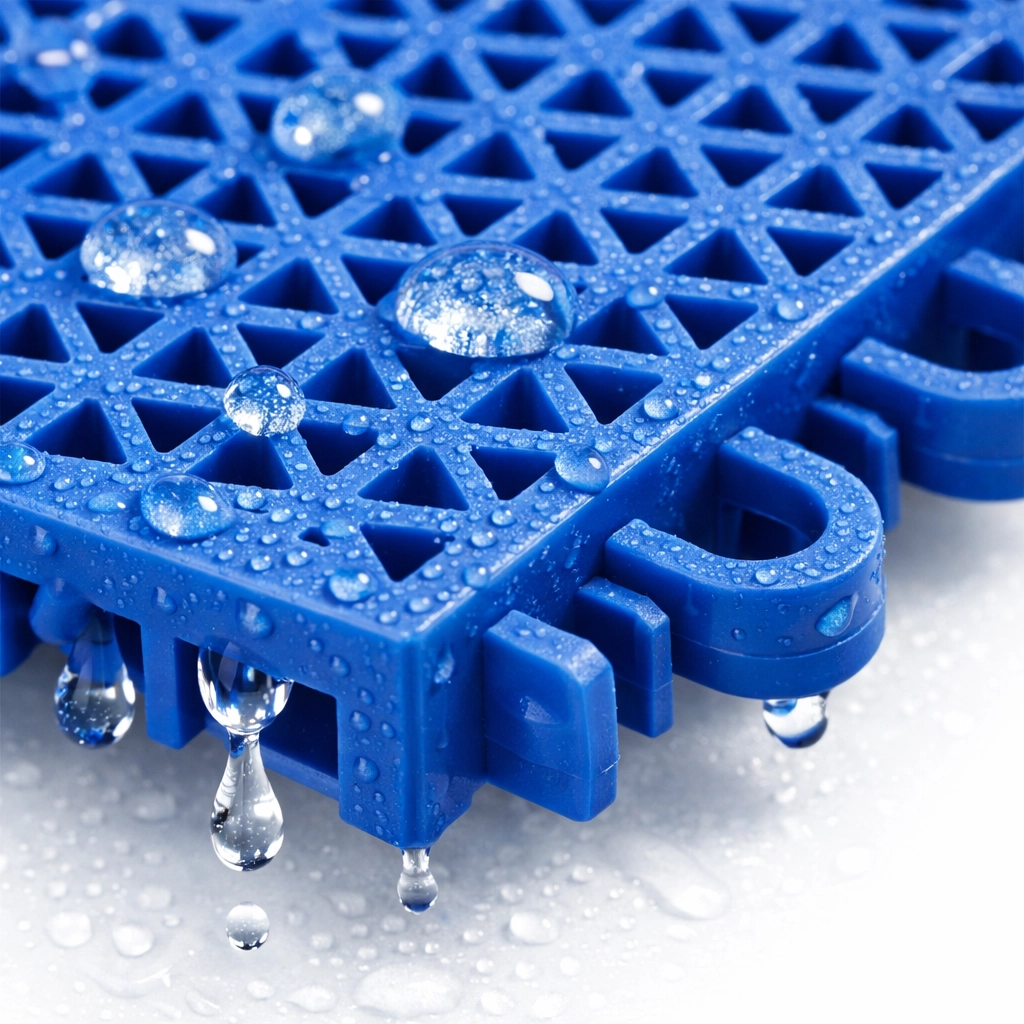
Start at one corner and work your way across and down. This is the most intuitive method. You lay one row, then the next, snapping the "pegs" into the "loops" as you go.
Find the exact center of your court area. Lay the first tile here and expand outward in a cross pattern. This is often used for custom logos, balanced colour layouts, or multi-sport courts where both Pickleball and 3 x 3 basketball markings need to sit evenly within the tile grid.
For most shared-use outdoor court setups, the Corner Approach is the easiest for DIY installers to manage.
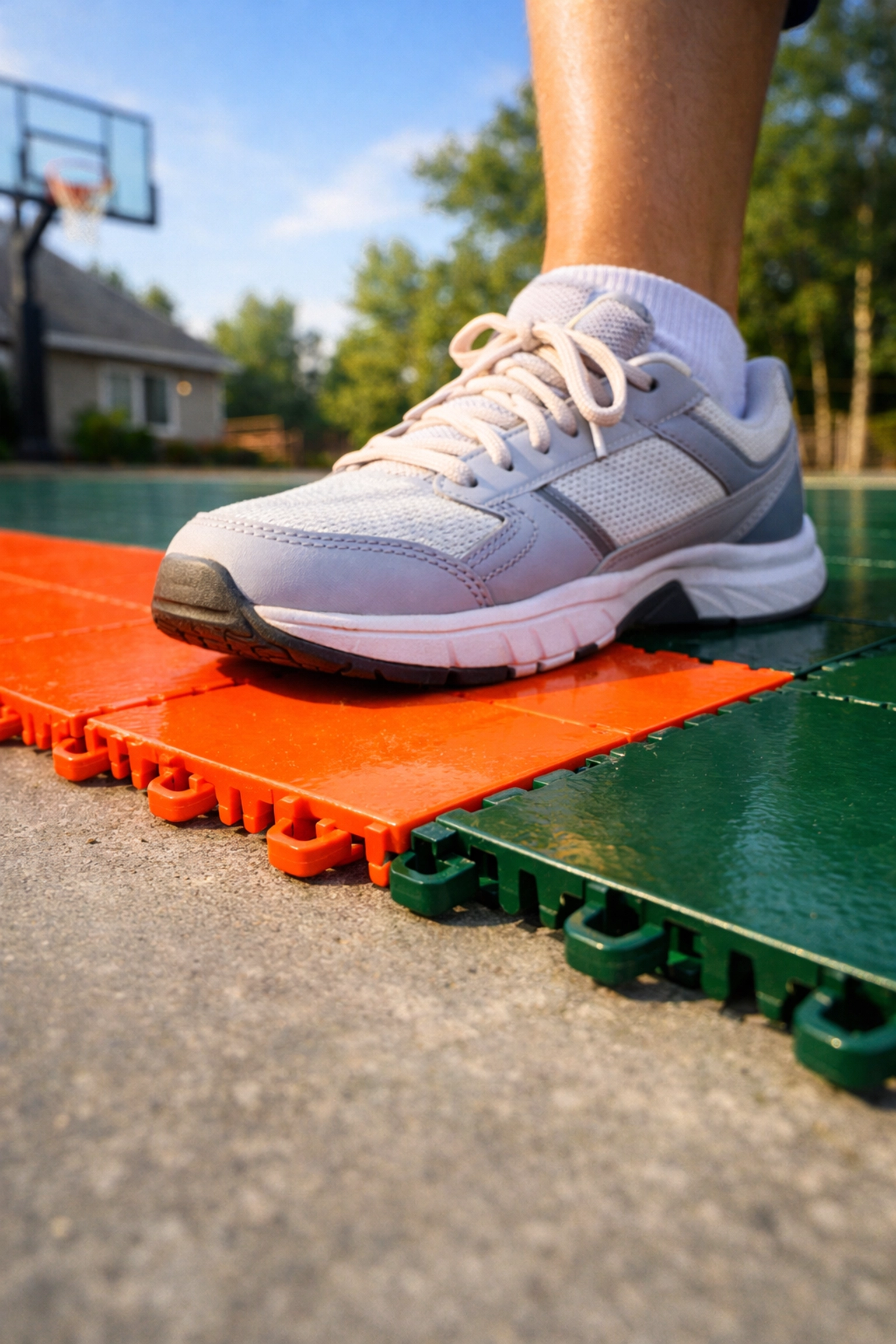
Start laying your tiles without connecting them initially for the first few feet to ensure your alignment is correct. Once you are happy with the positioning:
Polypropylene is a plastic, and plastic expands when it gets hot and contracts when it gets cold. If you install your tiles tight against a wall or a curb, the court will "buckle" upward in the summer heat.
The Rule of Gold: Leave a 3/4" (approx. 20mm) gap between the edge of your tiles and any permanent structures (walls, fences, or poles). This gives the court room to breathe throughout the seasons.
Once the main field of play is down, it’s time for the finishing touches.
If you did not buy pre-marked tiles, apply your court lines after the tile field is fully installed and checked for alignment. Use a high-quality, slip-resistant striping product suitable for outdoor sports surfaces.
For a combined Pickleball and 3 x 3 basketball court:
Clear line separation is one of the most important details in a successful multi-sport court. If players hesitate because markings are confusing, the layout has not been planned properly.
One of the best things about PP tiles is how low-maintenance they are.
When building a court surface for both Pickleball and 3 x 3 basketball, material quality directly affects performance, longevity, and maintenance requirements. Low-grade tiles are more likely to warp, fade, loosen, or wear unevenly under regular use and changing outdoor conditions.
Specify tiles that are designed for outdoor sport applications and built to handle:
If the goal is a court that performs well across both sports, quality is not a cosmetic upgrade. It is a core installation requirement.
To install a PP tile court that works properly for both Pickleball and 3 x 3 basketball, focus on the essentials:
Get the planning right, install the tile field accurately, and the result is a practical multi-sport court built for consistent use.


