
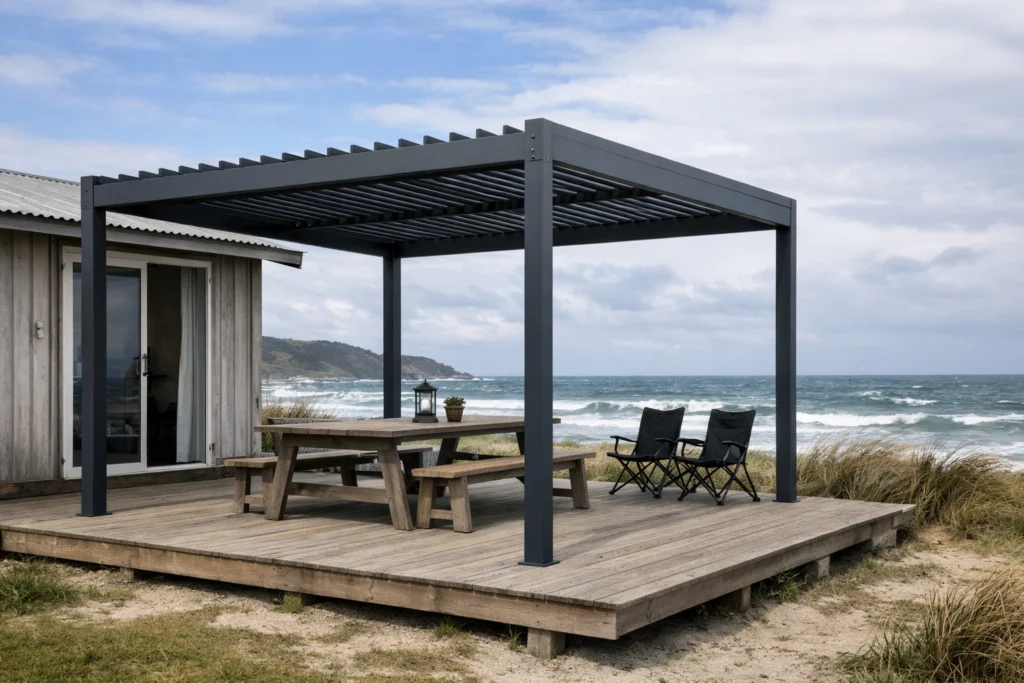
Owning a property in a remote coastal location, whether it’s a Kiwi bach or a retreat in the Pacific, sounds simple on paper. In practice, it usually comes down to freight, weather, and one big problem: there often isn’t an installer available when you need one.
That’s where the DIY louvre kitset approach makes sense. Instead of relying on a specialist crew to travel out, stay on site, and build from scratch, a kitset shifts the hard work into the factory and keeps the on-site process straightforward. For remote builds, that matters.
For baches, island homes, and secondary properties, the appeal is pretty clear. You get a practical outdoor structure that is easier to ship, easier to handle, and realistic to assemble with limited local support.
The biggest challenge with remote construction is not always the build itself. It’s the shipping. Large pre-assembled structures are expensive to move, awkward to unload, and more exposed to freight damage. That is why the flat-pack format works so well.
A DIY louvre kitset built from aluminum louvres can be separated into practical components like posts, beams, blades, fixings, and brackets. That changes the project in a few important ways:
For remote baches and Pacific Islands outdoor products, that transport logic is often what makes the whole project viable.
In a coastal or tropical setting, the material choice matters fast. Salt spray, humidity, and strong UV exposure will show up every weakness in the build. Timber can still work, but it usually demands more maintenance than most remote property owners want to deal with.
That is why aluminum louvres are such a practical fit.
For exposed sites, material durability is not just about appearance. It directly affects how reliable the structure stays over time.
The installer shortage is real in remote regions. Even when you can get a builder out, the added travel time, accommodation, delays, and freight coordination can quickly stretch the budget. That is exactly why the mid-range kitset category is getting more attention.
A well-designed DIY louvre kitset is built to reduce site complexity. The aim is simple: fewer custom decisions on site, fewer specialist tools, and fewer opportunities for things to go wrong halfway through the build.
For remote coastal sites, the best system is usually not the most complex one. It is the one that can be delivered, assembled, and maintained without drama.
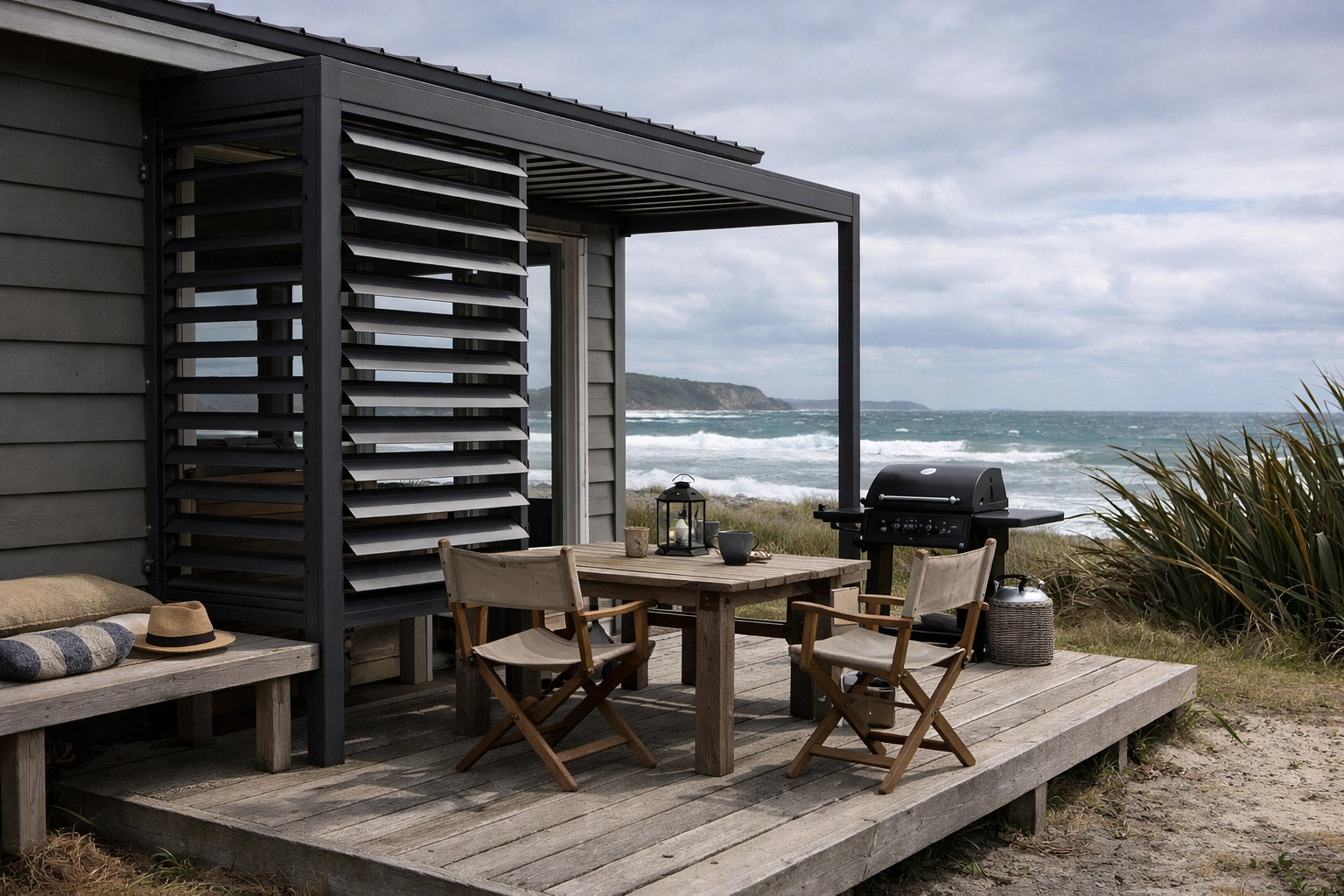
In the Pacific, an outdoor structure has to do more than look tidy. It has to cope with wind, salt, rain, and long periods without close supervision. That means the specification matters.
When assessing pacific islands outdoor products, focus on the basics first:
A remote property does not need an overcomplicated system. It needs one that is robust, understandable, and realistic to maintain.
For a bach or secondary property, the goal is usually not maximum complexity. It is dependable performance at a sensible level. That is where the mid-range segment makes sense.
The sweet spot usually comes down to a few things:
For isolated coastal homes and island properties, mid-range often means a better fit, not a compromise.
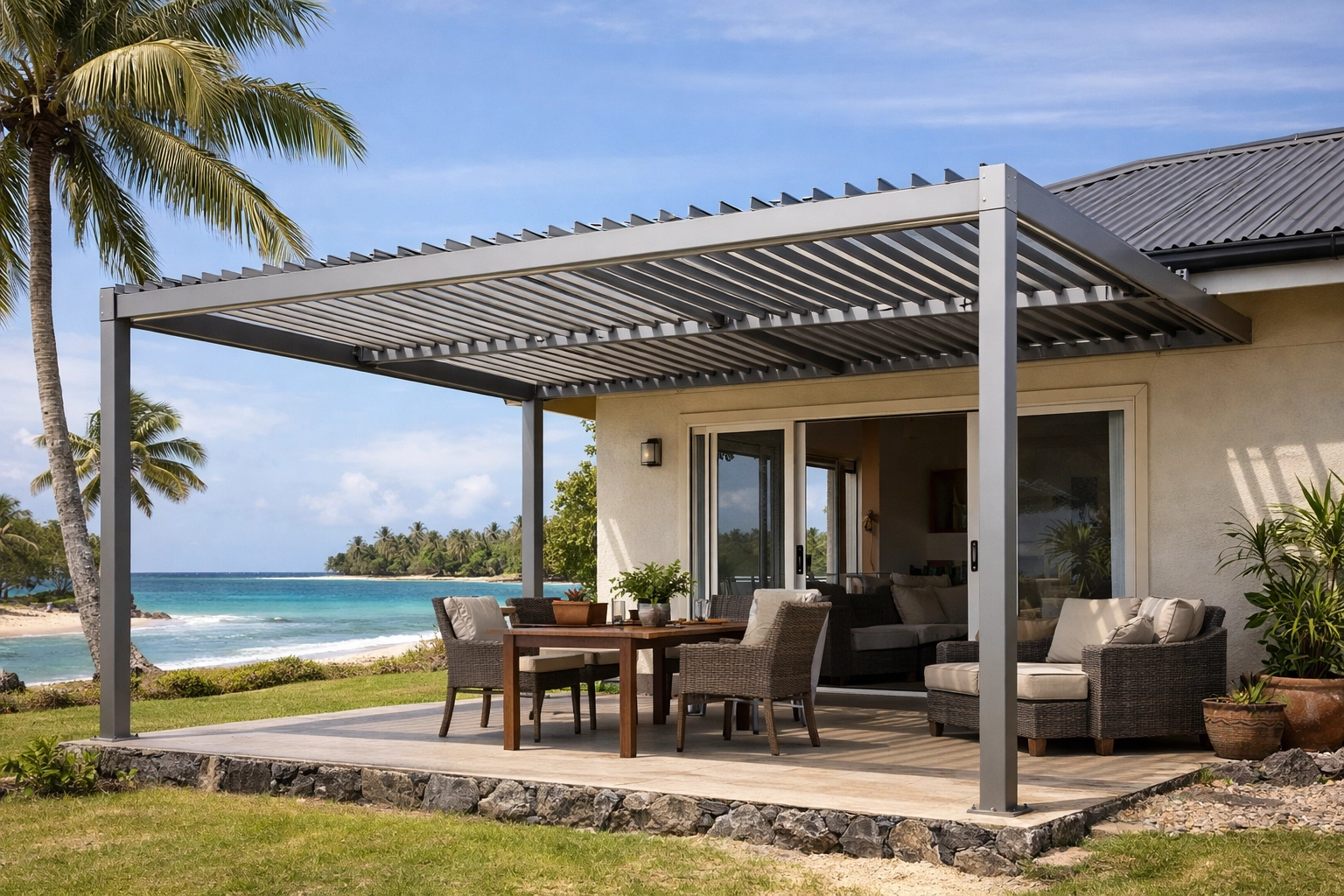
If you are planning to install a kitset at a remote or island property, preparation is 90% of the success. Because you can't just "nip down to the hardware store," you need to be meticulous.
For more remote projects, the same modular planning mindset can also be applied to decks, screening, shade, storage, and other outdoor infrastructure. The key is keeping each stage simple, freight-efficient, and realistic for the site conditions.
Remote coastal builds need simple answers to difficult conditions. A well-planned DIY louvre kitset built from aluminum louvres gives remote baches and island homes a practical way to add shelter without relying on scarce installers or overcomplicated construction. For many pacific islands outdoor products projects, the best result comes from keeping the system durable, freight-friendly, and easy to assemble.


