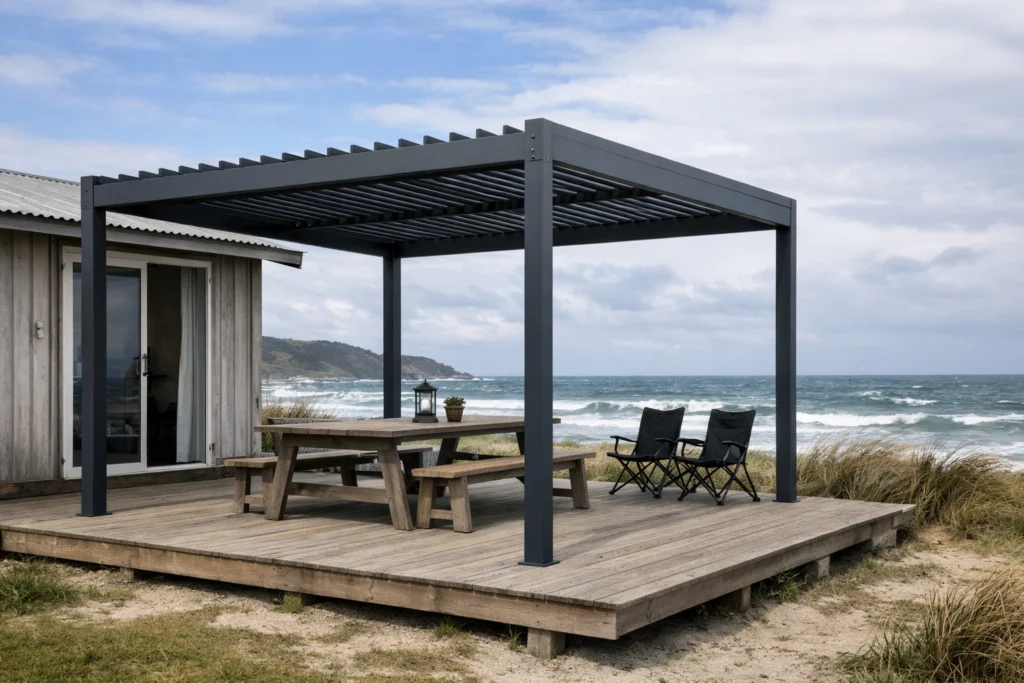
Remote & Coastal Ready: Why kitsets are the perfect solution for baches or Pacific Island properties

April 13, 2026
Spread the love

Owning a property in a remote coastal location, whether it’s a Kiwi bach or a retreat in the Pacific, sounds simple on paper. In practice, it usually comes down to freight, weather, and one big problem: there often isn’t an installer available when you need one.

That’s where the DIY louvre kitset approach makes sense. Instead of relying on a specialist crew to travel out, stay on site, and build from scratch, a kitset shifts the hard work into the factory and keeps the on-site process straightforward. For remote builds, that matters.

For baches, island homes, and secondary properties, the appeal is pretty clear. You get a practical outdoor structure that is easier to ship, easier to handle, and realistic to assemble with limited local support.

The Logistics of the Edge: Flat-Packing for the Win

The biggest challenge with remote construction is not always the build itself. It’s the shipping. Large pre-assembled structures are expensive to move, awkward to unload, and more exposed to freight damage. That is why the flat-pack format works so well.

A DIY louvre kitset built from aluminum louvres can be separated into practical components like posts, beams, blades, fixings, and brackets. That changes the project in a few important ways:

  • Easier freight planning: Flat-packed components are easier to fit into standard transport channels, whether that means container freight, regional trucking, or barge access.
  • Lower transport waste: You are shipping parts, not empty air inside a pre-built frame.
  • Better handling on site: Smaller components are more realistic to move around on isolated properties where machinery may be limited.
  • Less risk in transit: Packed parts are generally easier to protect than a bulky assembled structure.

For remote baches and Pacific Islands outdoor products, that transport logic is often what makes the whole project viable.

Material Matters: Why Aluminum Wins in Coastal Zones

In a coastal or tropical setting, the material choice matters fast. Salt spray, humidity, and strong UV exposure will show up every weakness in the build. Timber can still work, but it usually demands more maintenance than most remote property owners want to deal with.

That is why aluminum louvres are such a practical fit.

  1. They resist corrosion well: Aluminum naturally protects itself with an oxide layer, and the right powder-coated finish adds another layer of defence in salty air.
  2. They stay dimensionally stable: Unlike timber, aluminum is less likely to twist, swell, or shrink as moisture levels change.
  3. They are strong without being too heavy: That is useful when parts need to be carried, lifted, and assembled with limited labour on site.
  4. They suit long gaps between maintenance visits: For remote homes and island properties, low upkeep is not a bonus. It is part of the specification.

For exposed sites, material durability is not just about appearance. It directly affects how reliable the structure stays over time.

The DIY Advantage: No Installer? No Problem.

The installer shortage is real in remote regions. Even when you can get a builder out, the added travel time, accommodation, delays, and freight coordination can quickly stretch the budget. That is exactly why the mid-range kitset category is getting more attention.

A well-designed DIY louvre kitset is built to reduce site complexity. The aim is simple: fewer custom decisions on site, fewer specialist tools, and fewer opportunities for things to go wrong halfway through the build.

Key DIY features to look for

  • Pre-drilled components: This speeds up assembly and helps keep alignment consistent.
  • Clear instructions: Remote projects need documentation that is easy to follow without a specialist standing beside you.
  • Integrated drainage: Built-in water management keeps the structure cleaner and reduces extra plumbing work.
  • Manageable part sizes: This matters when the structure is being assembled by a homeowner, handyman, or small local crew.
  • Manual or simple motor options: In places where power supply can be inconsistent, basic operation is often the smarter choice.
  • Modular add-ons later: A staged build is useful when freight timing, budget, or local labour availability changes.

For remote coastal sites, the best system is usually not the most complex one. It is the one that can be delivered, assembled, and maintained without drama.
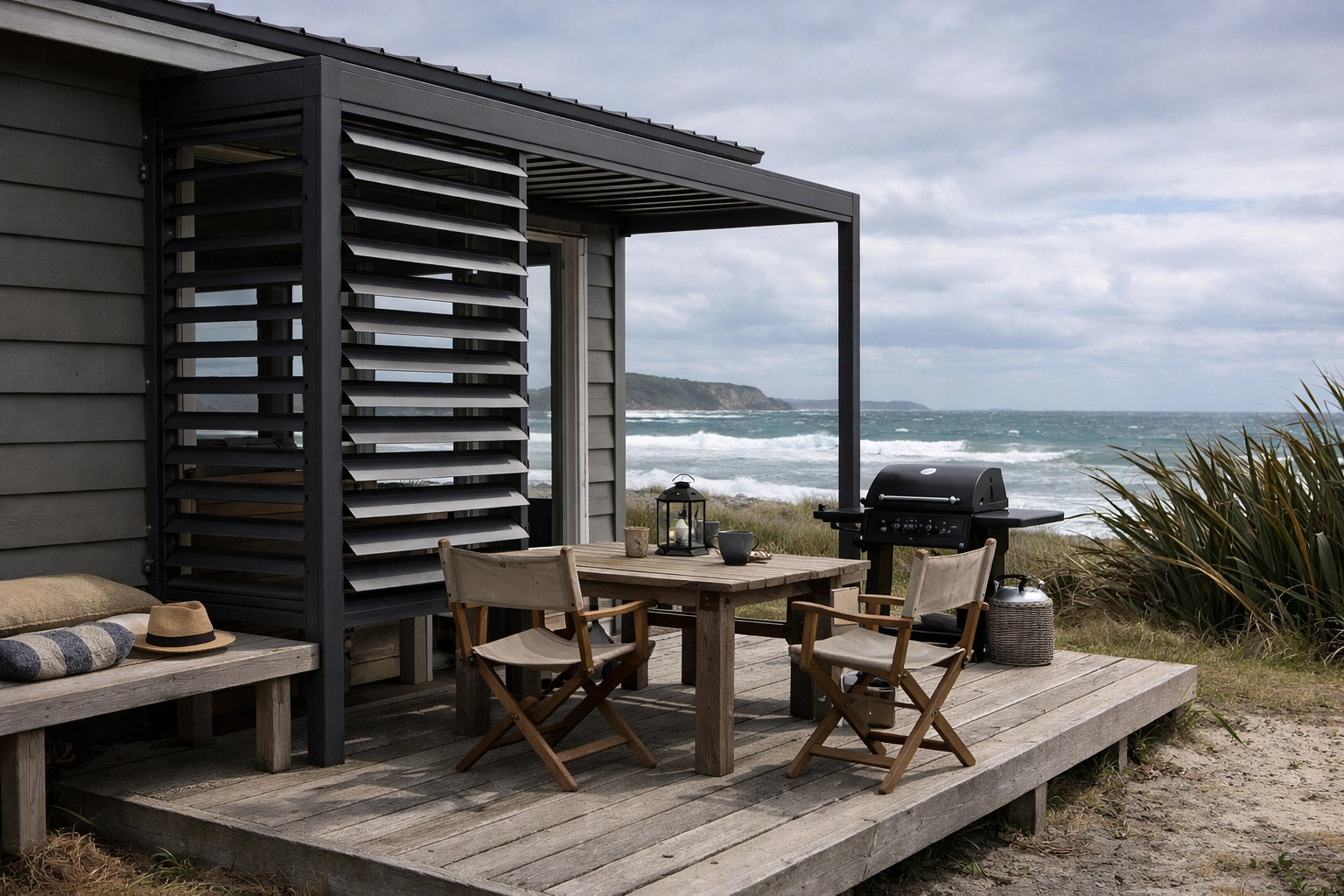
Mid-range DIY aluminium louvre kitset installed on a remote coastal bach deck with practical minimalist styling.

Tropical Resilience: Engineering for High Wind Zones

In the Pacific, an outdoor structure has to do more than look tidy. It has to cope with wind, salt, rain, and long periods without close supervision. That means the specification matters.

When assessing pacific islands outdoor products, focus on the basics first:

  • Wind suitability: Check what the structure is designed to handle and what fixing method is required.
  • Foundation requirements: The roof is only part of the story. The footing and connection points matter just as much.
  • Blade profile and frame rigidity: These affect how the system behaves under load.
  • Operation during power issues: Manual control or a straightforward backup option can be useful on island sites.

A remote property does not need an overcomplicated system. It needs one that is robust, understandable, and realistic to maintain.

The Mid-Range Sweet Spot: Performance vs. Price

For a bach or secondary property, the goal is usually not maximum complexity. It is dependable performance at a sensible level. That is where the mid-range segment makes sense.

The sweet spot usually comes down to a few things:

  • Standard sizing: This simplifies freight, planning, and part replacement.
  • Durable finishes: Matte or low-sheen powder-coated surfaces tend to handle outdoor wear well and are easier to live with visually.
  • Straightforward engineering: Simpler systems are often better suited to remote locations than highly customised builds.
  • Repairable components: If a part ever needs replacing, standardised parts make life easier.
  • Practical value: You are paying for durability and usability, not unnecessary extras.

For isolated coastal homes and island properties, mid-range often means a better fit, not a compromise.
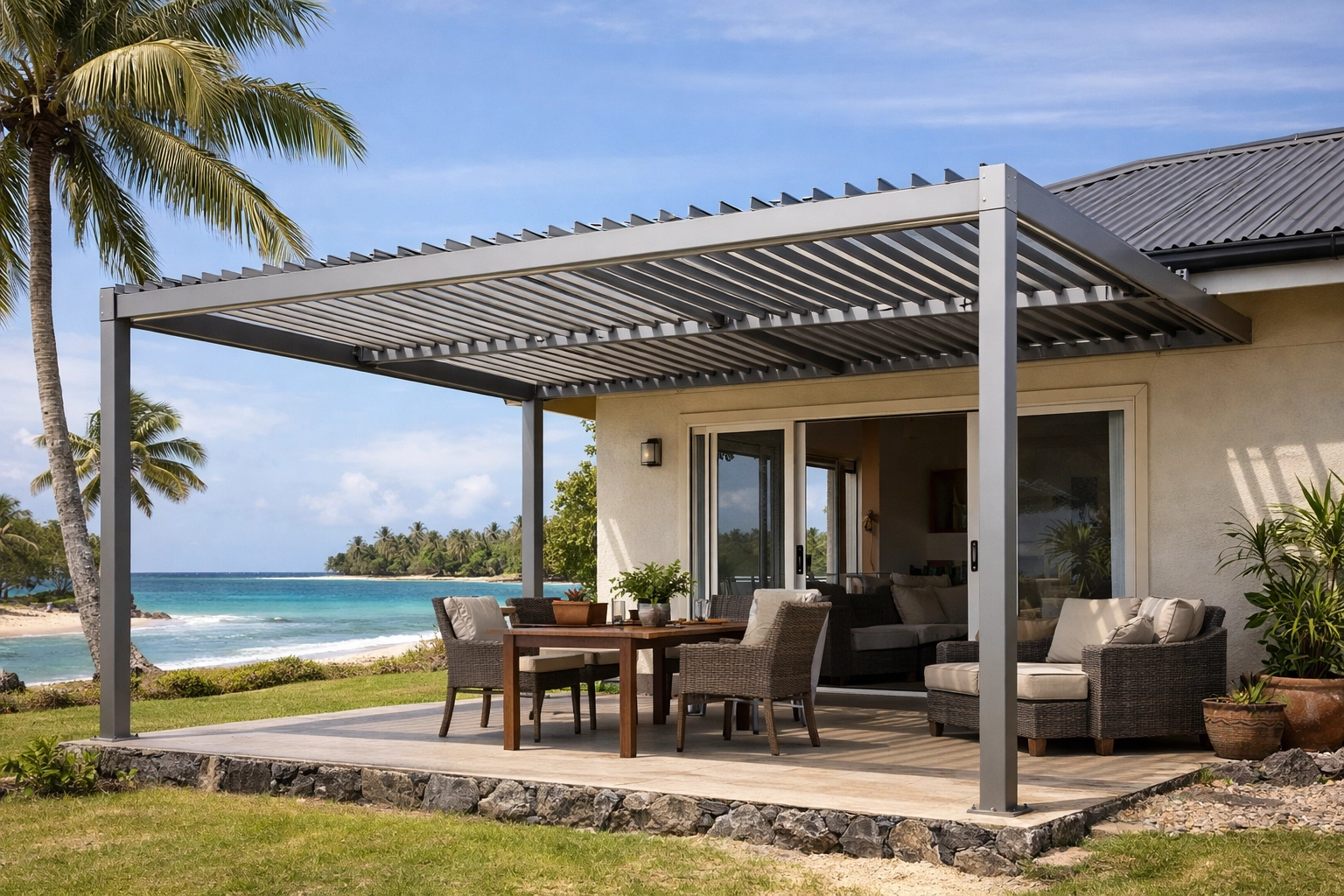
Completed DIY aluminium louvre kitset at a practical Pacific Island property with durable outdoor shade design.

Planning Your Remote Build: A Checklist

If you are planning to install a kitset at a remote or island property, preparation is 90% of the success. Because you can't just "nip down to the hardware store," you need to be meticulous.

  • Check Your Footings: Ensure your deck or concrete pad is level and structurally sound. A kitset is only as good as the foundation it sits on.
  • Tool Audit: Most kitsets require standard tools (drill, level, socket set, ladder). Double-check the manual before you head to the property.
  • Power Access: If you are opting for a motorized system, ensure you have a plan for getting power to the site, or consider a solar-ready configuration.

For more remote projects, the same modular planning mindset can also be applied to decks, screening, shade, storage, and other outdoor infrastructure. The key is keeping each stage simple, freight-efficient, and realistic for the site conditions.

Summary

Remote coastal builds need simple answers to difficult conditions. A well-planned DIY louvre kitset built from aluminum louvres gives remote baches and island homes a practical way to add shelter without relying on scarce installers or overcomplicated construction. For many pacific islands outdoor products projects, the best result comes from keeping the system durable, freight-friendly, and easy to assemble.

Key Takeaways:

  • Freight matters: Flat-pack design makes remote delivery more manageable.
  • Material choice matters: Aluminum is well suited to salt air, humidity, and coastal exposure.
  • DIY matters: Remote properties benefit from systems that reduce reliance on specialist installers.
  • Mid-range matters: Standardised, practical kitsets often deliver the best fit for baches and island properties.
Return to insights

Charities We Support

cart
Hawaii car transport. power only trucking companies. Logi transports brings expertise and a customer first approach to every power only move.