
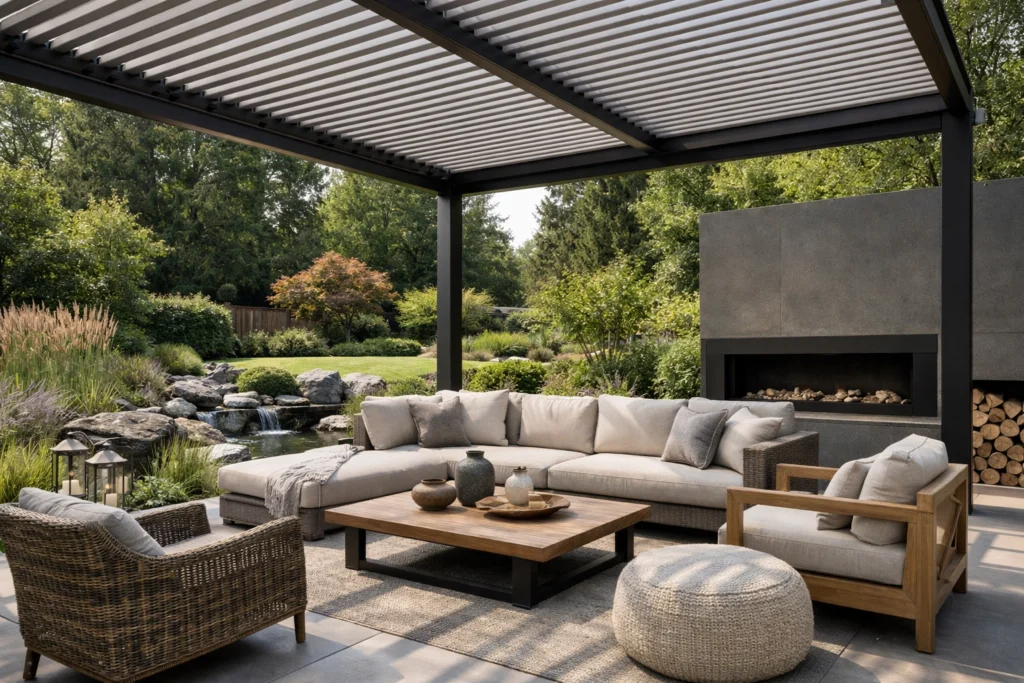
Modern life is largely spent in boxes. We wake up in a box, commute in a box, and sit in a box for eight hours a day to afford the box we sleep in. It is no wonder that the concept of the 'Third Space': that elusive middle ground between the rigid structure of the indoors and the chaotic unpredictability of the outdoors: has become the holy grail of modern residential design.
But this isn't just about a nice deck or a fancy patio. There is a deep, psychological driver behind why we are currently obsessed with outdoor rooms. It is a biological craving for nature, tempered by a very human desire to remain in total control of our surroundings.
We want the breeze, but not the gale. We want the sun, but not the UV damage. We want the great outdoors, but we’d prefer it with a remote control.
In architectural terms, the Third Space is a "liminal" space: a threshold. It is the transition zone. Psychologically, these areas serve as a decompression chamber. When you step out of your kitchen and into a space covered by aluminum louvres, your brain receives a signal that the "domestic" rules no longer apply, yet the safety of the "home" remains.
This transition is essential for mental health. The home is often associated with labor (chores, cooking, cleaning) and the office with stress. The Third Space is the neutral ground. By utilizing outdoor shading solutions, homeowners are effectively building a sanctuary that bypasses the traditional boundaries of a house.
The term biophilic design sounds like something from a sci-fi novel, but it’s actually rooted in evolutionary biology. It suggests that humans possess an innate tendency to seek connections with nature and other forms of life.
When we are confined to four drywall boundaries, our cortisol levels tend to stay elevated. When we introduce natural elements: natural light, moving air, and greenery: our nervous systems begin to regulate. This is why a view through a window isn't enough. You need to be in it.
However, the "wild" is inconvenient. This is where the psychology of the outdoor room changes the game. By installing aluminum louvres, you are inviting the biophilic benefits of the outdoors into a controlled environment. You get the vitamin D and the oxygen without the "nature" parts that ruin your lunch: like a sudden downpour or a gust of wind that sends your napkins into the neighbor's yard.
There is a specific psychological phenomenon known as "Environmental Control." Research consistently shows that individuals who have the power to alter their immediate environment experience lower levels of stress and higher levels of satisfaction.
Think about the office worker who can’t control the thermostat: they are perpetually frustrated. Now, think about the homeowner standing on their deck with a remote in hand.
With a single click, they can:
This ability to "edit" the weather is a massive psychological win. It removes the "learned helplessness" we feel against the elements. If it starts to drizzle, you don't run inside and concede defeat; you simply close the roof. The remote control is the scepter of your own private kingdom.

A dedicated outdoor room changes the entire "vibe" of a home because it expands the usable square footage without the claustrophobia of more walls. When a backyard is just a patch of grass, it is a chore to be mowed. When it is equipped with outdoor shading solutions, it becomes a destination.
To turn a backyard into a year-round sanctuary, one must consider the three pillars of outdoor psychology:
Social psychology tells us that "privacy" isn't just about being alone; it's about having the choice to be alone. A wide-open backyard offers zero choice. You are on display to every two-story window in the neighborhood.
By defining the space with structural elements, you create a psychological "cocoon." Outdoor privacy blinds serve as the skin of this cocoon. They allow for the passage of air while blocking the visual "noise" of the surrounding environment. This enables deep relaxation, the kind usually reserved for the interior of a bedroom, but with the added sensory input of the outdoors.

Creating a high-functioning Third Space requires more than just buying a few chairs. It requires a structural strategy. If you are planning to upgrade your lifestyle, follow these steps:
It isn't just homeowners who are obsessed with this. The hospitality industry has caught on to the psychology of the Third Space. Cafes and restaurants that utilize outdoor shading solutions find that customers stay longer and spend more.
Why? Because the "Third Space" feels like a luxury. It feels like a vacation from the "First Space" (home) and the "Second Space" (work). When a restaurant offers a space that is protected by louvres and blinds, they are offering a premium experience that humans are biologically wired to enjoy.

We aren't just obsessed with outdoor rooms because they look good on social media. We are obsessed with them because they solve a modern human crisis: the disconnect from our environment.
By combining the raw beauty of the outdoors with the sophisticated tech of aluminum louvres, retractable awnings, and outdoor privacy blinds, we are finally able to exist in both worlds at once. We get the sunshine, the breeze, and the birdsong; but we keep the remote close by, just in case.
Key Takeaways:


