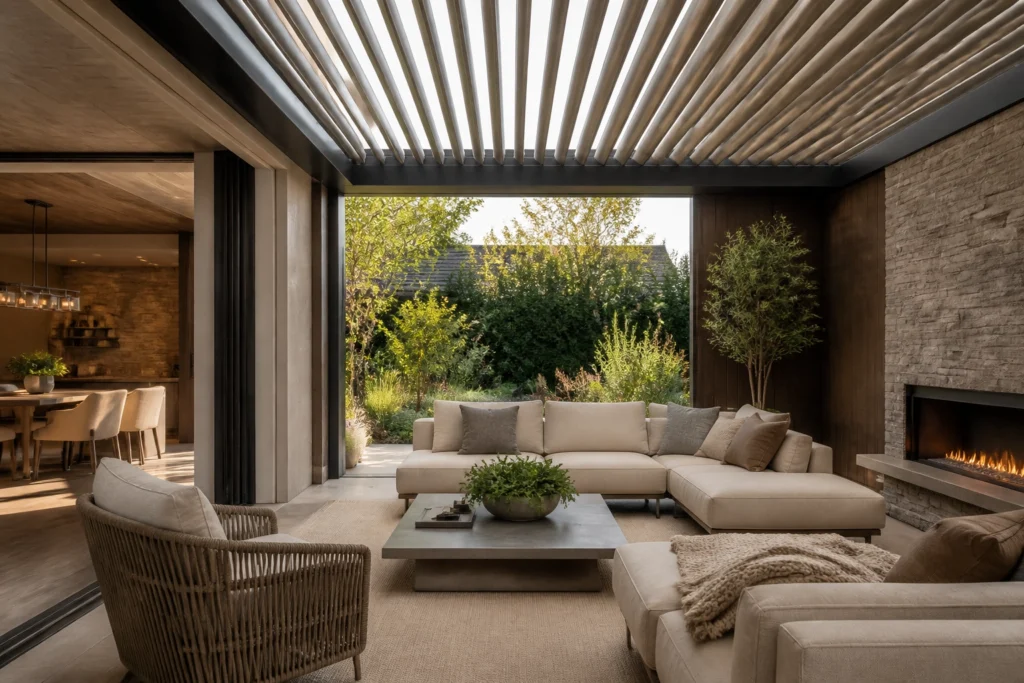
The Art of the "Micro-Climate": Engineering Your Patio for 365-Day Comfort
May 3, 2026
Spread the love
In the realm of high-end residential design, the distinction between "outdoor space" and "engineered environment" is becoming increasingly sharp. Traditionally, a patio was a passive feature: a slab of stone or a wooden deck subject to the whims of the seasons. Today, the focus has shifted toward the creation of a micro-climate: a localized atmospheric zone where temperature, airflow, and light are meticulously managed to ensure comfort 365 days a year.
Engineering a micro-climate is not merely about aesthetics; it is a discipline of environmental control. It requires an understanding of thermodynamics, fluid dynamics (airflow), and the strategic application of architectural tools. When executed correctly, a micro-climate can reduce local temperatures by up to 5°C in the summer and retain significant warmth during the winter, effectively doubling the usable square footage of a property.
The Pillars of Micro-Climate Engineering
To transform a standard patio into a year-round sanctuary, architects and homeowners must address four primary environmental variables: Solar Radiation, Wind Velocity, Ambient Temperature, and Humidity.
1. Solar Radiation: The Precision of Shading
The sun is the most significant driver of thermal discomfort. However, total shade is rarely the goal. The objective of micro-climate engineering is dynamic light management.
Aluminum Louvres: These represent the pinnacle of solar control. Unlike fixed roofs, adjustable louvre systems allow for the precise calibration of light. By tilting the slats, you can block direct UV rays while still encouraging "bounce light" to illuminate the interior of the home. This prevents the "cave effect" often associated with permanent patio covers.
Retractable Awnings: For spaces that require total flexibility, retractable systems allow for an "open-sky" experience when the weather is mild, while providing high-tension UV protection during peak solar hours.
2. Airflow and Wind Velocity
A gentle breeze is a cooling asset in February, but a high-velocity wind in July renders an outdoor space uninhabitable. Engineering the micro-climate involves creating wind buffers that do not stagnate the air.
Vertical Integration: The use of custom outdoor blinds is essential for perimeter control. High-quality mesh or PVC blinds act as a thermal skin. They break the force of the wind, reducing "wind chill" significantly, while maintaining a degree of transparency and breathability.
The Venturi Effect: Professional designers often use louvre systems to create a natural chimney effect. By slightly opening the roof slats, hot air is drawn upward and out, creating a low-pressure zone that pulls in cooler air from the sides.
3. Thermal Mass and Material Selection
The materials surrounding your patio act as a battery for heat. Darker stones and concrete have high thermal mass, absorbing heat during the day and radiating it long after the sun sets.
Heat Sinks: In cooler climates, utilizing heavy stone masonry within the patio zone can help stabilize evening temperatures.
Reflective Surfaces: In high-heat environments, selecting light-colored, permeable pavers prevents the "heat island" effect, keeping the ground temperature low enough for bare feet even in mid-summer.
Tools for Environmental Control
Achieving 365-day comfort requires a suite of modular tools that work in tandem. The most successful outdoor living designs treat these elements as a single integrated system.
The Role of Aluminum Louvres
Aluminum is the material of choice for micro-climate engineering due to its strength-to-weight ratio and thermal properties. Unlike timber, which can warp and change its fit over time, aluminum remains structurally precise. This precision is vital for weatherproofing. When closed, high-end louvre systems create an interlocking seal that manages rainwater through internal guttering, ensuring the micro-climate remains dry during coastal storms.
Custom Outdoor Blinds as a Thermal Barrier
If the louvre system is the "roof" of the micro-climate, outdoor blinds are the "walls." To engineer a space for winter use, the perimeter must be sealed.
Solar Protection: During summer, blinds can block up to 90% of solar heat gain before it even reaches the patio surface.
Heat Retention: In winter, clear or tinted PVC blinds allow for "passive solar heating": trapping the sun's warmth inside the enclosure much like a greenhouse.
Biodesign: The Natural Component
While mechanical systems provide the structure, vegetation provides the fine-tuning. Integrating "green engineering" into your patio design enhances the micro-climate through evapotranspiration.
Deciduous Planting: Strategic use of deciduous trees provides a natural "automated" shading system. In summer, the canopy provides deep shade; in winter, the leaves drop, allowing the low-angled sun to penetrate the space and provide natural heating.
Vertical Gardens: Living walls act as natural humidifiers and acoustic buffers. They absorb sound: which often bounces off hard patio surfaces: and lower the ambient temperature through the release of moisture.
Engineering Checklist for a 365-Day Patio
When planning an outdoor environmental upgrade, follow this structural hierarchy to ensure maximum ROI on comfort:
Analyze Orientation: Identify the "Prevailing Wind" and "Peak Solar Path." Your shading and screening must be positioned to intercept these forces.
Specify the Overhead Structure: Determine if your climate requires a permanent bioclimatic louvre or a flexible retractable awning.
Define the Perimeter: High-use areas (dining, outdoor kitchens) require vertical protection. Provide custom blinds that can be automated for ease of use.
Integrate Active Heating/Cooling: Once the structure is set, add infrared heaters for winter or high-pressure misting systems for extreme summer heat.
Manage Drainage: Ensure the engineered space directs water away from the house and the primary lounging zones through integrated guttering systems.
The Evolution of the "Extra Room"
The ultimate goal of micro-climate engineering is to blur the line between indoor and outdoor living. By controlling the variables of the natural world, the patio ceases to be an occasional-use area and becomes a functional "extra room."
This transition is particularly valuable for modern builds where internal floor plans are becoming more streamlined. Moving the dining or lounge area outdoors: without sacrificing the comfort levels found in the living room: adds immense lifestyle and property value.
Whether you are a developer looking to add "resort-level" features to a project or a homeowner seeking a permanent sanctuary, the shift from "decoration" to "engineering" is the key to unlocking the full potential of your property.
Key Takeaways for 365-Day Comfort
Precision Control: Use adjustable aluminum louvres to manage the delicate balance between natural light and thermal heat gain.
Perimeter Defense: Install custom outdoor blinds to mitigate wind chill and create a thermal skin for the space during cooler months.
Material Intelligence: Choose hardscaping materials based on their thermal mass to either store heat or stay cool.
Synergy: The most effective micro-climates combine mechanical shading (louvres/awnings) with biodesign (strategic planting) and active climate control (heaters/fans).
Structural Clarity: Focus on the "physics of the space" before the "aesthetics of the furniture" to ensure long-term usability.
By treating the patio as a technical environment rather than an architectural afterthought, you ensure that the investment provides comfort and utility regardless of what the forecast dictates. Engineering a micro-climate is the ultimate expression of modern outdoor design: a perfect marriage of nature's beauty and human-led precision.