
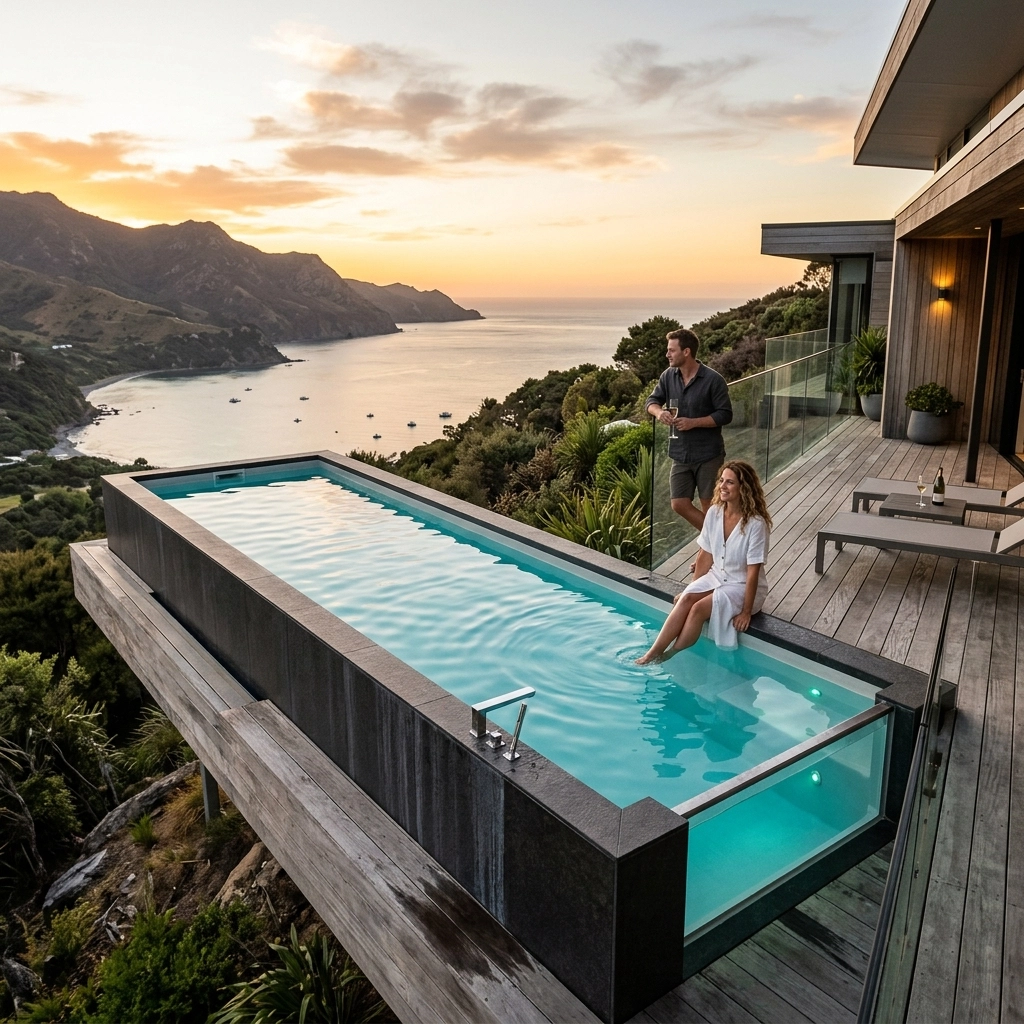
The definition of luxury in home design is shifting. It’s no longer just about the permanence of a structure or the sheer scale of a build; it’s about the fluidity of the lifestyle it enables. For the modern homeowner, time and flexibility have become the ultimate currencies. This shift is most evident in the evolution of the backyard, where the traditional, six-month concrete pool excavation is being replaced by the sophisticated, modular efficiency of container pools.
Designing a modular pool sanctuary isn't just a technical exercise in plumbing and filtration: it is an aesthetic curation. It is about blending the raw, industrial strength of a shipping container with high-end textures and finishes that speak to contemporary architectural trends. When you choose a modular container pool, you aren’t just buying a place to swim; you are selecting a palette of materials that will define the atmosphere of your outdoor living space.
At its core, a modular pool is a masterpiece of engineering. The structure relies on a galvanised steel keel frame, providing a level of structural integrity that traditional fiberglass shells often lack when placed above ground. This "industrial skeleton" allows the pool to be self-supporting, meaning it can sit on a flat pad, be partially recessed, or even be integrated into a sloping hillside without the need for massive retaining walls.
This structural honesty is a hallmark of "stealth luxury." There is a certain confidence in a design that doesn't try to hide its origins but instead elevates them through superior finishing. The industrial nature of the container provides the clean, straight lines that architects crave, acting as a perfect frame for the water within.
The most critical decision in designing your modular sanctuary is the exterior finish. This is the "skin" of the pool, the element that will most often be viewed from the house or the patio. While the raw steel of the container offers a certain "Brooklyn loft" vibe, most high-end designs opt for WPC (Wood Plastic Composite) cladding.
WPC is the gold standard for modern outdoor design. It offers the rich, tactile warmth of natural timber but without the high-maintenance cycle of oiling, staining, and sanding. When selecting your cladding, consider how the tone interacts with your home’s existing materials:

The color of the water in your pool isn't just about the water itself; it’s a reflection of the FRP (Fibreglass Reinforced Plastic) liner. The interior color you choose will dictate the "mood" of the sanctuary every time the sun hits the surface.
White interiors are for the purists. A white liner produces a crystalline, light-blue water tone reminiscent of the Mediterranean or the Maldives. It is unforgivingly clean, highlighting the clarity of the water and creating a bright, energetic vibe.
Blue and Light Blue interiors offer the classic resort aesthetic. They provide a deeper sense of tranquility and a traditional "pool" look that feels familiar and relaxing. These shades are excellent at hiding the occasional leaf or minor debris between cleanings, maintaining a "ready-to-use" appearance at all times.

In high-end design, there is a distinct difference between "customisable" and "incomplete." True luxury is all-inclusive. The modern modular pool should not be a series of upsells; it should be delivered as a complete, functioning ecosystem.
When we talk about the standard features of a premium container pool, we are looking at components that ensure the experience is as seamless as the design:
The most radical aspect of the modular pool sanctuary is the plug-and-play capability. In a world where bespoke construction can take years, the ability to position, connect, and fill a pool in a matter of days is the ultimate convenience.
This isn't just about speed; it's about the lack of disruption. Traditional pool builds involve heavy machinery, destroyed lawns, and months of dust. A modular pool arrives on a truck, is craned into position, and connects to existing services. This allows the homeowner to maintain the peace and order of their home while still upgrading their lifestyle.
Furthermore, these pools are designed with standard dimensions: typically a 2.2m width: making them perfectly proportioned for the narrower lots and urban "pocket gardens" that are becoming the norm in modern city planning. With heights ranging from 1.0m to 1.8m, they can be configured for everything from a shallow social "plunge" pool to a deeper, more athletic swim space.

Beyond the specs and the colors, a sanctuary must appeal to the senses. The sound of water, the texture of the WPC cladding underfoot, and the visual harmony of the pool against the house are what create the "vibe."
Consider the placement of your pool to maximize reflections. Positioning a container pool near a glass-fronted lounge or under a retractable pergola creates a layered outdoor room. The modular nature of these units means they can be moved if you decide to relocate or redesign your landscape: a level of portability that was previously unthinkable for a luxury pool.
The "Palette of Portability" is about more than just aesthetics; it's about a new philosophy of home improvement. It’s the realization that you can have architectural excellence, high-end materials, and premium features without the permanence and headache of traditional construction.
By carefully selecting your cladding, interior mood, and integrated features, you create a space that is uniquely yours. Whether it’s a matte black minimalist tank for a city courtyard or a teak-clad oasis for a coastal retreat, the modular pool is the future of the bespoke sanctuary.
Summary of Key Takeaways:


